L'Italiana in Algeri at Deutsche Oper Berlin
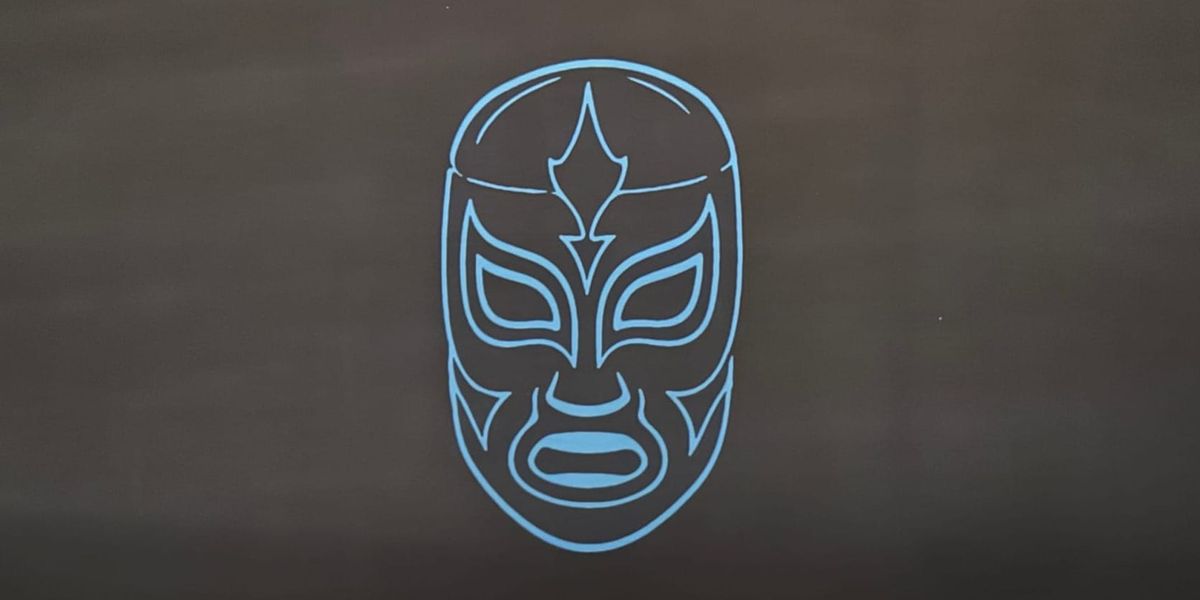
A lucha libre mask on the curtain, two gyms, one wrestling ring, and Rossini completely dismantled—then rebuilt into something that actually works today.

🎭 L’Italiana in Algeri
🎶 Gioacchino Rossini, 1813
💭 Rolando Villazón, 2025
🏛️ Deutsche Oper Berlin
🗓️ 08.03.2026
The retrospective continues. L'Italiana in Algeri premiered in March, and I've been meaning to write about it ever since—partly because it was genuinely great fun, partly because it raises points worth taking time with rather than rushing through.
"C'INVITANO ADESSO LA PATRIA E L'AMOR."
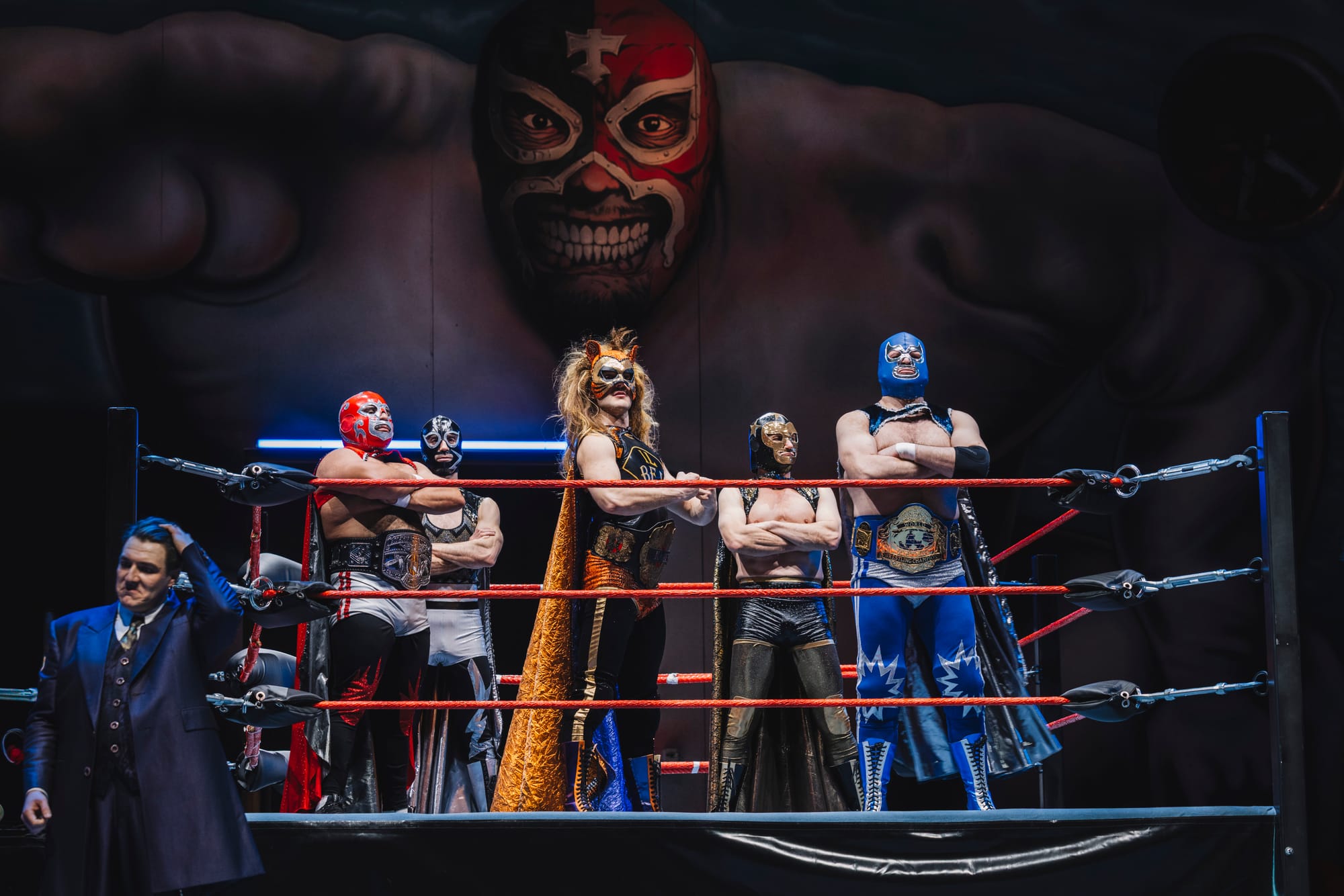
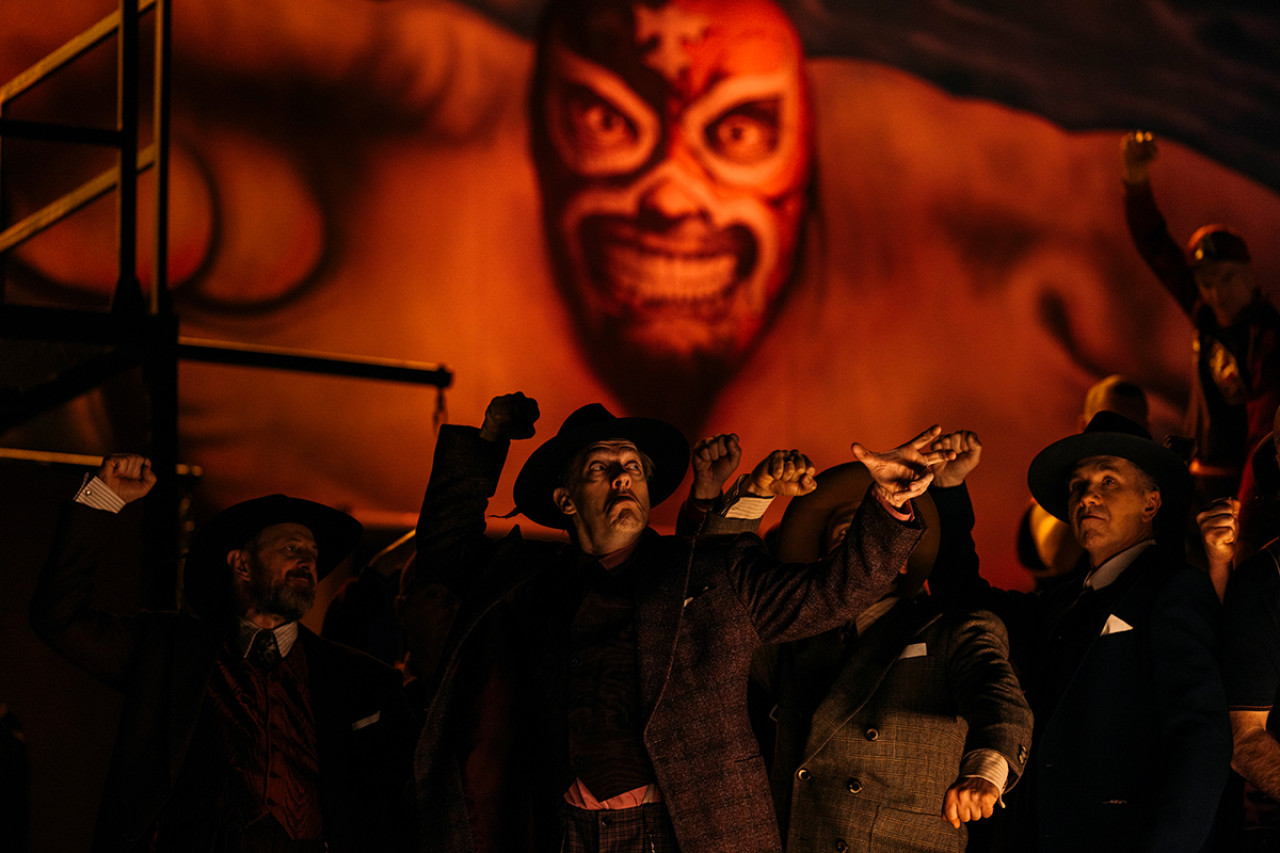
Before the overture, before the first note, there is a lucha libre mask projected onto the stage curtain. Bold, symmetrical, slightly absurd—the kind of image that makes you lean over to whoever you came with and say, what exactly are we about to watch? It's a good question. And Rolando Villazón, in his third production at this house, spends the next three hours answering it in the most entertaining way possible.
But to understand what this production is doing—and why it works—you have to first reckon with what it's working against.
The Opera Behind the Opera
L'Italiana is not quite core repertoire in the way that Rossini's Barbiere or Cenerentola are, but it belongs to the same family: comic, fizzing, propelled by its own momentum. It premiered in Venice in 1813, which means Rossini was writing it under French occupation, in a northern Italy that had not yet cohered into anything like a nation. The opera's plot—a group of Italians outwitting their Algerian captors and escaping home—was not, for its original audience, merely a comic adventure. Isabella, the unassailable protagonist who engineers the whole escape, was a figure onto whom Italian audiences could project something much more urgent: the fantasy of resistance, of getting out from under, of a small and spirited people defeating a more powerful one through wit rather than force. Her Act II aria Pensa alla Patria—think of the homeland—must have landed in 1813 with a weight that is almost impossible to reconstruct today.
What is possible to reconstruct, unfortunately, is the other layer: the one where the Algerians are depicted through exactly the kind of Orientalist caricature you'd expect from a European opera of this period. Mustafa, the Algerian lord, is buffoonish and lascivious; his court exists primarily as a backdrop against which Italian cleverness can shine. Seen through a post-colonial lens, the nationalist allegory curdles. What was once a fantasy of liberation reads, at this distance, also as a fantasy of European superiority—which puts any contemporary production in an uncomfortable position. Play it straight and you're staging something the audience will either not notice or quietly wince at. Update it, and you risk losing the very thing that made it resonate in the first place.
Mexico City, 1948, Two Gyms
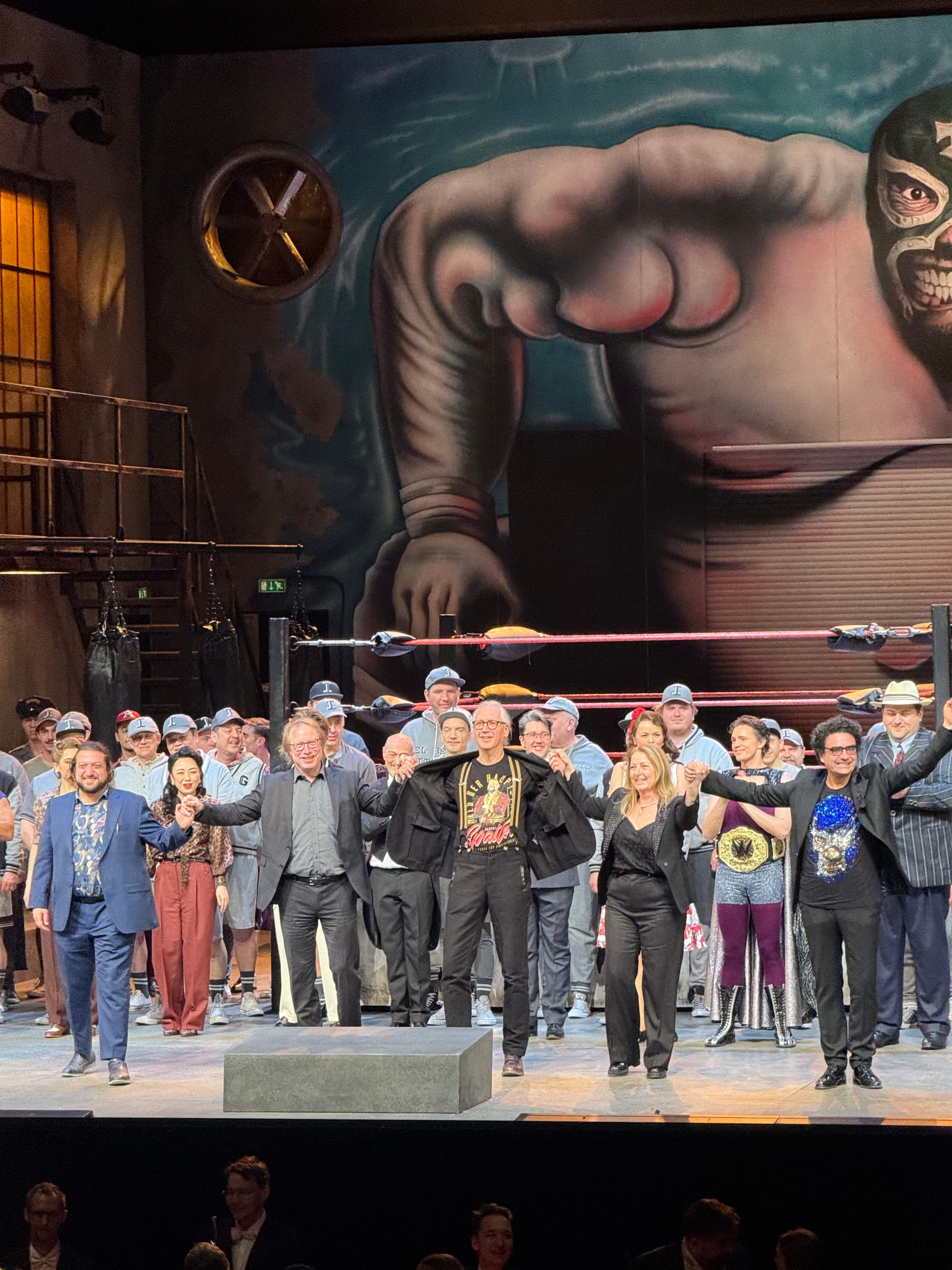
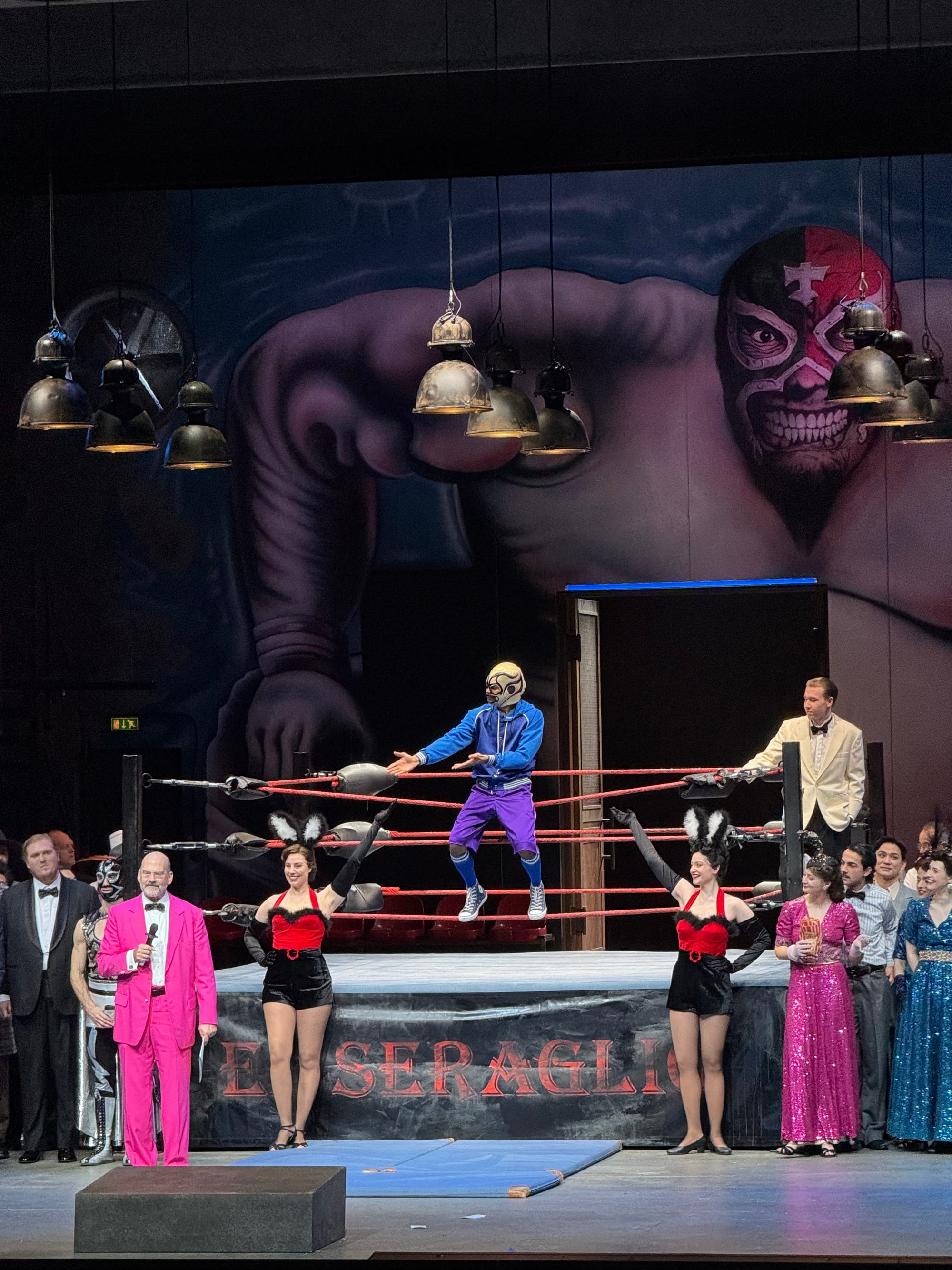
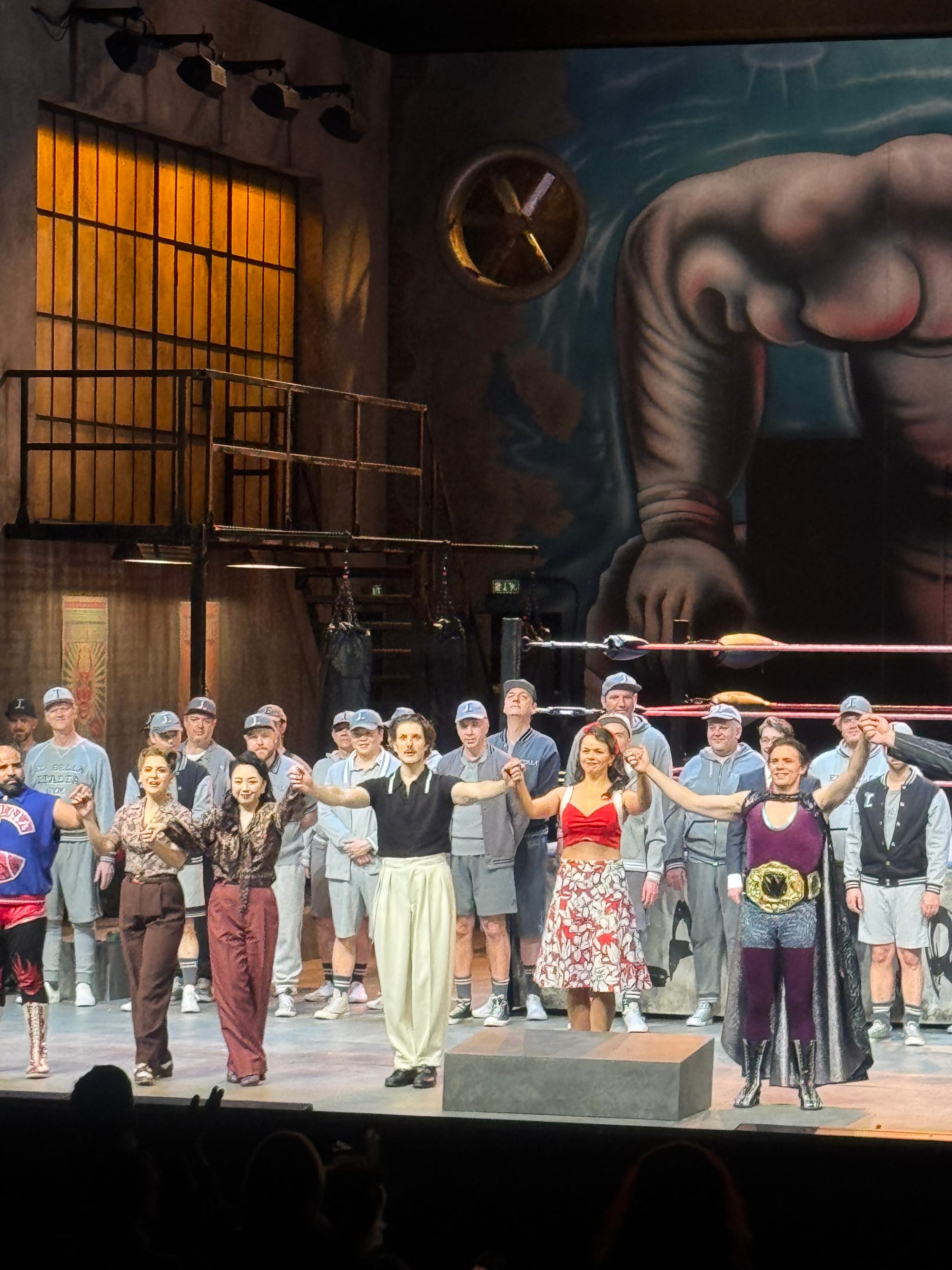
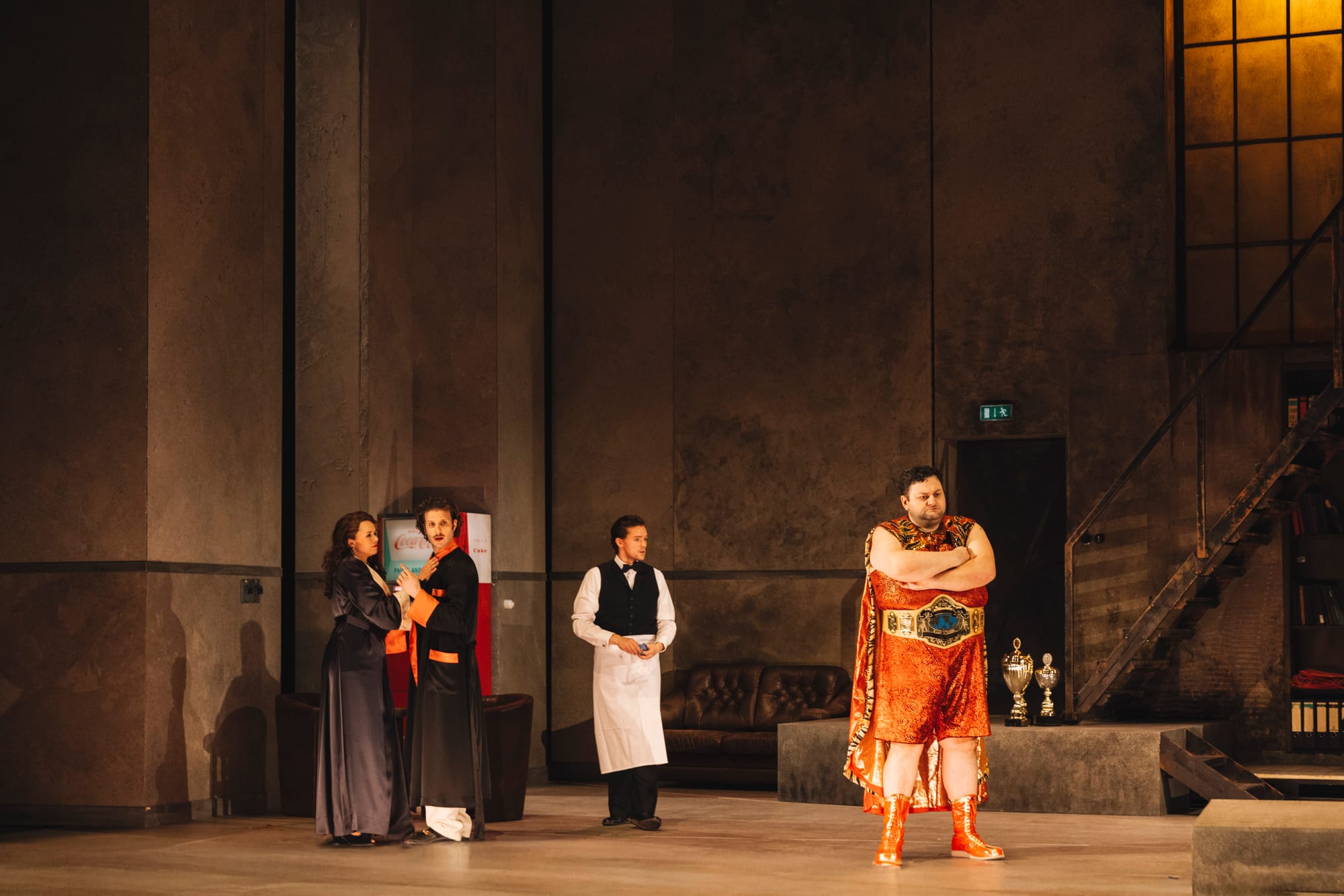
Villazón's answer is to relocate the problem entirely. There are no Italians here, no Algerians, no geopolitical tension whatsoever. Instead: Mexico City, 1940s, two competing lucha libre gyms. The large corporate chain—El Seraglio—run by a CEO named Mustafa. The scrappy independent—La Patria, revealed with a knowing flourish at the end—run by Isabella. The conflict is David and Goliath: boutique versus corporation, underdog versus conglomerate, the kind of story that needs no footnotes.
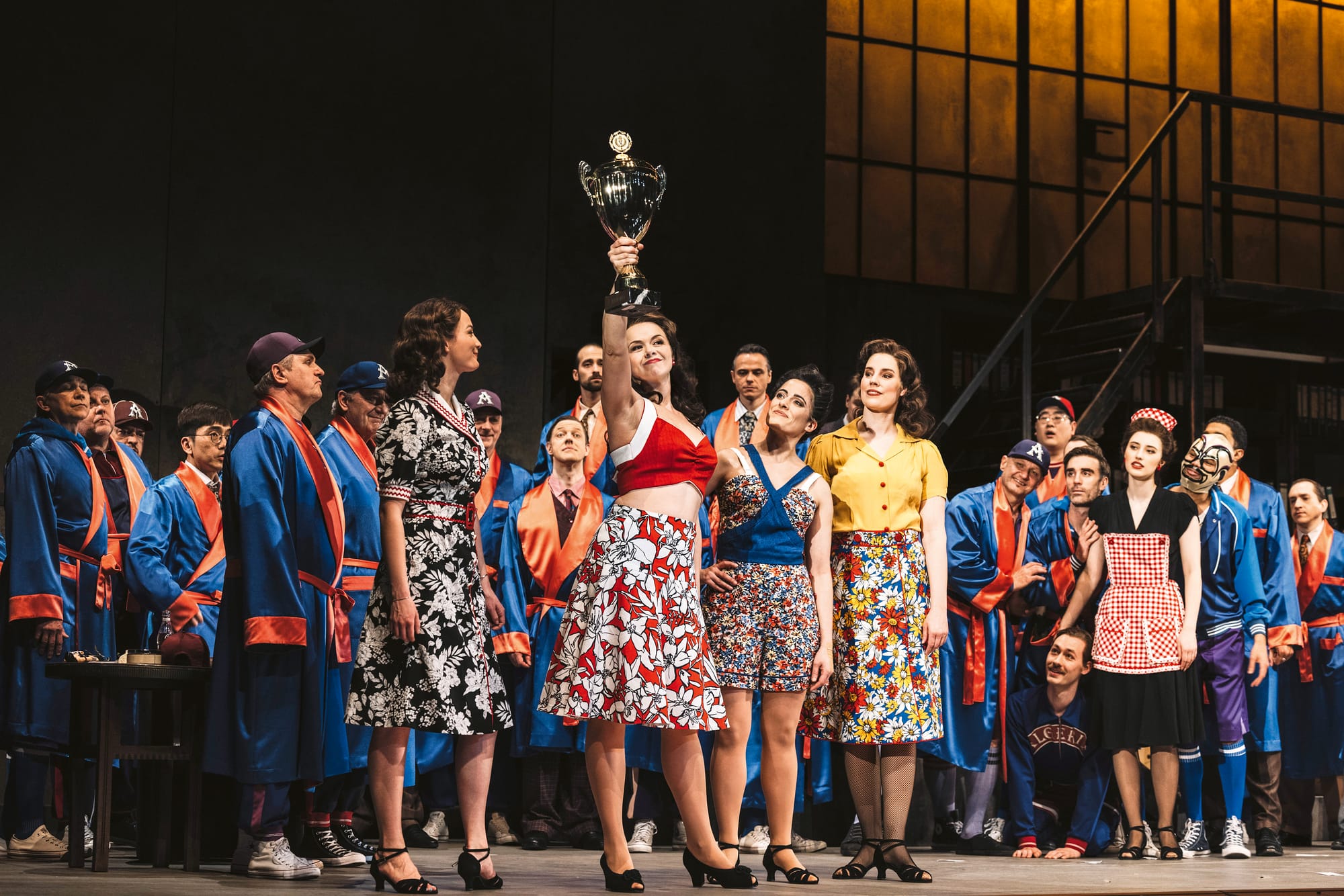
The stage is a rotating brutalist gym space—bleachers, a wrestling ring, a back-office, a canteen—that cycles through its configurations with the efficiency of a well-run machine. The costumes are Technicolor post-war optimism: wide shoulders, polka dots, wide-brimmed hats, the exaggerated silhouettes of a world that had just come through something terrible and decided to dress loudly as a response. Everything is vivid and slightly cartoonish, and that, it turns out, is the point.
There's an argument buried in this production about what opera and lucha libre actually have in common. Both are stylized beyond naturalism; both require a suspension of disbelief, an acceptance that what you're watching is not a representation of reality but an amplified version of it—emotions clarified through exaggeration, meaning driven home through excess. Rossini's music already courts this: the sheer syllabic velocity of his comic writing, the coloratura that asks singers to execute something almost athletic in its precision, has always been closer to spectacle than to intimate expression. Placing it inside a world of theatrical combat makes that explicit.
The Thud Over the Orchestra
It peaks—properly, irresistibly—at the end of Act I, when an actual wrestling match breaks out in the ring while the singers and chorus perform around it. Two professional Berlin wrestlers, and the thuds of bodies hitting the mat are completely audible over the orchestra. The audience, trained by years of opera etiquette to sit still and stay quiet, didn't quite know what to do with themselves. You could feel it—the giddy impulse to cheer, suppressed and converted into something more like collective electric tension. It was the funniest and most alive I've seen an opera audience in a long time, and it pointed at something real: that the distance between the ring and the stage is smaller than we pretend.
The production also handles its gender politics with a lightness that doesn't feel labored. Isabella here is the boss, literally—she owns the gym, she outmaneuvers Mustafa, she wins. And Elvira, Mustafa's wife in the original, is quietly given somewhere better to be: what reads as a romantic connection with her female companion builds through the evening, culminating in a kiss that the production neither underlines nor hides. In a piece that has always been about escape and self-determination, it registers as one more form of both.
A Story That Travels
Not everyone will be satisfied. There is a genuinely legitimate version of the complaint that when you strip away the nationalist context, you also strip away the thing that gave the piece its original charge—that without Pensa alla Patria meaning what it meant in Venice in 1813, you're left with a shell that merely entertains. But this objection assumes that the only meaning available to an old work is the one baked in at the moment of its creation. What Villazón's production demonstrates, I think, is something more interesting: that the skeleton of the story—the outnumbered fighting back, the clever defeating the powerful, the escaped claiming their freedom—is portable. It meant something specific in 1813. It can mean something specific again, differently, in 2026. Opera has always done this. The ones willing to let it happen are the ones that last.

Cast - 08.03.2026
Conductor Alessandro De Marchi
Director Rolando Villazón
Stage design Harald Thor
Costume design Brigitte Reiffenstuel
Light design Stefan Bolliger
Choreography Ramses Sigl
Wrestling rehearsal Ahmed Chaer
Chorus master Jeremy Bines
Dramaturgy Konstantin Parnian
Mustafà Tommaso Barea
Elvira Hye-Young Moon
Zulma Arianna Manganello
Haly Benjamin Dickerson
Lindoro Jonah Hoskins
Isabella Nadezhda Karyazina
Taddeo Misha Kiria
Wrestler El Comandante Rambo, Pascal Spalter
Chorus Chor der Deutschen Oper Berlin
Orchestra Orchester der Deutschen Oper Berlin
Dancers of the Opernballett der Deutschen Oper Berlin