All Balanchine III at the New York City Ballet
Balanchine in New York, Berlin in the audience—and a reminder not to take any of it for granted.

🩰 Symphony in C, Agon, Firebird
🎶 Georges Bizet, Igor Stravinsky
💭 George Balanchine
🏛️ New York City Ballet / Koch Theatre
🗓️ 21.04.2026
I met her at the Vicenza Opera Festival—we got talking immediately, the way you do when you find someone equally passionate about something you care about, and within minutes we were deep into the great transatlantic debate: European ballet versus American ballet, the abstract and intellectual versus the classical and the canonical. She had been a fan and supporter of the New York City Ballet for decades, and her devotion to Balanchine was absolute. Contemporary European ballet—the Pina Bausch lineage, the more cerebral end of things—she was skeptical, warmly but firmly. "You have to see Balanchine," she told me. "When you come to New York, that's the first thing you book."
And so it was. Flights confirmed, New York City Ballet immediately in the calendar—and lo and behold: All Balanchine III; of course we met at both intermissions to exchange notes. (When I told her that the Staatsballett Berlin was performing Symphony in C at the end of May, her expression said more about Balanchine than anything she'd shared with me in Vicenza.)
A company at home in its own canon
The All Balanchine III program—Symphony in C, Agon, Firebird—had the quality of a company completely at home in its own canon. Three very different pieces, three very different choreographic registers, all of them carrying the same underlying confidence of a company that knows exactly where it came from. I was particularly curious about Symphony in C for obvious reasons—and apparently I was not the only one who had made the trip with that in mind. I ran into Christian Spuck, the Staatsballett Berlin's director, in the theater; presumably there for exactly the same reason. (I was fortunately wearing my Staatsballett Berlin t-shirt, so the recognition was mutual.)
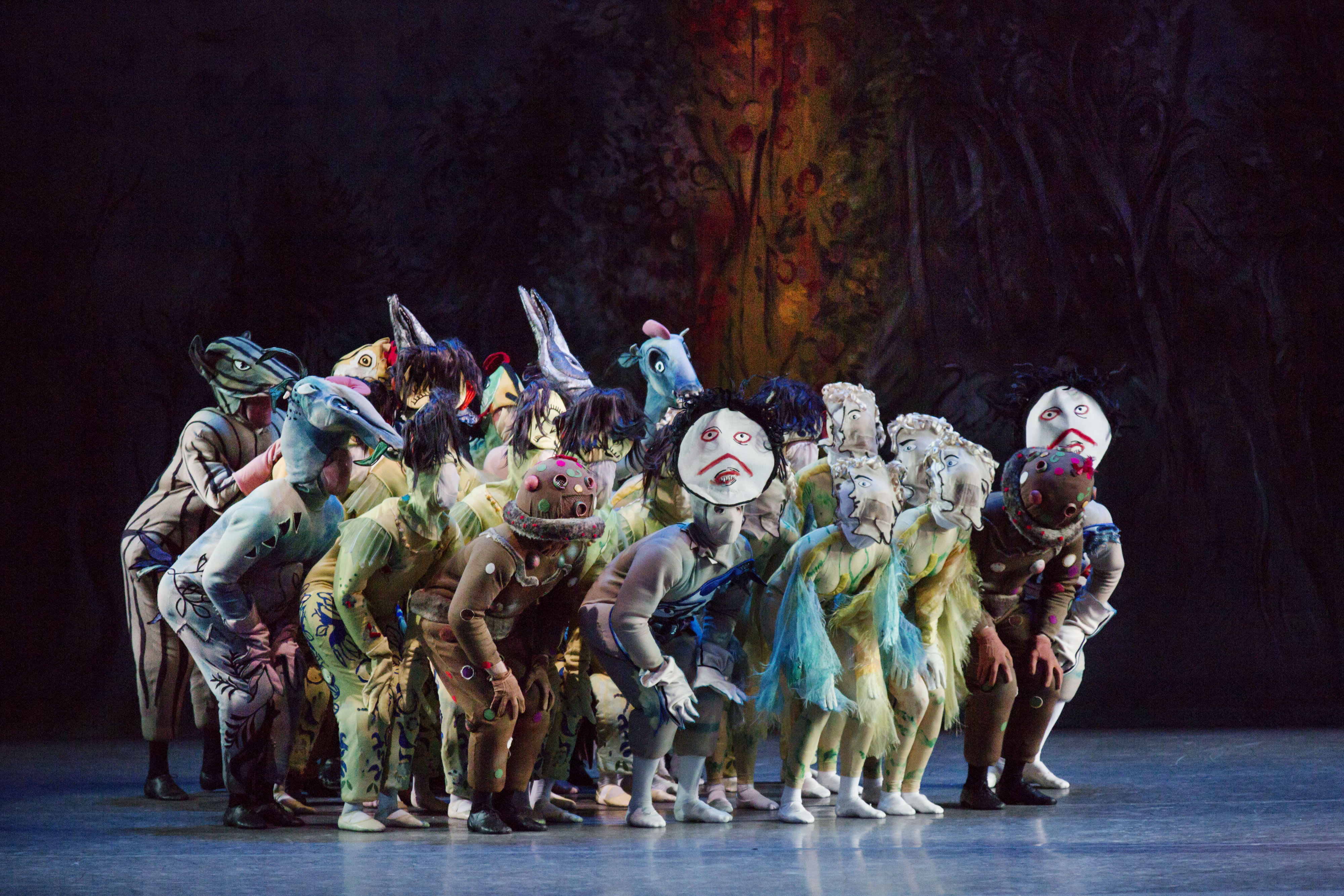
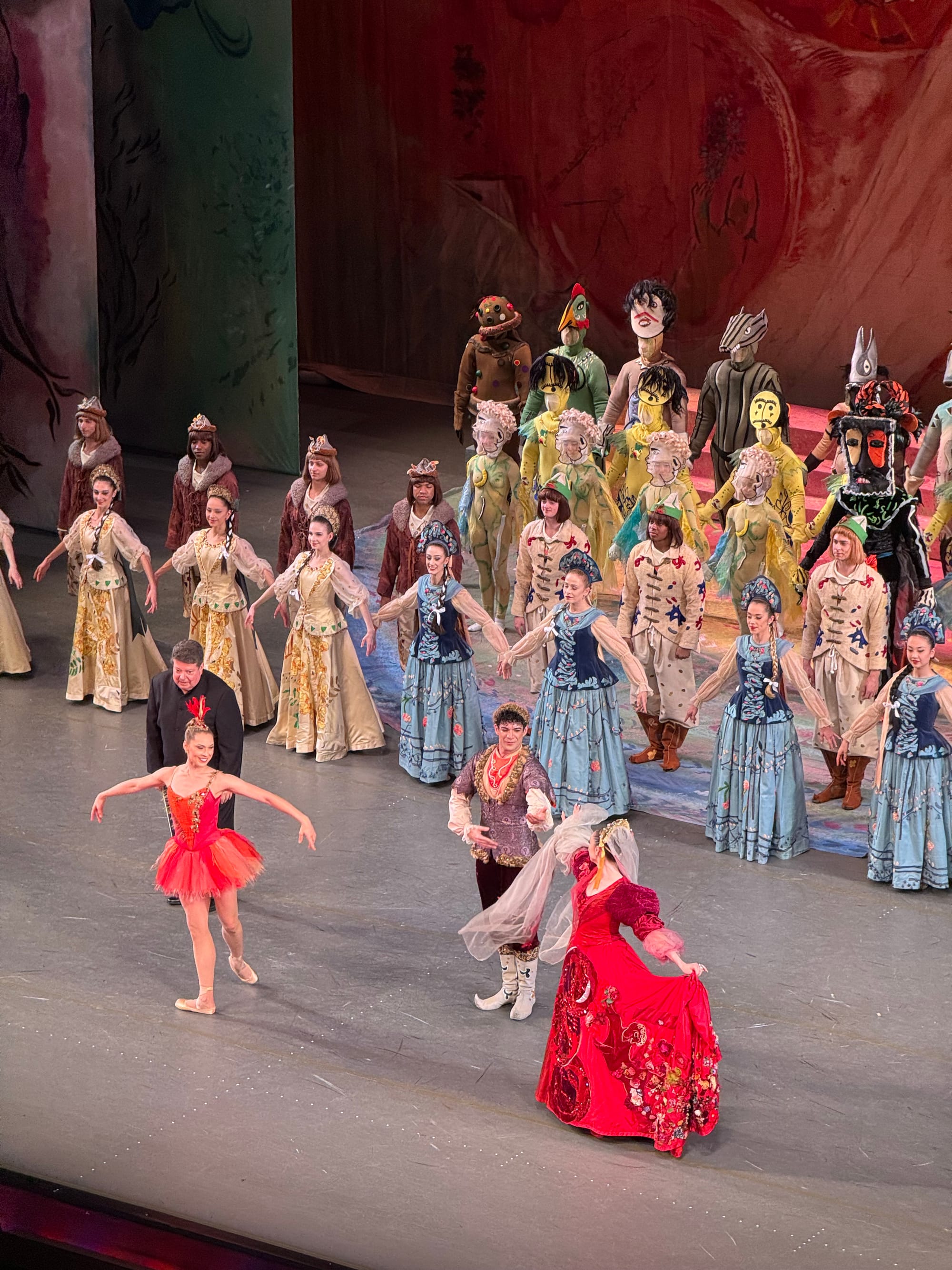
Agon was the revelation of the evening—that white-shirts, slick-hair 1950s aesthetic giving it something of West Side Story, coiled and precise, with a pas de deux that left me breathless. Firebird closed the program with something closer to spectacle: those Marc Chagall costumes and backdrops carrying the whole visual weight of 20th-century avant-garde theater, utterly confident, undeniably iconic. The storytelling is standard ballet fare, but visually it lands like a statement—this is what the form can look like when it's given everything it needs.
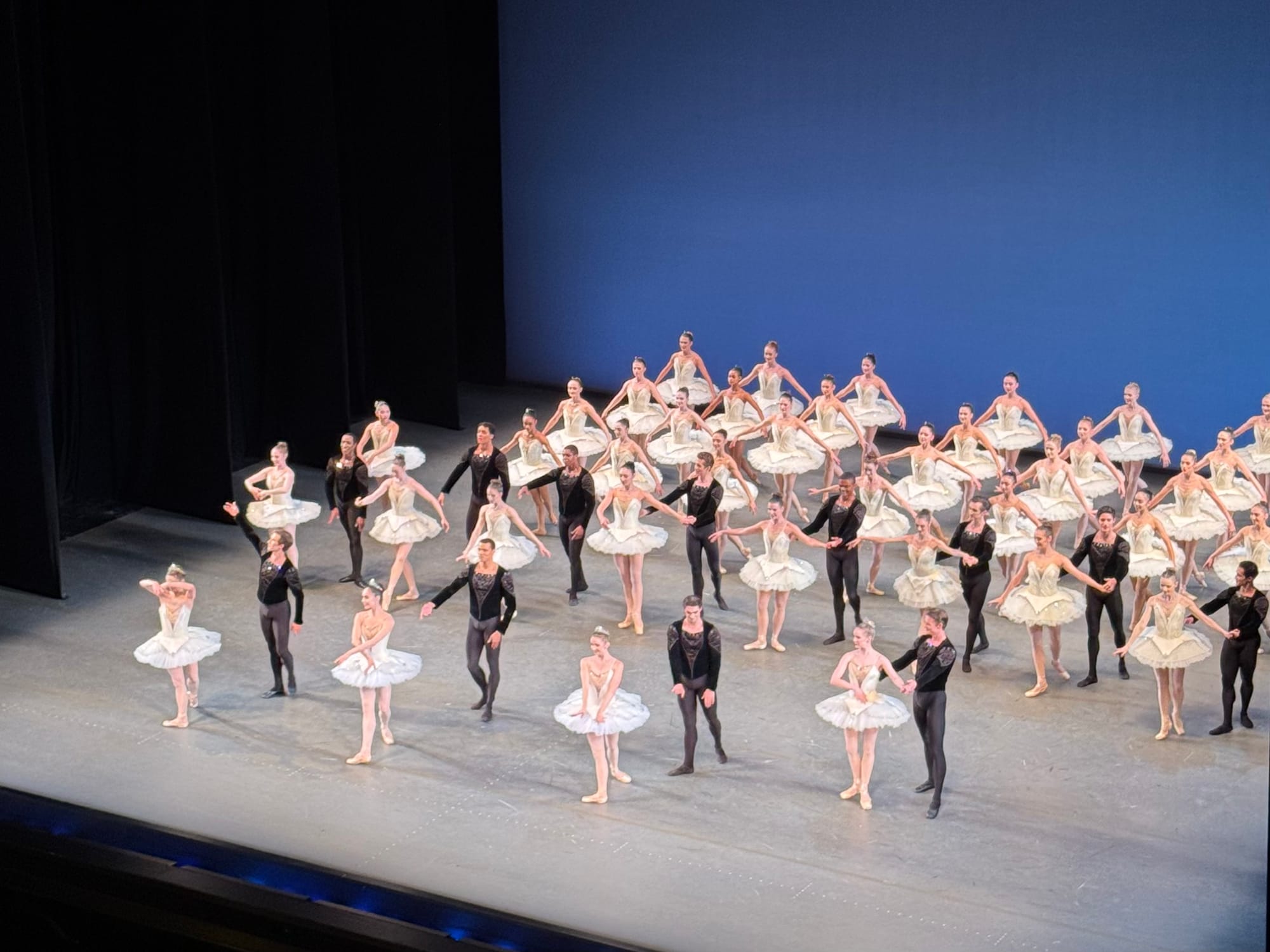
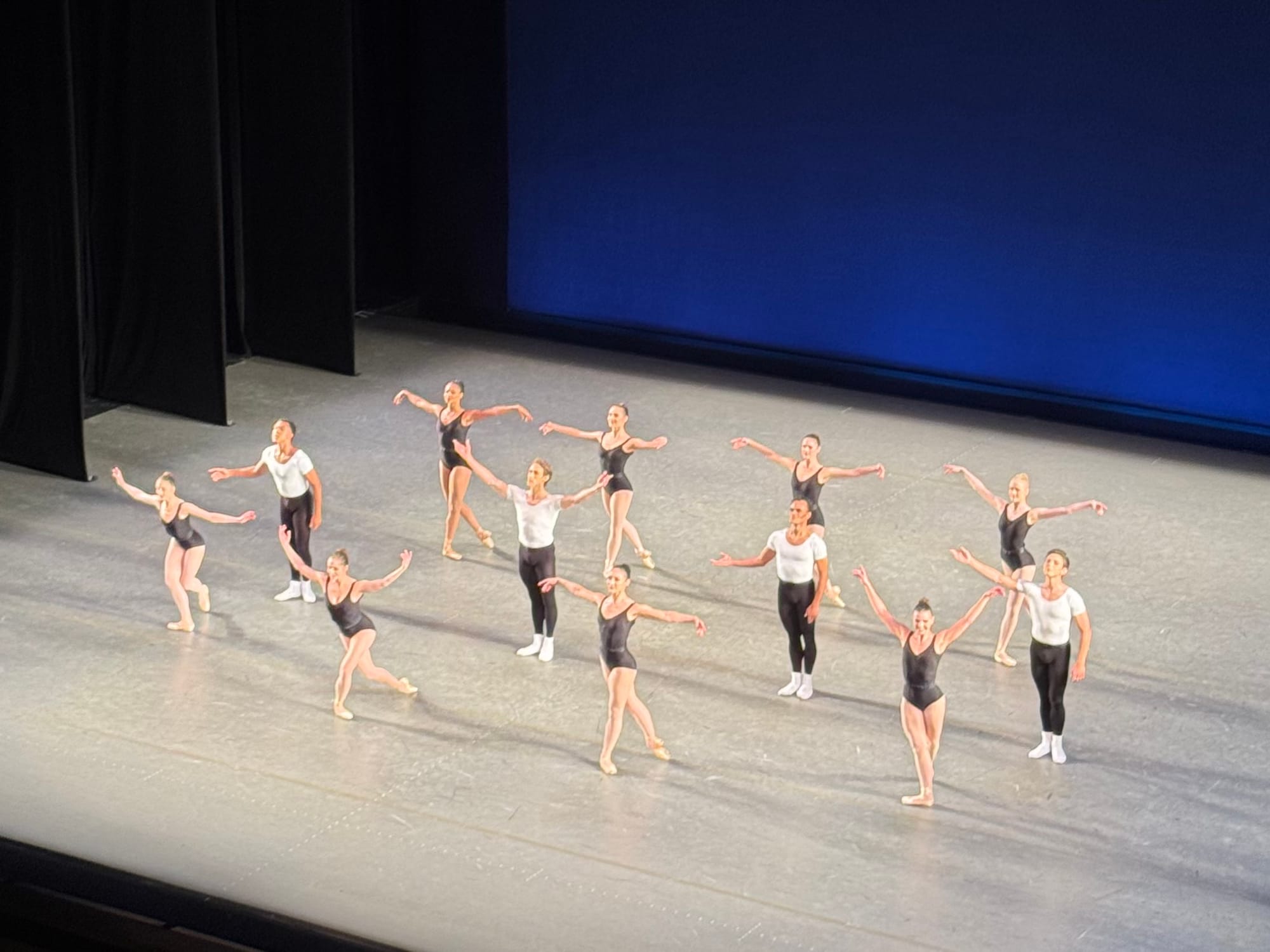
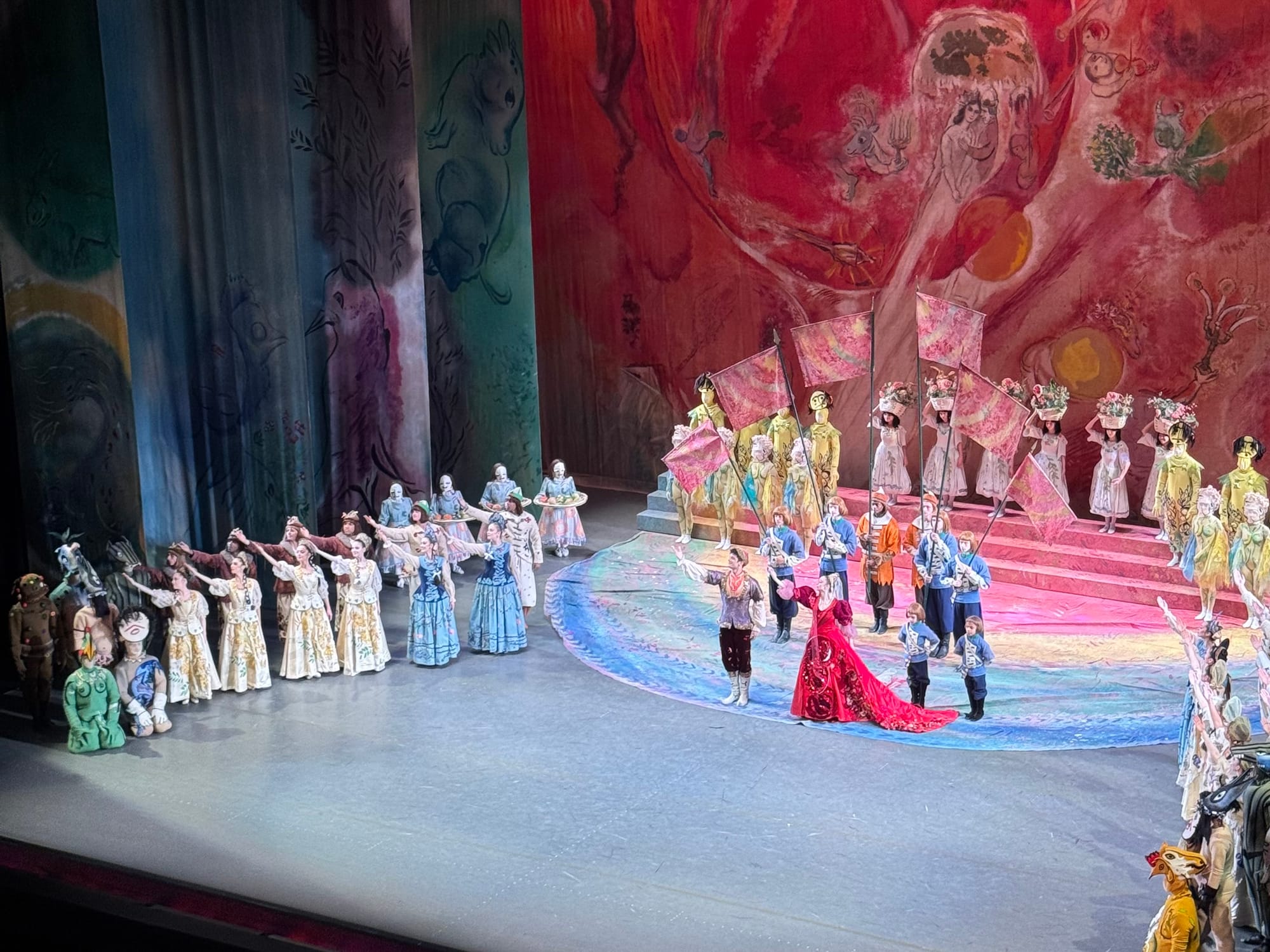
Symphony in C, Agon, Firebird at the New York City Ballet
Notes from the pit
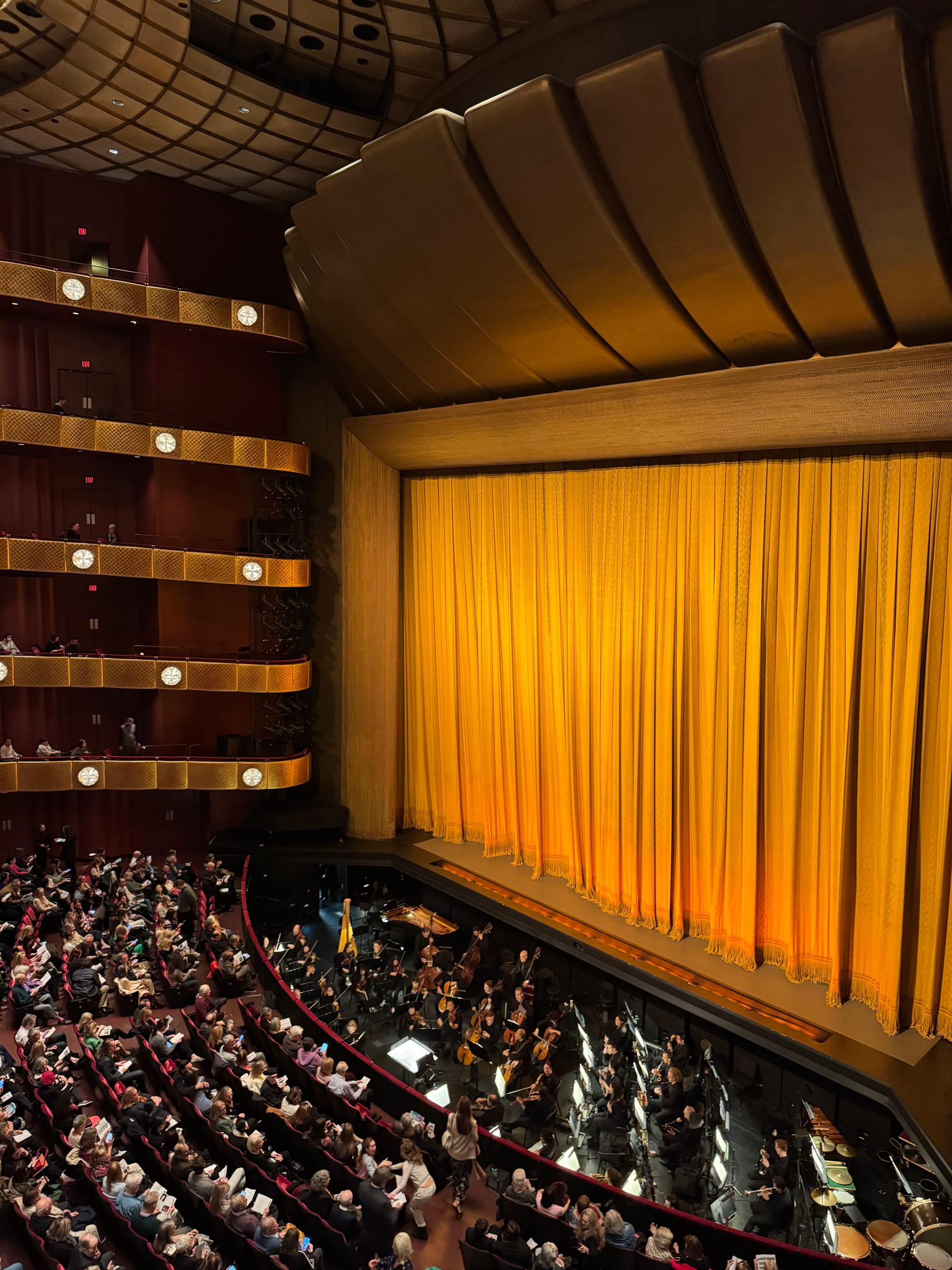
One thing I hadn't anticipated was the orchestra layout. In the German pit configurations that I'm used to, strings typically sit at the front, with double basses at the back, cellos to the right, woodwinds and brass distributed across the rear. Here it was entirely different: all strings on the left, arranged by size from front to back—violins, violas, cellos, double basses—and all woodwinds, brass and percussion on the right, with harp and grand piano tucked behind the strings. A few nights later at the Metropolitan Opera, the same arrangement. Whether this is a North American convention or a coincidence across two houses, I'm not sure—but it was novel enough to keep noticing.
The price of the room
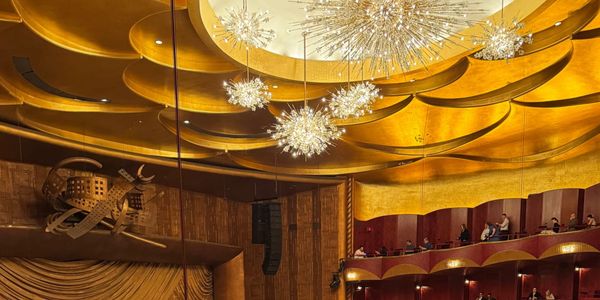
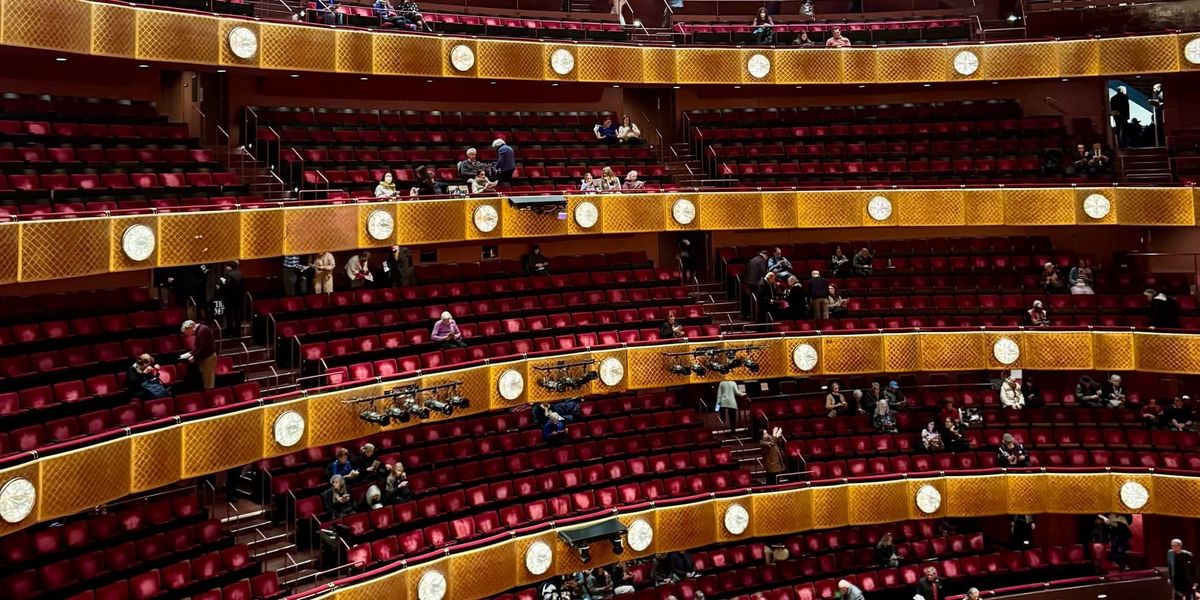
But the thing I haven't been able to stop thinking about since is the private sponsorship—not as a quirk of American cultural life, but as a structural necessity. Every room named after a donor, every gap filled by private capital because the state simply isn't there. Sitting in that auditorium—beautiful, full, sold out—it's easy to feel like the model works. And maybe it does, on its own terms.
But we are extraordinarily lucky in Berlin to have what we have: state funding, a constitutionally guaranteed federal cultural mandate, and sold-out seasons. And still, the Staatsballett Berlin is now performing separate shows for corporate sponsors to fill the gap left by cultural austerity—for the first time ever. It seems that, in one of Europe's cultural capitals, we are ever so slowly sliding towards having one of our own houses renamed to something like the Theo Albrecht Jr. Oper Berlin. Here's hoping that stays a joke.