La Bohème at the Metropolitan Opera
World-building in the largest opera house on earth—and a Puccini farewell that hit closer to home than expected.

🎭 La Bohème
🎶 Giacomo Puccini, 1896
💭 Franco Zeffirelli, 1981
🏛️ Metropolitan Opera NYC
🗓️ 27.04.2026
"FAREWELL WITHOUT RESENTMENT, FAREWELL TO THE DREAMS OF LOVE"
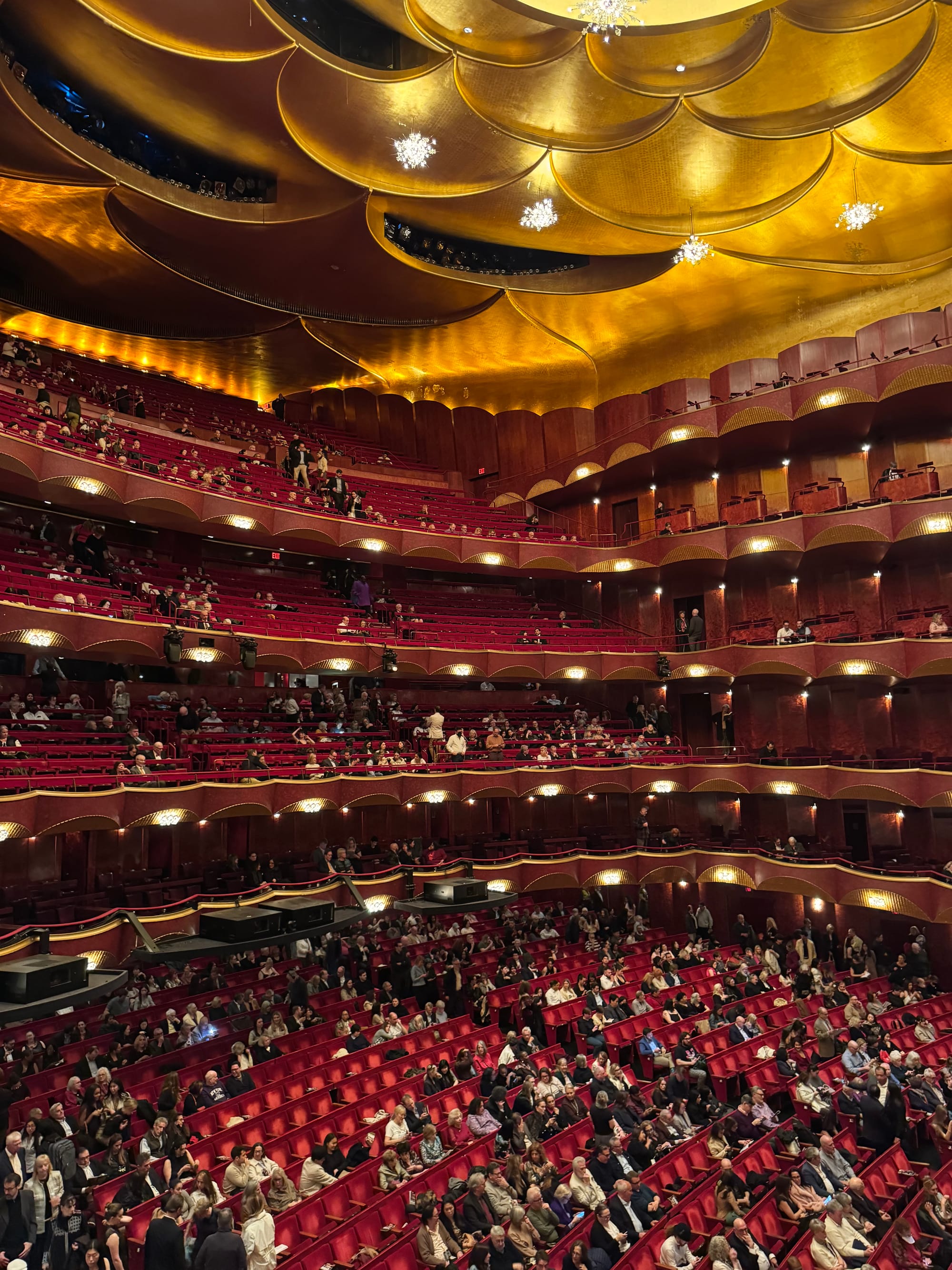
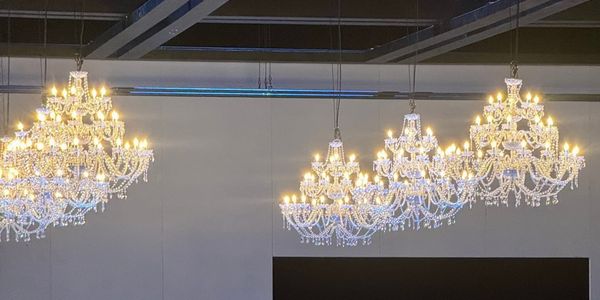
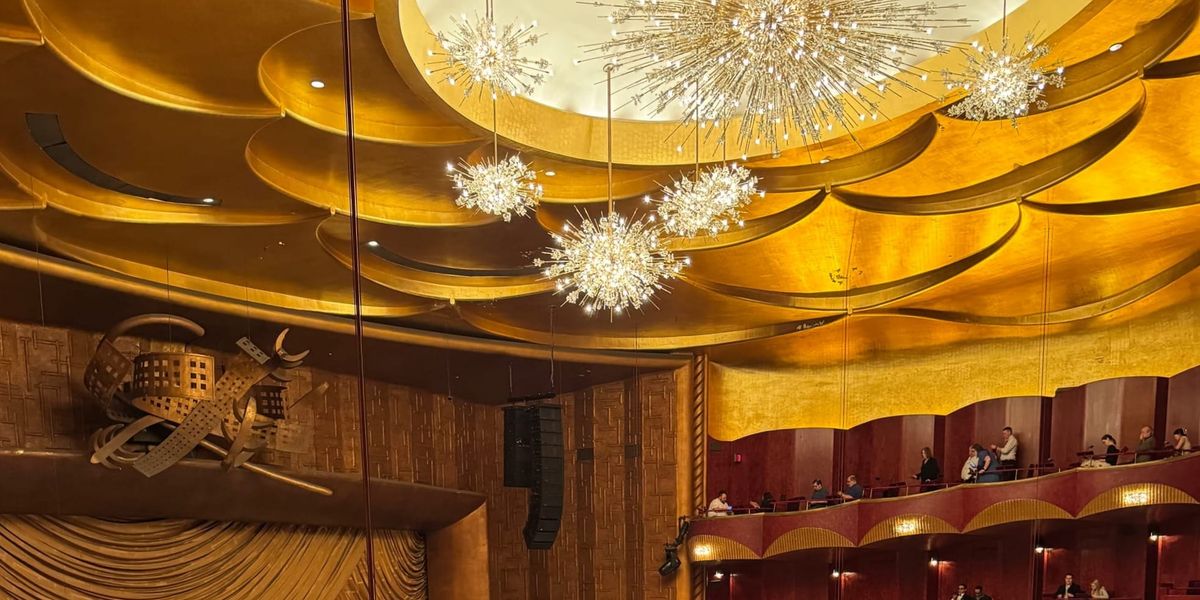
There is a ritual at the Metropolitan Opera that happens before every performance: the Lobmeyr chandeliers—stunning mid-century constellations of crystal and light—are slowly raised to the ceiling as the house fills. It is a small piece of theatre before the theatre, and it's marvelous. By the time they’ve reached the top, the room has already worked its magic on you.
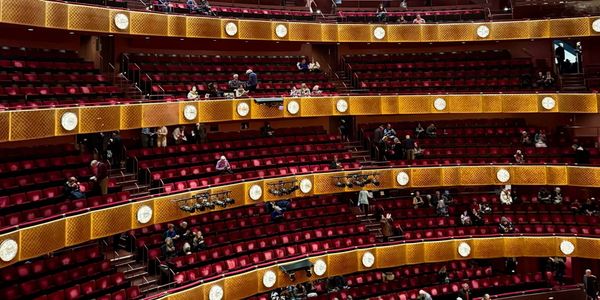
The Met seats just under 4,000 people—Deutsche Oper Berlin, one of the largest houses in Germany, seats fewer than half that—and the auditorium earns that number in every dimension: height, depth, the particular suspense of nearly four thousand people breathing in the same direction. I spent the first half of the evening in the Family Circle, the uppermost tier, roughly 60 meters from the stage, watching what appeared from that altitude to be a very detailed miniature. From up there, you cannot really make out faces. You cannot tell, from the movement of a mouth, who is singing. What you can do is oversee nearly four thousand people intently focused on the performance—which turns out to be an experience entirely its own.
I had come to New York for a week, torn between this performance and the Onegin running at the same house. The decision ultimately was a straightforward one, for two reasons: I had just seen the luscious Barrie Kosky production at Komische Oper Berlin and wanted to let that impression linger a while longer. More importantly though, the Zeffirelli Bohème is not a production you pass up. It has been running since 1981 and has spawned imitators all over: the Deutsche Oper Berlin’s Götz Friedrich production from 1988, which I know well, now reads differently having seen the original—you can see exactly what Friedrich was looking at. There‘s also a Zeffirelli production of La Bohème in Vienna, which has since been recommended to me multiple times. The idea of a cinematic director in total creative command of an operatic stage, building a world rather than a set—this is where that idea came from.
The Stage as World
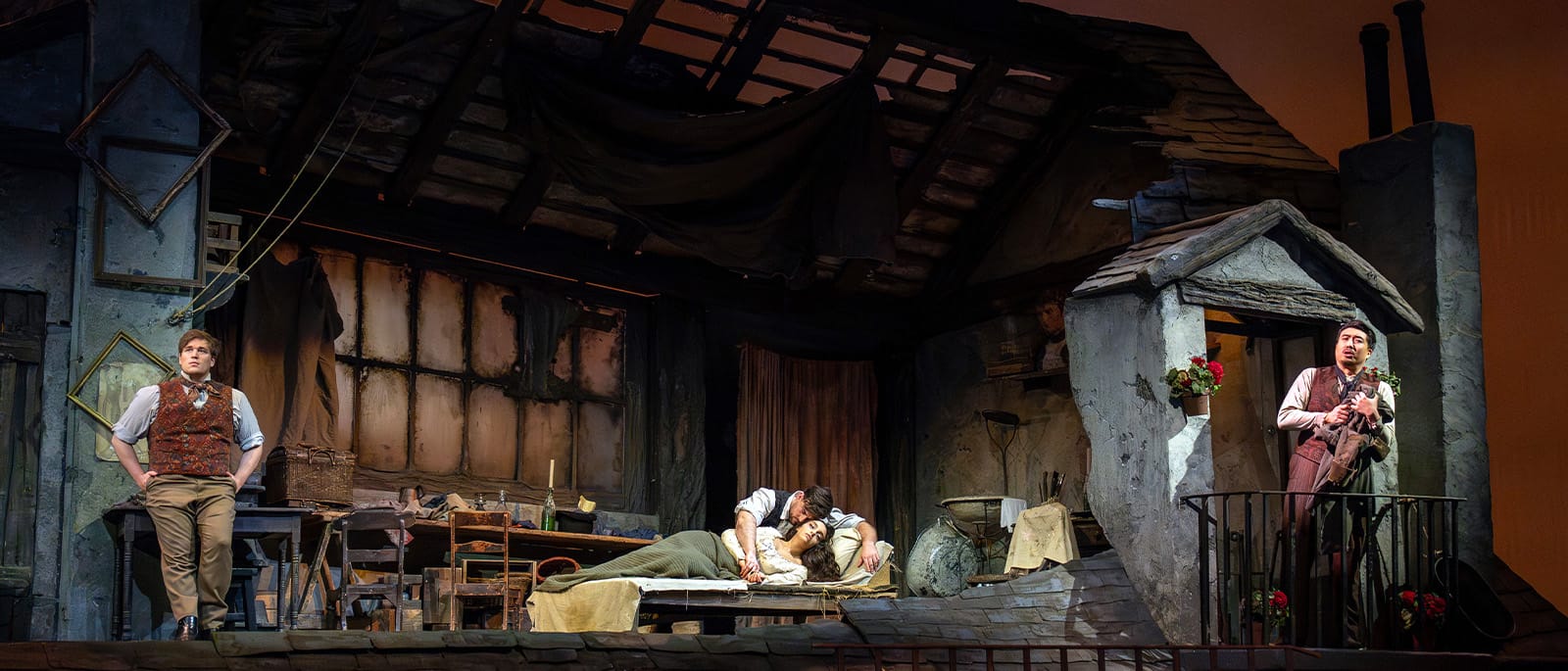
Zeffirelli’s Bohème is, among other things, a feat of world-building so thorough it tips occasionally into something else. The first and fourth acts—which give us the interior of the garret, a cross-section of Rodolfo’s attic life—are stuffed with objects: furniture, books, canvases, the suggestion of accumulated living, and of living in squalor. It is beautiful in the way that certain Disney films are beautiful, which is perhaps not a coincidence. When the artists, in Act 4, duel theatrically and leap from the attic window onto the Parisian rooftops, the image lands closer to Mary Poppins than to Murger. It suggests an American sensibility applied to a French story set in an Italian opera—and there is something clarifying about watching it from a foreign enough distance to notice that at all.
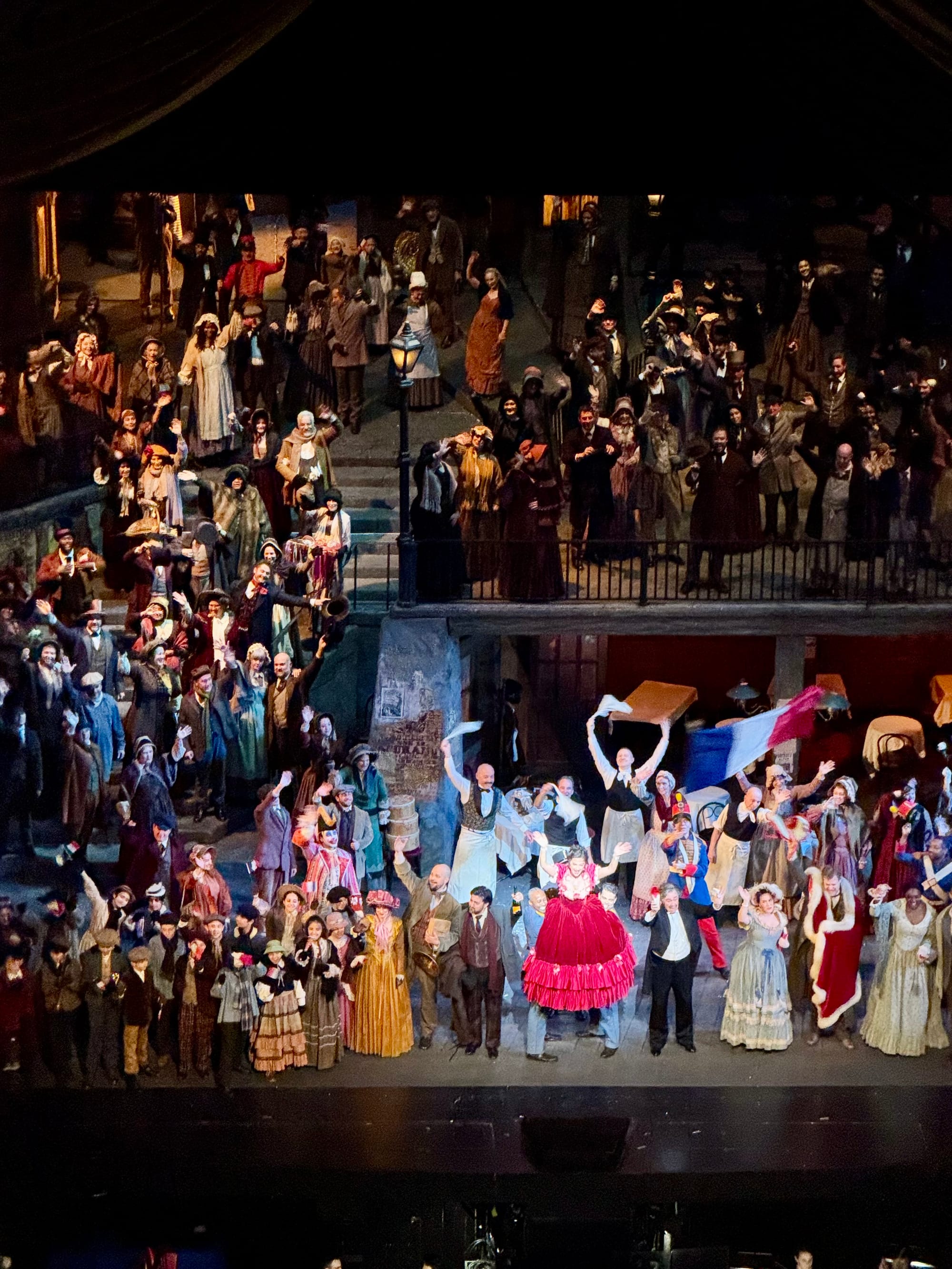
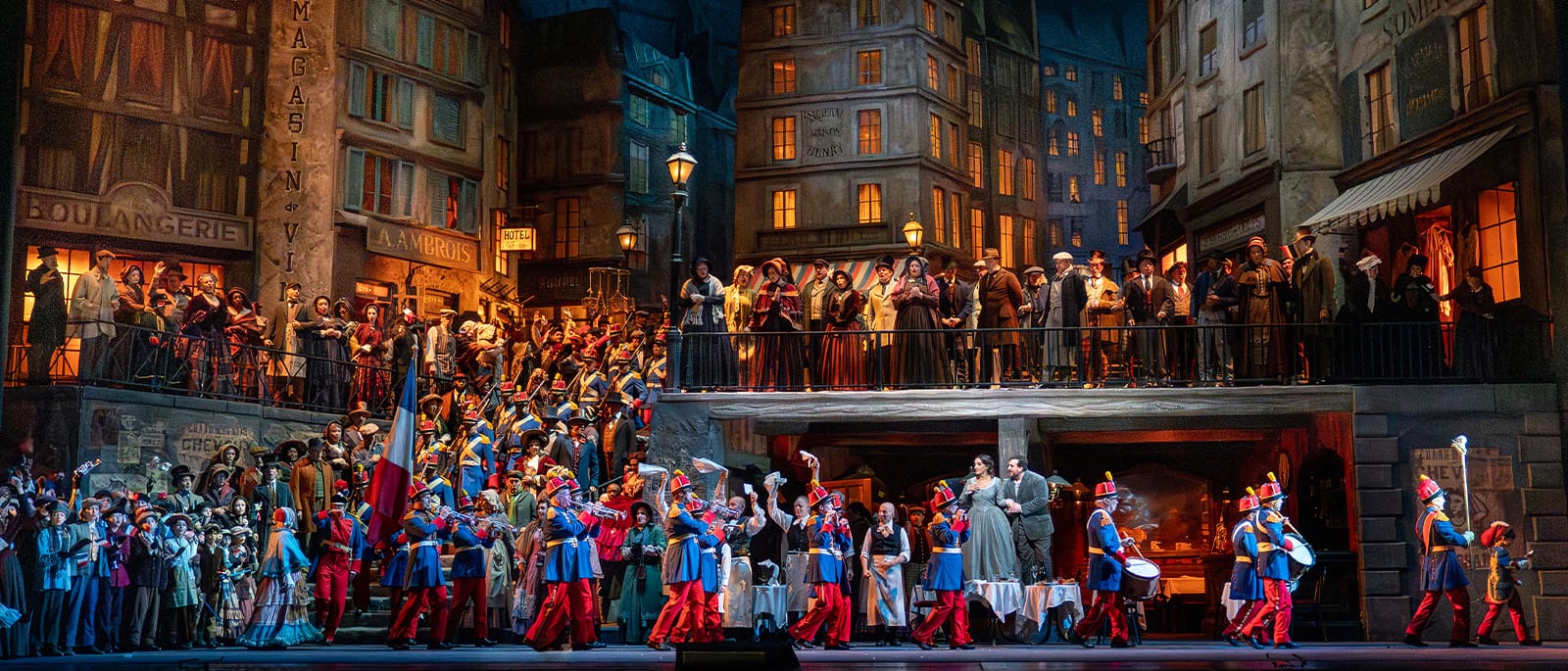
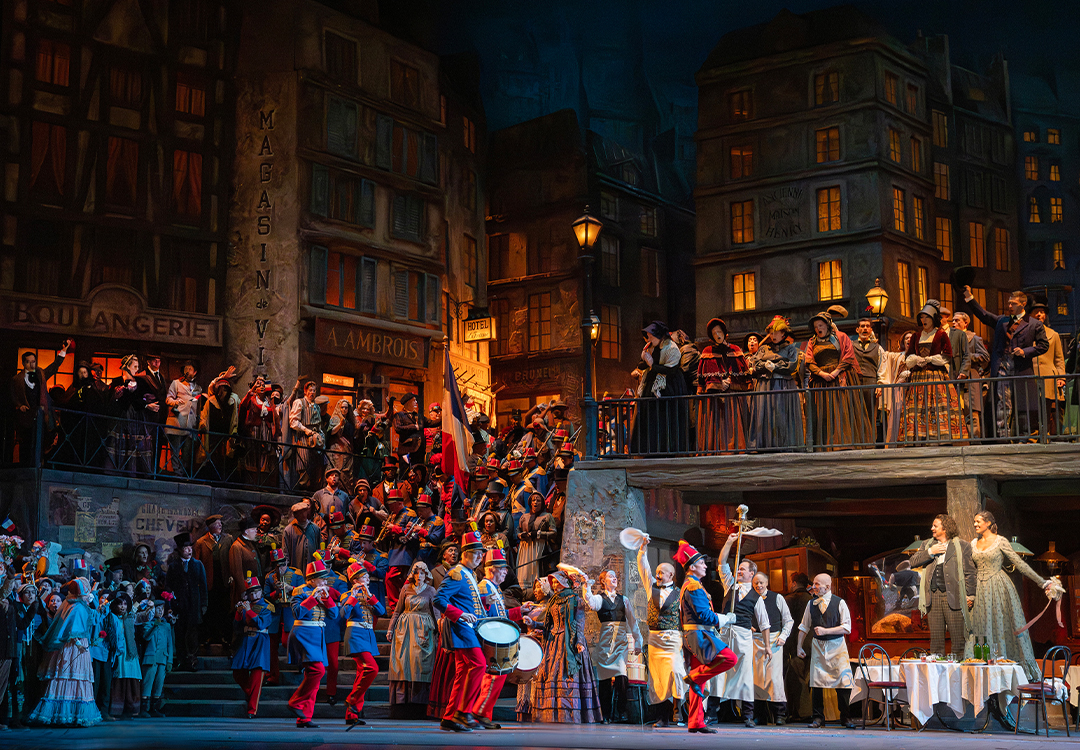
But Act 2 is the undeniable highlight of this production, and the main reason I simply had to see it for myself. When the curtain rises on the Café Momus, the audience goes wild—scenic applause, immediate and rapturous—and they are not wrong to. There are dozens of people on stage simultaneously, possibly over a hundred; there is so much happening that you don’t know where to look, which is both the production’s great achievement and its only real problem (remembering our seats in the Family Circle, 60 meters away from the action). Parpignol arrives with a small pony pulling a toy carriage; Musetta and her wealthy admirer arrive in a horse-drawn carriage—an actual horse, an actual carriage. I have genuinely no idea how they get it on stage and I have chosen not to investigate, on the grounds that some magic is better left intact.
A House of Superlatives
Midway through the evening, we moved. The second tier side balcony was only lightly sold that night, and nobody stopped us from relocating—so we did, ending up almost directly above the orchestra pit, looking down onto the stage from one side and, if you turned left, across that auditorium of nearly four thousand people. I cannot help but repeat this number, for the atmosphere of that space, when full and in full voice—singers, orchestra, the collective held breath of the audience—is something the word “impressive” doesn’t quite reach. It's awesome, in the awe-inspiring sense of the word.
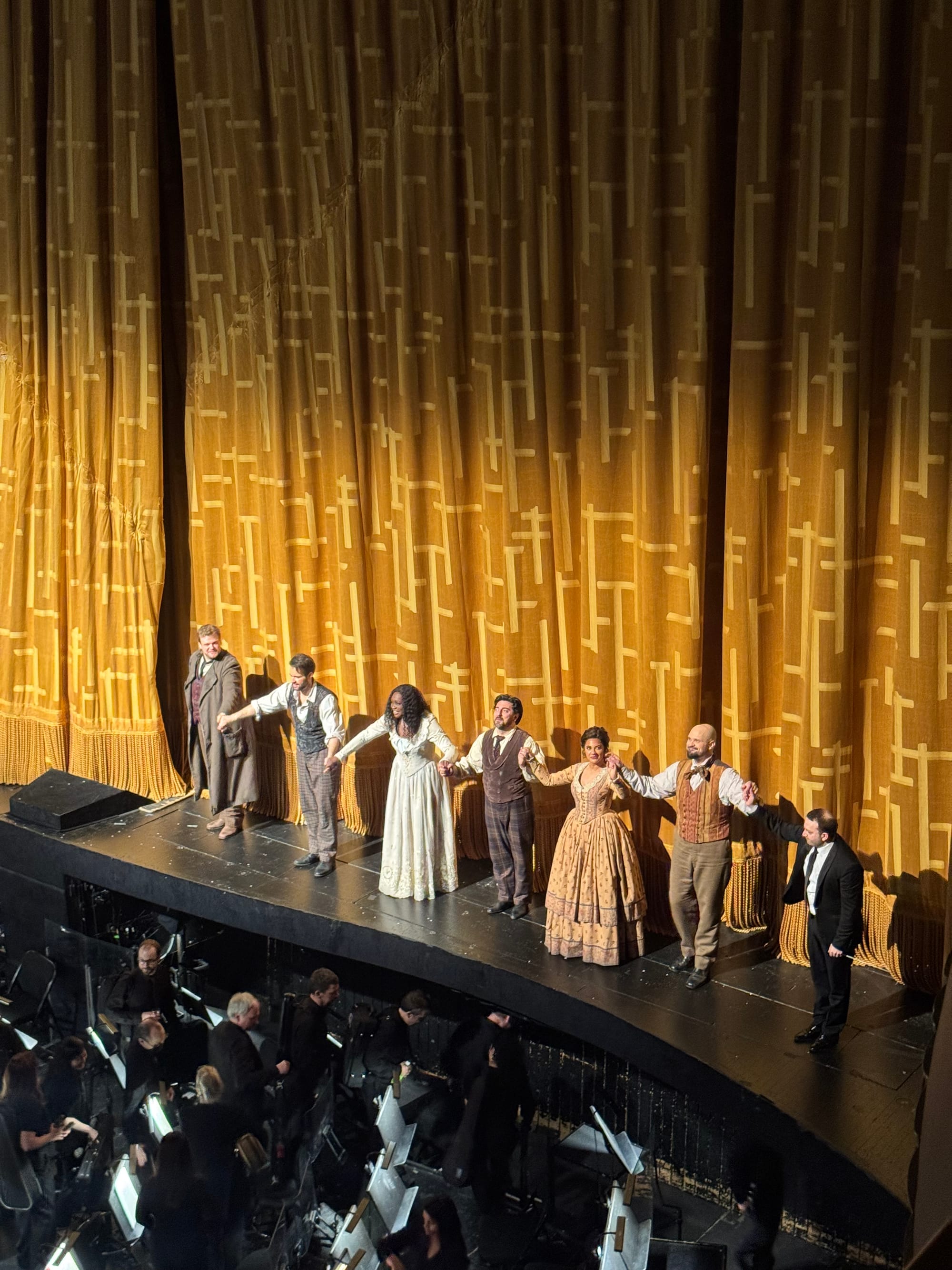
From our seats overlooking both stage and audience, the evening also taught me something about applause ettiquette. American opera audiences—or at least this one, on this night—applaud differently. There is scenic applause after almost every aria, which the conductor accommodates, laying down the baton to make room for it. The curtain at the Met is pulled upward at the sides in a wide, sweeping arc—beautiful enough to prompt applause of its own—and it closes on the music still playing, the last bars running under the rising crowd. I found this jarring at first, and then found myself wondering why I found it jarring: what exactly is the convention I was protecting? In Berlin, we (mostly) sit on our hands until the conductor signals permission. In New York, people seem to start when they feel it. Neither is obviously more correct, though one is certainly louder. (Where Berlin wins, though, is the enthusiasm after the show: multiple rounds of applause, standing ovations, many minutes of uninterrupted cheering. At the Met, a substantial part of the audience got up to leave as soon as the curtain closed.)
The audience was also simply more visibly delighted—chuckling at jokes, audibly engaged with the plot, treating the whole thing as something they were meant to be at, not observing from a respectful distance. Which is, I think, what an opera house should feel like. Whether that energy is more democratizing or more consuming of the art’s complexity is a question I preferred to left unanswered.
Act 3 and Its Libretto
Because I had the luxury of an empty seat beside me, I was able to put on English and Italian subtitles on the small individual monitors at each seat—something you currently cannot do in Berlin, where it is German and English and you are grateful for that. I was therefore reading the libretto more closely than usual, and therefore Act 3 hit differently this time. Not just because I was going through something myself, and not just because the friend I’d come with was too, and not just because we were both crying in a way that required some discreet tissue management—but because the actual text of that farewell is, when you read it in the original Italian, genuinely heartbreaking in its precision. Adio senza rancor. Farewell without resentment. Addio ai sogni d’amor. Farewell to the dreams of love. Mimì and Rodolfo are not breaking up because they stopped loving each other, they are breaking up because the circumstances of their lives are bigger than what they feel, and they know it. That is a remarkably modern thing to put in an opera from 1896. It is also, as it turns out, not a historically foreign experience.
On Gratitude and Scale
All this landed with particular force that night partly because of where we were. An opera house in a city with no structural obligation to have one—no constitutionally guaranteed federal cultural mandate, no billion-euro yearly budget for culture, no Stiftung Oper, no eighty opera houses distributed across the country like a public utility—and yet: nearly four thousand people, dressed up, fully present, devastated by a libretto from 1896. The man I spoke to on the bus afterward had been coming to the Met for forty years and was visibly startled to learn that Berlin has three full opera houses producing over 90 productions a season between them. The Met, by comparison, does around 20. He had no framework for what that meant, which is not a criticism of him; it is simply a fact about how unevenly this art form is distributed across the world, and how thoroughly that distribution shapes what any given audience thinks opera is or can be.
I have been, for years, quietly afraid that living anywhere other than a city like Berlin would mean giving opera up—that access to this particular density of work, at this level, at prices that remain broadly within reach, is not something you can replicate elsewhere. A week in New York has not entirely cured me of that fear, but it has loosened something. The Met, for all its conservatism—and it is conservative, emphatically so; the Tristan they just premiered was apparently their boldest move in years and was accordingly controversial—fills a house of four thousand people, regularly, with an audience of all ages and enormous enthusiasm. People came dressed to the nines; I saw silk gloves, floor-length dresses, black tie.
I therefore remain convinced: This art form is not dying. It is not even particularly ill. It is just differently alive in different places—and there is something quietly hopeful about seeing that in a city that has no reason, structurally or economically, to sustain it the way Germany does, and does so anyway. (Intermission Prosecco in a single-use plastic flute notwithstanding).

Cast - 27.04.2026
Conductor Roberto Kalb
Production Franco Zeffirelli
Set Franco Zeffirelli
Costumes Peter J. Hall
Lighting Gil Wechsler
Chorus Tilman Micheal
Mimì Angel Blue
Musetta Amina Edris
Marcello Davide Luciano
Benoit/Alcindoro Donald Maxwell
Shaunard Edward Parks
Rodolfo Adam Smith
Colline Alexandros Stavrakakis