Die Zauberflöte at.. Union Berlin?
I walked into a football stadium braced for confrontation, and came out converted. On community, belonging, and what opera might learn from Köpenick

This piece is my own reflection on taking part in the RBB project Mein Berlin, Dein Berlin, a radio series pairing Berliners from different corners of the city to spend a day inside each other's reality, ahead of the state election - produced by journalist Helena Daehler. The three-part radio series (in German) is linked at the end of this article.
"EMOTION STATT TELEFON"
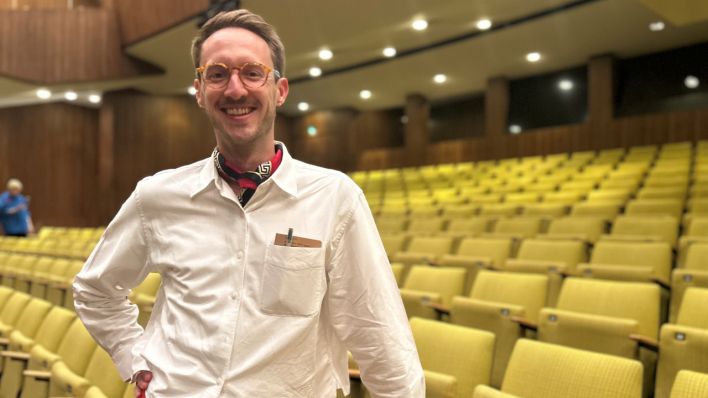
A few weeks ago, RBB - Radio Berlin Brandenburg, our public broadcaster - asked Deutsche Oper Berlin if they could recommend an opera fan for a radio series called Mein Berlin, Dein Berlin: Berliners from different bubbles, paired off to spend a day inside each other's reality, timed to go live ahead of the state election, in the spirit of the idea that a city this fractured into parallel lived experiences might benefit from occasionally pushing two of them together. Deutsche Oper thought of me; naturally I said yes - before fully understanding what I was saying yes to.
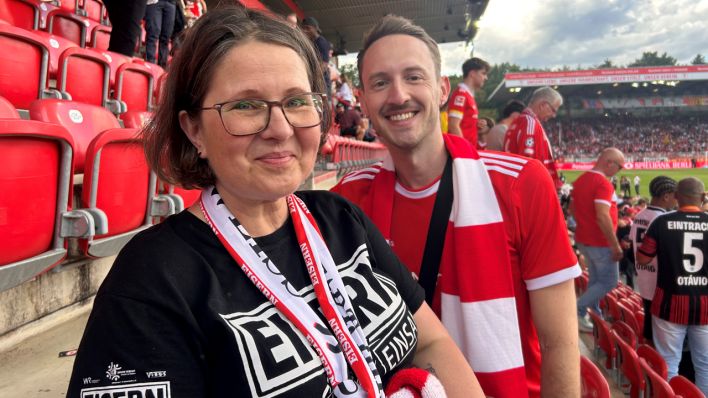
My counterpart was Bianca: an Union Berlin fan from Köpenick of more than twenty years, the kind of fan for whom the club isn't a hobby stacked on top of a life but something closer to the architecture of the life itself - she volunteers for the club, she’s known everywhere inside its perimeter, she is, I found, something like an institution unto herself. For her, Union is what opera is for me. I understood this quite quickly and, for reasons that will need a moment to unpack, still walked into our first meeting with something between curiosity and dread.
Two First Game Days
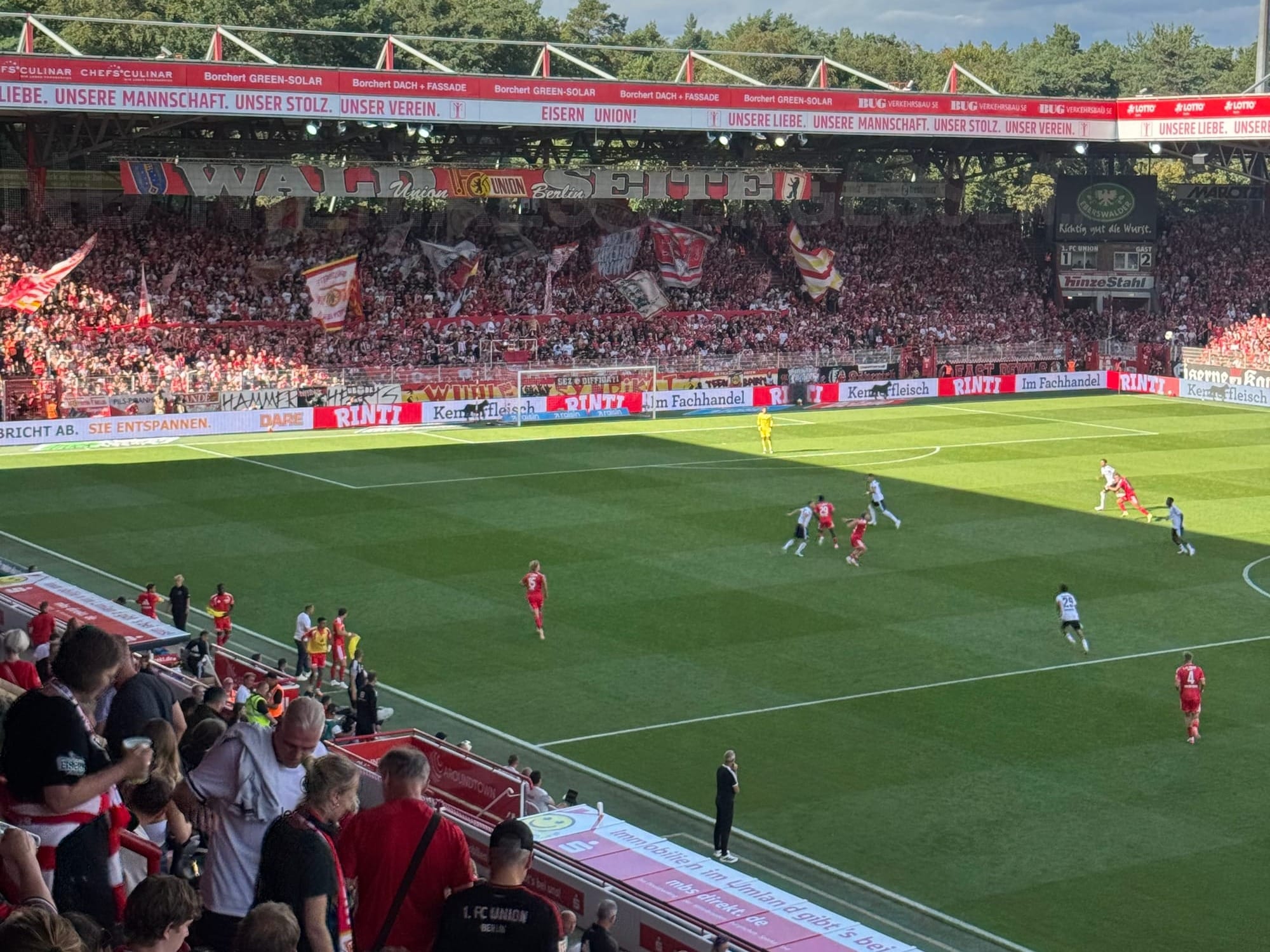
Football, for me, has never been a sport so much as a category of experience I've spent a lifetime opting out of: loud, overwhelmingly male (and straight), shot through with a strain of aggression that reads, more often than not, as toxic masculinity, and - depending on which headline you'd last read about which regional match - occasionally something closer to actually unsafe. I am not an athletic person and never was; I grew up gay in a culture that had already decided, long before I had things figured out myself, what kind of men belonged in a football stadium. So this was the version of football I carried into Alte Försterei on the first game day of the Bundesliga season - braced, more than anything, for confirmation.
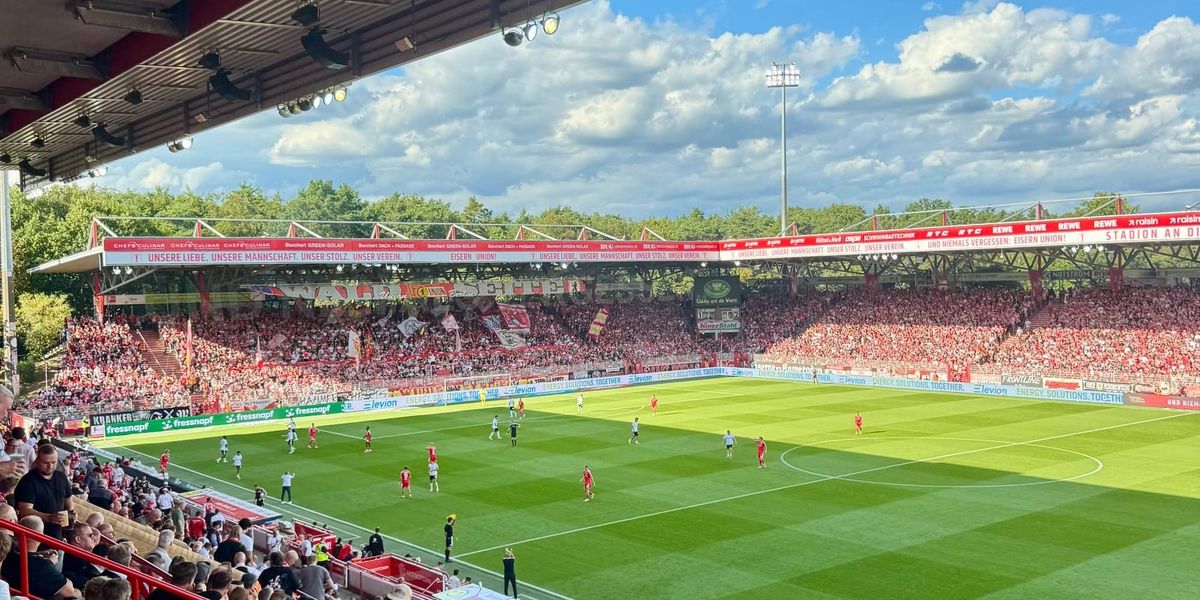
I got anything but. Even the game delivered: Union scored after three and a half minutes, Eintracht Frankfurt answered with three of their own in what Bianca assured me was an uncharacteristic collapse, and the match crawled back to a draw that had the 22,000 people around us - a stadium built, quite literally, by its own fans, in the forest at the edge of Köpenick - standing, shouting, and embracing total strangers.
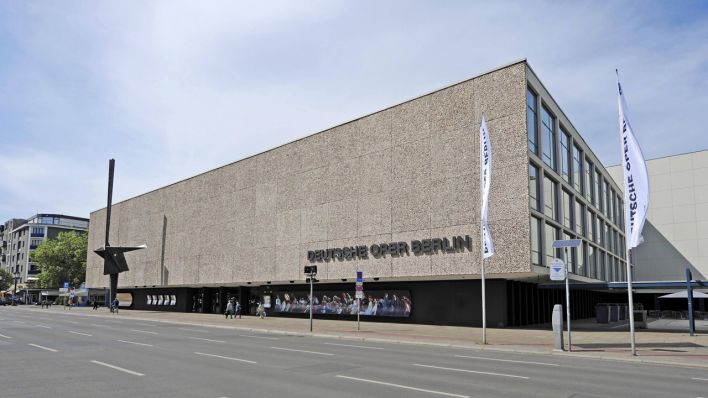
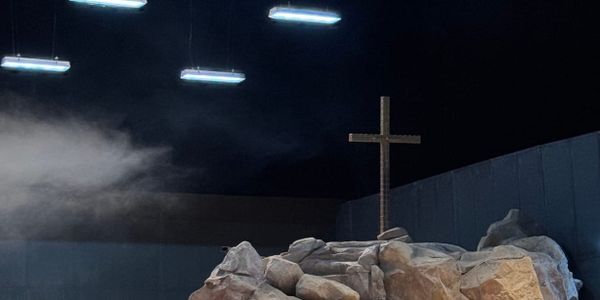
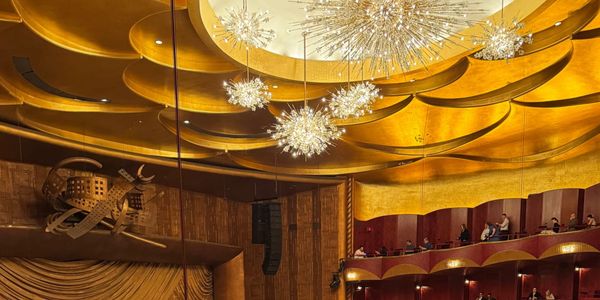
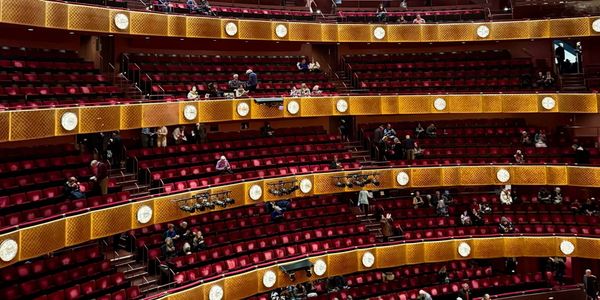
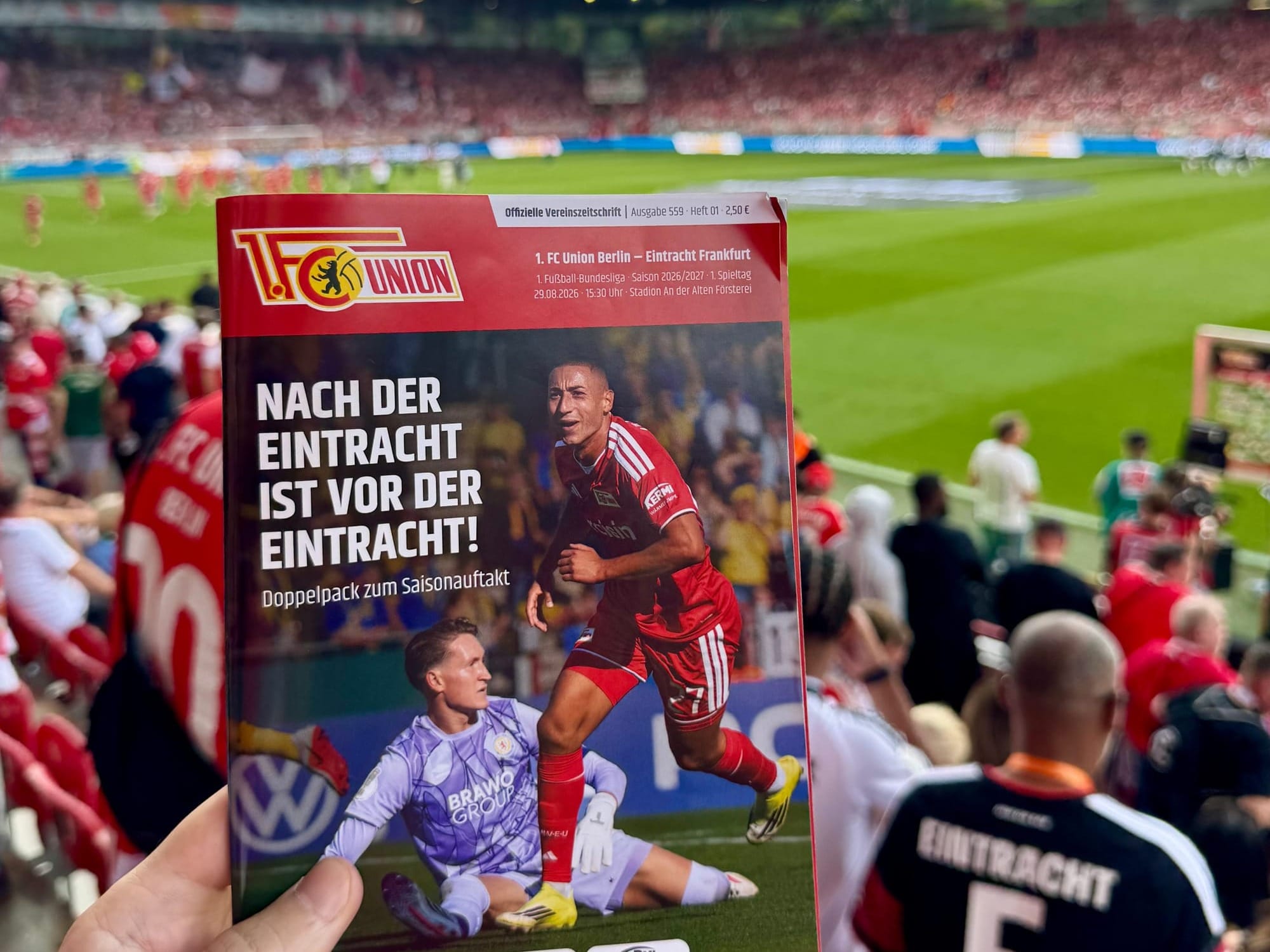
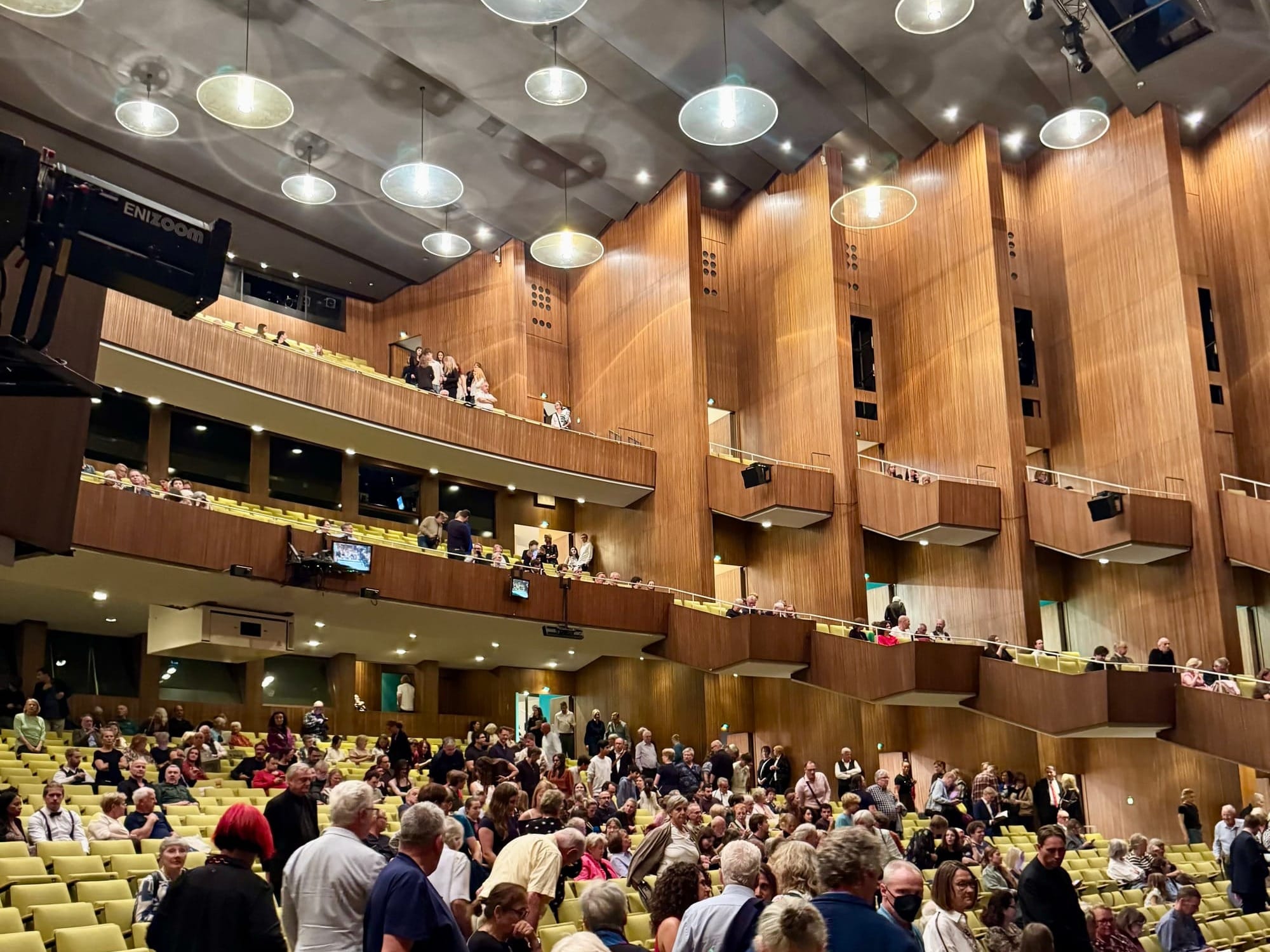
It was somewhere in that stadium that another thought started forming: football and opera, it turns out, are far more alike than I wanted to admit. Both hand you a program at the door. Both ask the audience, more or less, to put away phones - the Alte Försterei’s own version is Emotion statt Telefon. And both are, ultimately, a room full of people who've shown up for something collective, ephemeral, and irreducibly live - a thing that exists only for the ninety-odd minutes it's actually happening, and that no recording afterward can quite portray in the same way. And so a few days later, Bianca sat beside me at Deutsche Oper for the season-opening performance of Die Zauberflöte - her first opera, not ever, but in a long time. We'd already done this together, four days earlier, in a different uniform, cheering for a different kind of ensemble.
A Football Club, Beyond the Pitch
I should say, before I go further, that everything I say about opera in what follows comes from the seats, not from anywhere behind them. I have no real view into what conversations are already happening inside these institutions, what's been tried and quietly abandoned, what someone with Bianca's kind of vantage point - twenty years inside a place, not twenty years watching it from a ticket - would immediately correct me on. Bianca knows Union from the inside. I know opera only as a member of its audience, and that's a real limit on everything that follows. But I really care, more so every year, about the survival of the art form I do in a way belong to, and it is in that spirit - half admiration, half diagnosis - that I spent the entire afternoon thinking some version of the same sentence: opera has a great deal to learn from this football club.
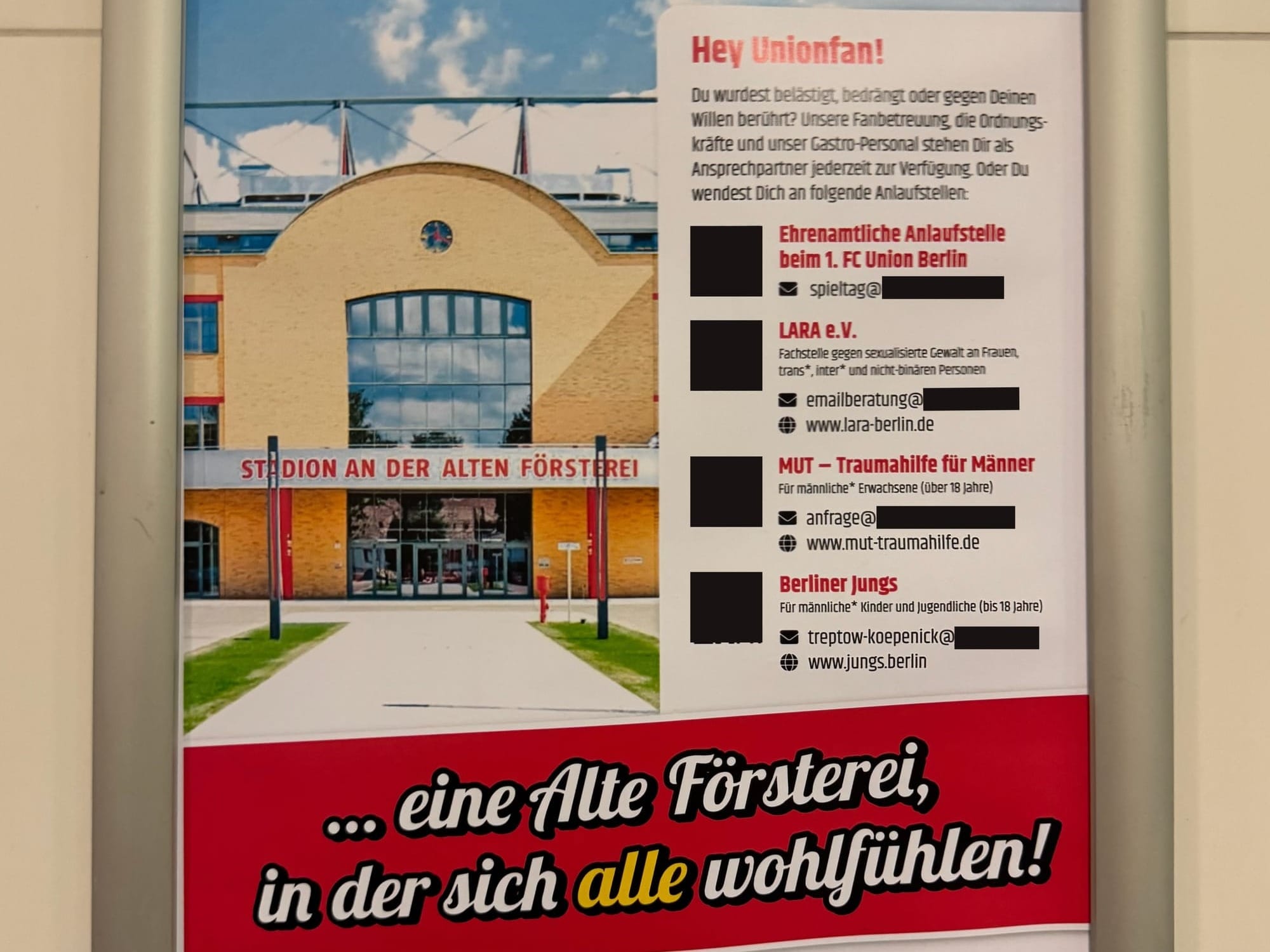
What struck me first was the sheer range of what the club considers its job. There is a separate entrance for women and children, added recently so they don't have to fight through the disproportionate crush of men that floods every other gate. There is a disability-access team, and a plan to lower the drink counters so that someone in a wheelchair can actually see the person pouring their beer - which, notably, now comes in a non-alcoholic version, introduced deliberately to widen who the stadium feels built for. There is a soup kitchen once a week for people in the neighborhood who can't afford groceries; there are support groups for substance abuse and for depression, queer meetups, family activities most weekends; even a night each December when the entire stadium fills not for a match, but to sing Christmas carols together for ninety minutes.
None of this is incidental, and none of it is soft-focus civic branding. The club's president has said plainly, repeatedly, that right-wing extremism has no place in football, and fan groups that drifted too close to it have been banned outright - a position that costs something to hold in the current political moment, and Union holds it anyway. Put together, this is not just a business that sells ninety minutes of athletic entertainment close to twenty times a season. It is closer to a piece of social infrastructure that happens to also field a football team, and the two facts about it - that it is beloved, and that it is useful in a hundred small daily ways that have nothing to do with goals scored - are not separate from each other.
Honestly, I don't think opera is there yet. Opera, as I've experienced it across three houses in this city, is a place where art is made, presented, and consumed, extraordinarily well and at real public expense - and where the relationship between the institution and the neighborhood around it more or less ends there. I'm not proposing Deutsche Oper open a soup kitchen, and I know a state-funded cultural institution isn't obligated to replicate the functions of a private football club. But the gap is real, and it's worth sitting with rather than rationalizing away.
Prime Real Estate, Only In the Evenings
Part of why I think about this so much is structural. Opera in Germany survives because it is subsidized, heavily, by the state - and I say this as someone who believes it should be: I don't think profit-oriented art works, and I don't think that's a controversial claim once you look at what happens when it's tested. American opera houses that have to cover their own costs end up doing one of two things: striking sponsorship arrangements with governments or corporations whose values might not align with those of the people working in the genre, or quietly sanding down the radicalness of their own programming to keep a paying, board-adjacent, donor-class audience comfortable - and to appeal to the widest mainstream audience possible. Public subsidy is what buys German opera the freedom to still occasionally be dangerous, and that’s a characteristic I don’t want it to lose.
But public subsidy also means these buildings belong, on paper, to everyone - and in practice, to almost no one for most of the week. Berlin has three opera houses, each of them beautiful, each of them sitting on some of the most central real estate the city has, and each of them mostly empty during the day, used for a few hours a couple of evenings a week. I think about the fact that when Deutsche Oper's original building went up in Charlottenburg roughly a hundred and ten years ago, it was civil society in that part of town that fundraised for it and built it - which means it was, at least for that generation and that specific demographic, something like a genuine local institution, the way Union still is in Köpenick today. That relationship has since dissolved. People come to Deutsche Oper now from every corner of Berlin and beyond; the people who actually live around the corner from it are, on any given night, not obviously more likely to be inside than anyone else.
There have been glimpses of another way. Deutsche Oper's most recent season-opening weekend opened the building for 72 hours - a costume parade, the chance to try on pieces from wardrobe, rehearsals open to the public, a rave staged on the actual stage with DJs prominent enough to pull in people who would never otherwise see that stage first-hand. It worked: people who had never been to the opera actually showed up. The harder question, the one nobody seems to have been able to answer yet, is what turns a single spectacular weekend into a habit - into the kind of return visit that eventually, ideally, becomes an actual ticket to an actual performance.
Football, Ahead of Opera?
Here is the part of the day that surprised me most, and it had nothing to do with football at all. Bianca and I compared notes, at some length, about walking into an unfamiliar space and not knowing whether we'd be welcome in it - both of us, in our own settings, admitted to a worry that went beyond simple awkwardness. At the stadium, that fear evaporated within the hour. Everyone we spoke to was kind, patient, glad to explain a rule I didn't know or a chant I couldn't follow. I felt, by the second half, like a full member of the crowd rather than a tolerated guest inside it.
I go to the opera one, two, sometimes three times a week, and I cannot say the same about how it treats people arriving for the first time. I've been told off, at volume, by a man seated next to me at an operetta for laughing too audibly and - his words - for being "too enthusiastic." I've arrived with a minute to spare, as one occasionally does, and had to ask a row of strangers to stand so I could reach my seat, and been met, more than once, with the weaponized patience of someone who wants you to know exactly how much you've inconvenienced them. I can absorb this because I'm a regular and I know the room belongs to me as much as it belongs to anyone. Someone arriving with a full-price ticket and novelty excitement might not have that armor. For them, one bad interaction with a stranger can set the mood for that whole evening.
Opera's audience is aging, and the usual prediction that follows - fewer of us now, fewer of us later - gets predominantly explained as a financial problem: opera is expensive, and expensive things don't recruit young audiences. That's not quite true, or at least not fully. Berlin already runs generous discount programs for students and for anyone under thirty - though nearly every person I've personally pointed toward one of these programs had never heard of it before I mentioned it, which makes me suspect the barrier isn't really the price.
A well-built marketing campaign that puts opera plainly next to a night out clubbing or a trip to the cinema, price for price, would probably still do real work - the gap is smaller than people assume, and nobody's making that case as strongly as it could be made. I think the deeper problem is cultural: opera is, not unfairly, understood as a hobby for people who are wealthier, older, and more conservative than the audience you'd find two neighborhoods over at the Berliner Ensemble - and an audience with that reputation does not, in my experience, go out of its way to make a newcomer feel like the room was built with them in mind.
The other half of it is that opera is deeply, unmistakably political, and largely declines to say so out loud. Every art form is; opera has centuries of practice smuggling contemporary argument through inherited music and plot, and some of the most striking productions on Berlin stages right now are doing exactly that - taking a centuries-old score and using it to say something pointed and current about the society sitting in the seats. A serious Regietheater staging of Die Frau ohne Schatten has more to say about where we are right now than some Marvel films do, and I don't think that's a controversial claim either once you've actually sat through such a performance. I just don't think opera houses say it about themselves nearly often enough, in the marketing, in the framing, in the invitation to a younger and more politically engaged generation that might actually show up if someone told them that what was waiting for them inside was highly relevant to their lived experiences. It's part of why I write on this blog at all - I want people who've never gone to understand that this art form is not a museum piece, but rather an essential part of social discourse.
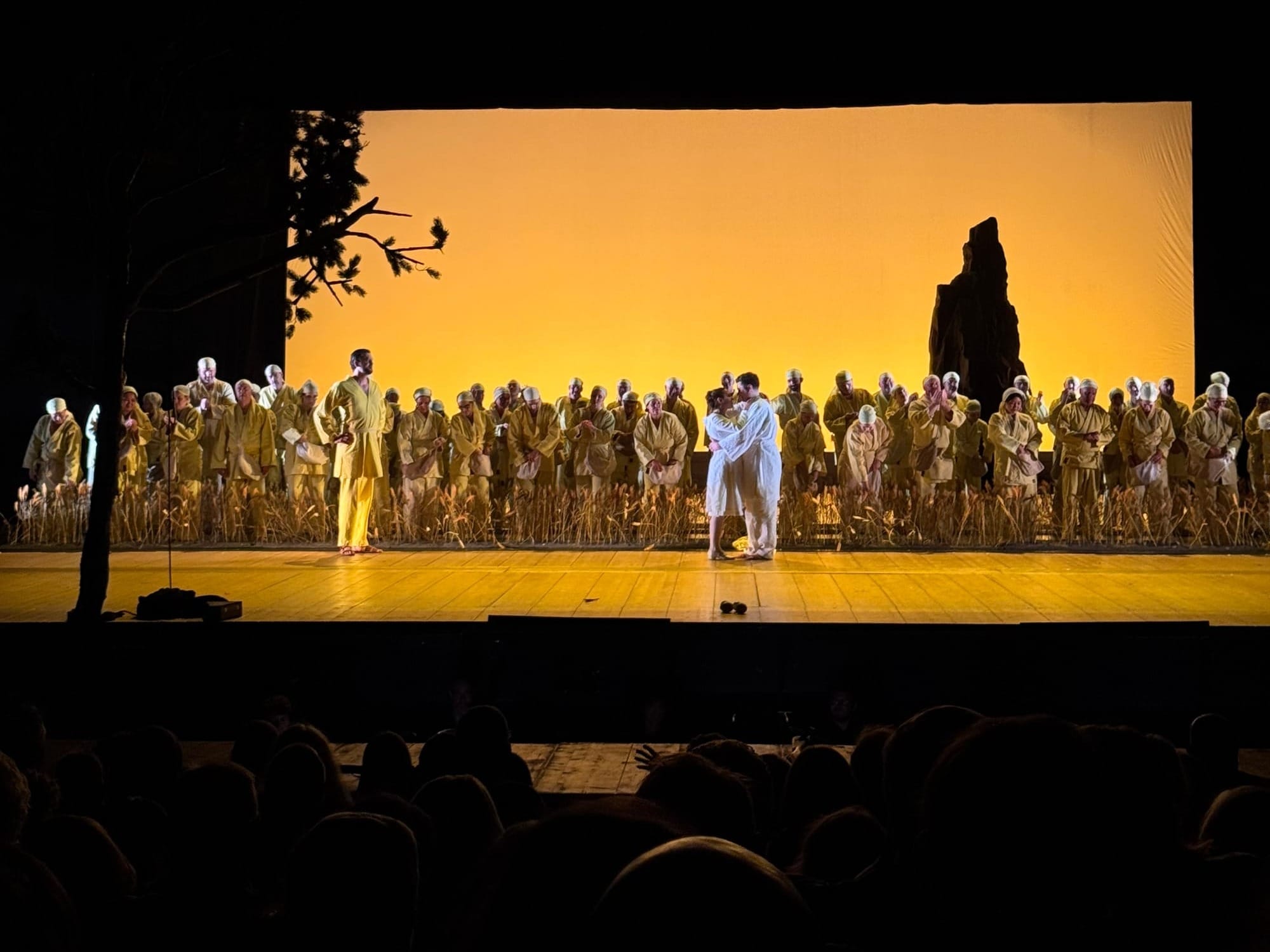
Über den Tellerrand hinaus
What I keep coming back to in the weeks since isn't so much a policy prescription. It's how firm my own expectations were going in - about football, about the culture around it, about what kind of space I was walking into - and how one afternoon at Alte Försterei completely took that image apart. If a single day can do that to this prejudice I'd been carrying around my whole life, then whatever the RBB set out to prove with this project, they proved it. Bianca and I both went into it open to the other's world, and we came out the other side with real respect for it - she enjoyed Die Zauberflöte more than she expected going in, and I'd go back to Köpenick tomorrow for another game. That's not a small outcome for a public broadcaster to engineer out of a radio segment, and it deserves to be said plainly: this was a phenomenal piece of programming.
If I take one thing from the day for the genre I actually write about, it's less about any specific fix and more about where opera houses look for inspiration in the first place. When German opera thinks about modernizing, the instinct is likely to look at other opera houses - Vienna, London, Paris, wherever the next interesting production is coming from - rather than at other kinds of institutions entirely, ones built on a completely different model but wrestling with the same tightening budgets and the same question of who actually walks through the door. Union didn't become this open and this resourceful because it had money to spare; if anything, it's the opposite kind of institution, one that built its own home by hand because it had to. I'd love to see opera houses take that lesson more literally - not to copy football necessarily, but to look beyond their own genre for what's already working nearby, rather than only ever comparing notes with each other. It worked, at least, for Bianca and me - and that's already something.