Lady Macbeth of Mtsensk at Komische Oper Berlin
A concrete hellscape, a cycle of violence, and the particular genius of a piece that got its composer exiled.

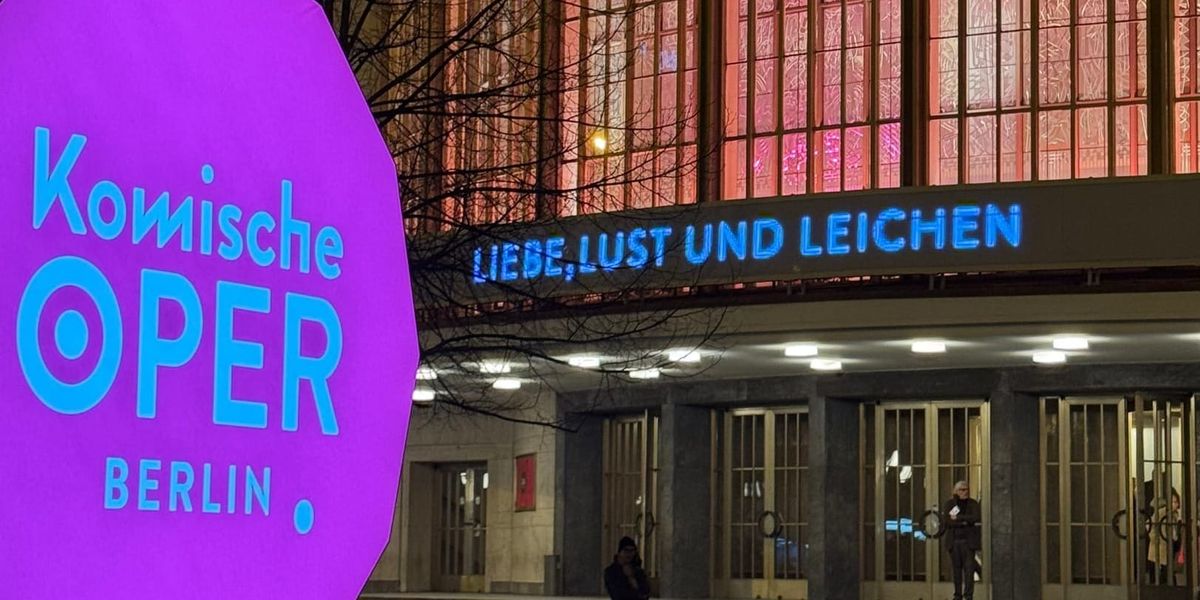
Posting this as part of my retrospective of the previous opera season in Berlin. This one is a piece that definitely needed some time to settle, but it's also one that's worth taking the time to dive into, even half a year later.
🎭 Lady MacBeth of Mtsensk
🎶 Dmitry Shostakovich, 1934
💭 Barrie Kosky, 2026
🏛️ Komische Oper Berlin
🗓️ 14.03.2026
More Russian Suffering
There is a running joke between me and my closest opera companion, herself from Saint Petersburg, about the nature of Russian art, which is to say, about suffering. Not suffering as a motif or a theme or a subject, but suffering as the medium itself: the material from which Russian opera, ballet, and literature are all made. The idea arrived via Kirill Serebrennikov, who once suggested in a Staatsballett program interview that Russian history is fundamentally an endless, cyclical history of suffering. We found this hilarious, in the way you can only find something hilarious when it is also completely relatable.
This context is necessary for Lady Macbeth of Mtsensk, because the curtain opens and the suffering is pre-programmed. You know, before a single note sounds, that you are in for it. My friend and I have been, almost paradoxically giddy, collecting these experiences - Boris Godunov and The Maid of Orleans in Amsterdam, Jewgeni Onegin at Komische Oper, Chowantschina at the Staatsoper, Nurejew by the Staatsballett, and now this. In each case the question is less whether someone will die horribly and more in what order and how thoroughly their happiness will have been dismantled first. Lady Macbeth is a perfect candidate. It might, in fact, be the apotheosis.
Musical Chaos
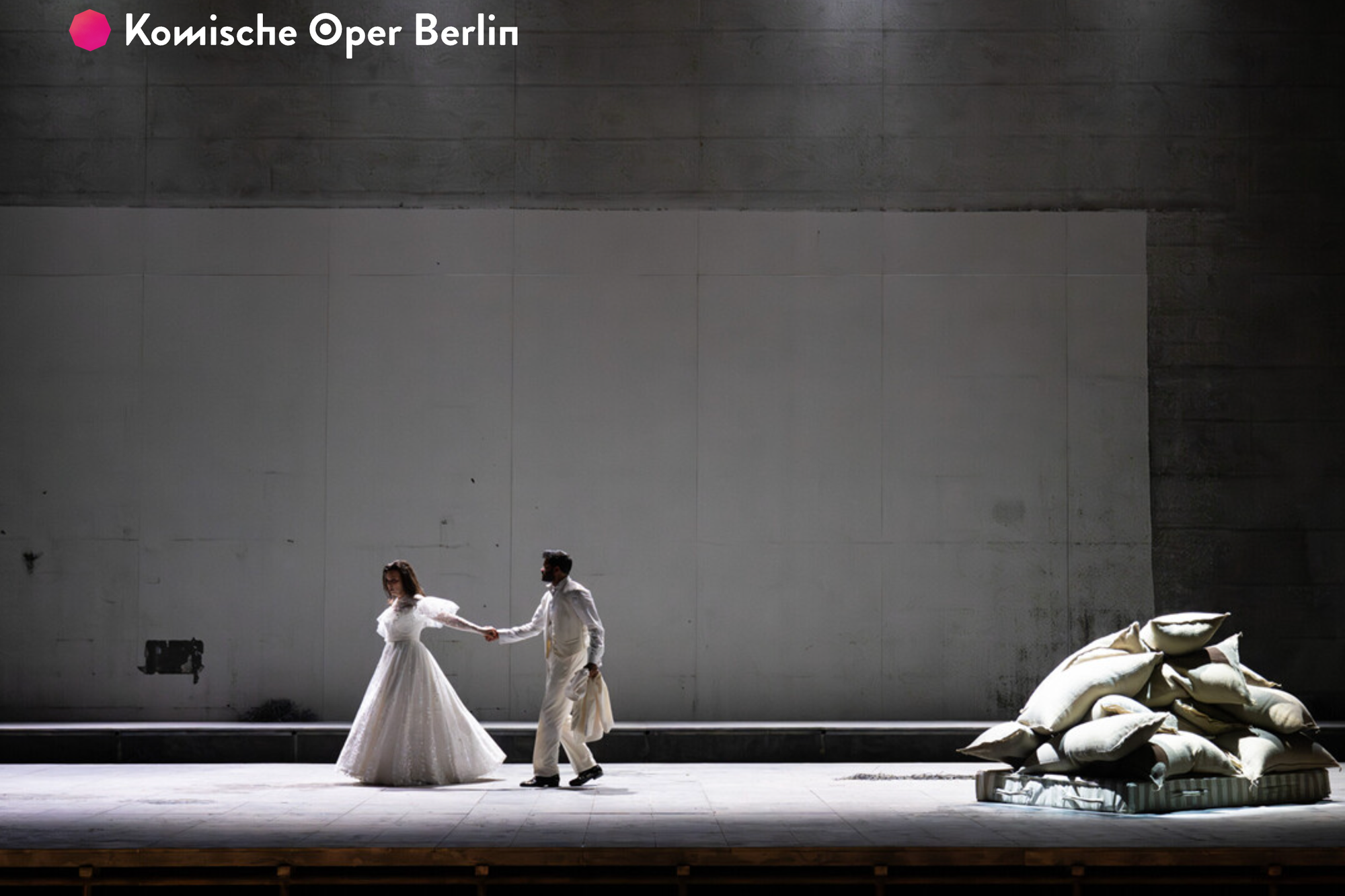
The opera premiered in January 1934 in Leningrad and Moscow, and for roughly two years - by the standards of institutional acclaim - it was something of a triumph. Then, in January 1936, Stalin attended a performance at the Bolshoi. Days later, Pravda published a review under no byline, denouncing the opera. Its title: Chaos instead of music. The authorship was never confirmed, but the directive was clear enough. Shostakovich was exiled; the work was banned; the composer revised it in 1962, softening its edges, before the original version was eventually revived after his death. What we saw at the Komische Oper was the radical original - the one that had been too much, too direct, too willing.
It is worth pausing on this, because the banning of Lady Macbeth has become so thoroughly absorbed into the Shostakovich narrative that it can start to feel like literary biography rather than political event. But the piece itself makes it legible again. A composer who writes music that is described, in the state press, as music that grunts, moans, pants, is a composer doing something deliberately unsettling with the relationship between sound and body. It's the same quality that earned the piece the label pornophony from a New York reviewer: the score does not maintain a polite distance from its subject matter. The sex scenes are - and I wrote this in my notes at the time - eerily hilarious, because contemporary sensibilities have caught up (and then some), and so the music's insistence on representing the physical is now closer to comedy than scandal. But that it once cost someone their career and freedom is also clear, if you let yourself sit with it.
A Provincial Fate
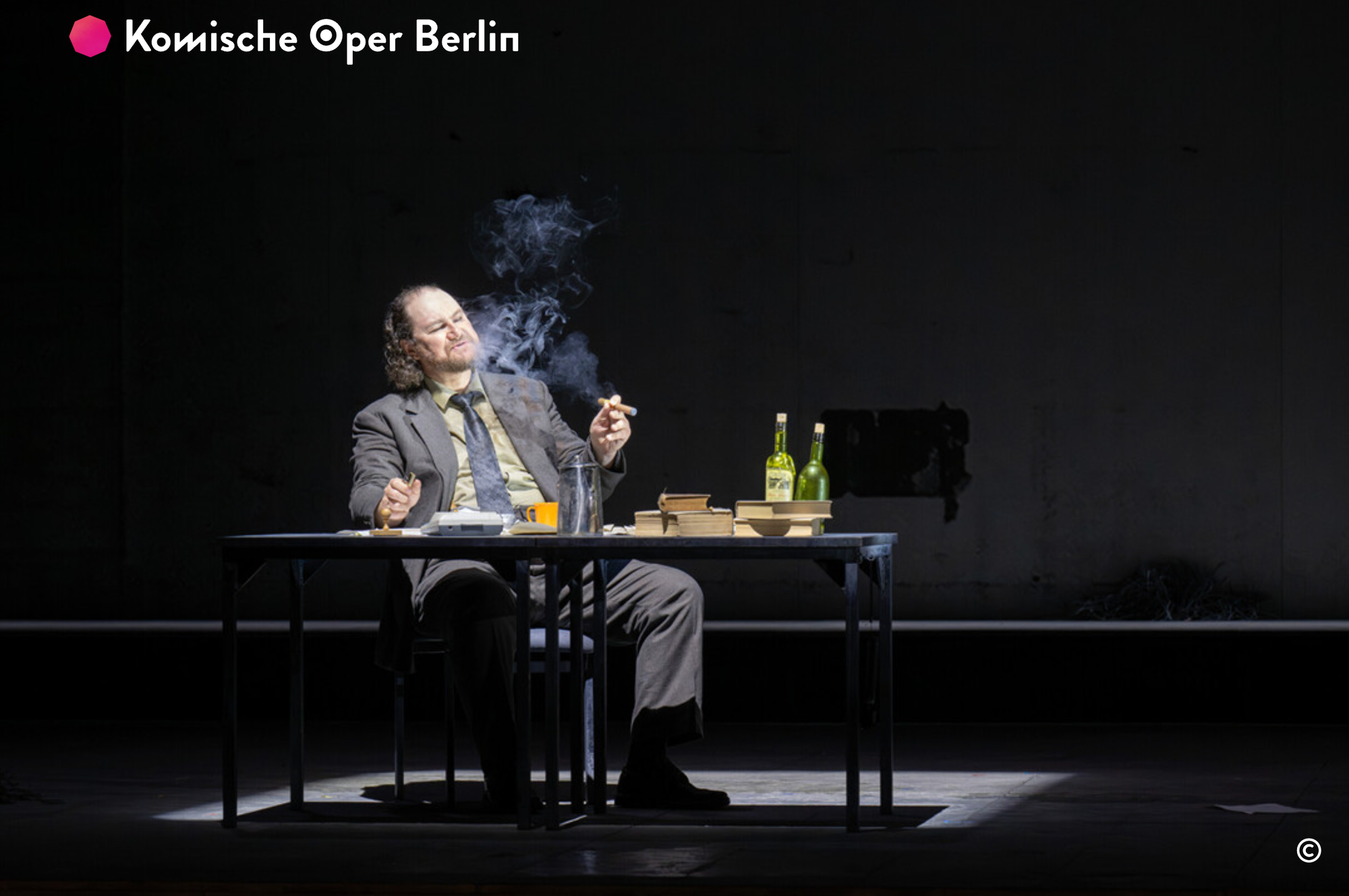
Barry Kosky's production does not tell you where or when you are. The stage is a blank concrete hellscape, oppressive in its blankness, ageographic, achronistic. It could be a factory in mid-century Russia or a residential block anywhere in the post-industrial world; the point seems to be precisely that it cannot be pinned. The first scene plays out in an oppressive summer heat, everyone sweating and slack, the kind of day where movement feels like a defeat.
Into this environment: Katerina. She has been married into a merchant family, to a husband I can only describe as of the mediocre type - which is a phenomenon anyone who has encountered a certain kind of couple will recognize, where an extraordinary woman stands next to a man whose greatest achievement is being present. She sings, early on, that she is bored, bored and unhappy, and so the mood is established.
This struck me with some personal force. I grew up as a gay teenager in a small village in the Black Forest, which is not a good place to grow up as a gay teenager—and I have spent the twenty years since then emphatically and without regret becoming a City Boy™. There is a particular texture to boredom in the countryside, a quality that goes beyond simply having nothing to do: it is the boredom of a self that cannot be expressed in the space available. Katerina longs for affection - for tenderness, for contact, for someone to want her rather than merely require her. Her husband cannot give her this, and neither can her environment. And then Sergey arrives.
In this production, Sergey is tall, handsome and pretty - well-cast in the sense of being quite undeniably physically compelling. He is also, in the terms the piece gives us, a provincial scumbag, an Andrew Tate type in a wife beater, the kind of man who treats women as category rather than person. The first thing he does before he has even properly registered Katerina's interest in him, is violently assault and rape Aksinja, one of the workers, in front of the other men, who cheerfully assist. I have rarely seen anything on an opera stage handled as viscerally as this scene. There is nothing stylized about it. The banality of what is being depicted - something that happens, in one form or another, in rooms full of bored, lonely men all over the world, all the time - sits fully in the room.
Katerina is on stage when it happens - and she does not intervene.
All Bad People?
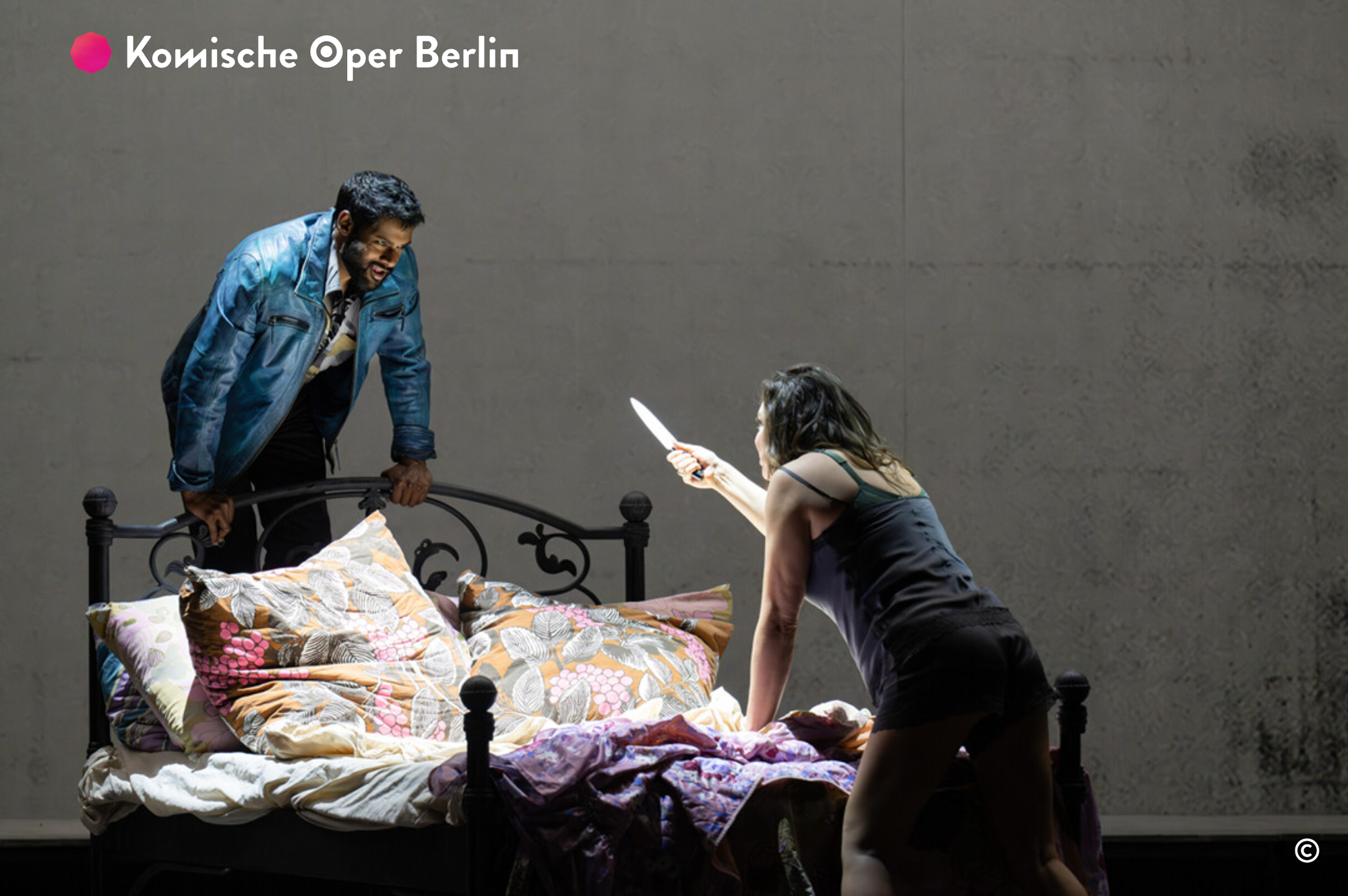
This is the real subject of Lady Macbeth, and the thing that makes it quite uncomfortable to sit with: everyone here is, in some measure, terrible. The libretto does not sort its characters into victims and villains - or rather, it lets the same person be both, sometimes in consecutive scenes. Kosky noted in the program that Boris is a sadist and sociopath; Sergei is an opportunist; the men around them are lonely in the specific way that unexamined, isolated masculinity produces loneliness. But so is Katerina - the person for whom we feel the most, whose circumstances are genuinely unjust, whose body and imagination have been confined to a life she didn't choose - and Katerina watches a woman get assaulted and then sleeps with the man who did it. This is not a random decision, and the opera does not let us forget it.
What follows is a murder spree with the formal logic of inevitability: the husband discovered and killed, the father-in-law poisoned (mushroom soup - a nice domestic touch), the evidence buried, Sergei eventually losing interest. A drunk snitch with a bottle of vodka and no fixed dignity serves as something between comic relief and memento mori - he appears in musical interludes, on his own, dropping his trousers in a corner, the representative of a world that sees everything and understands nothing. The priest arrives at the funeral drunk and in his underwear. The police are outraged, in a scene of low bureaucratic comedy, not that a murder occurred, but that they weren't invited to the wedding party. A political prisoner - accused of something involving a frog, the specifics of which I have already half-forgotten - is shot in the head as a kind of side event. The state reserves the right to violence, and exercises it on whoever is convenient.
The guilt accumulates in the way that guilt operates when it's not being processed - not linearly, not as a building weight, but as a repetition, a loop. The father-in-law returns as a ghost. Don't fear the dead; fear the living. The cycle turns.
The Price of It All
The final scene is set in a labor camp - or rather, in the procession toward one. Katerina and Sergei have been sentenced. She is still in love with him; he has already moved on. He wants Sonietka - not out of any particular feeling, but because she is new, and because Katerina is available, which is no longer interesting (we've all been there). Sonietka wants something too: her feet are cold, and she needs socks. Sergei talks Katerina into giving up her socks and then hands them to Sonietka like a trophy.
Katerina strangling Sonietka is one of the piece's cleaner moments of dramatic logic: the violence she once witnessed and declined to interrupt has now become hers to perform. The wheel completes itself. Then Katerina takes a gun from one of the guards, puts it in her mouth, and the opera ends.
The water in this lake, she sings, is as black as my conscience. In the original story she drowns herself; in this production the production updates the method without changing the meaning. Either way, the point is that guilt has become indistinguishable from the self, and the self cannot continue.
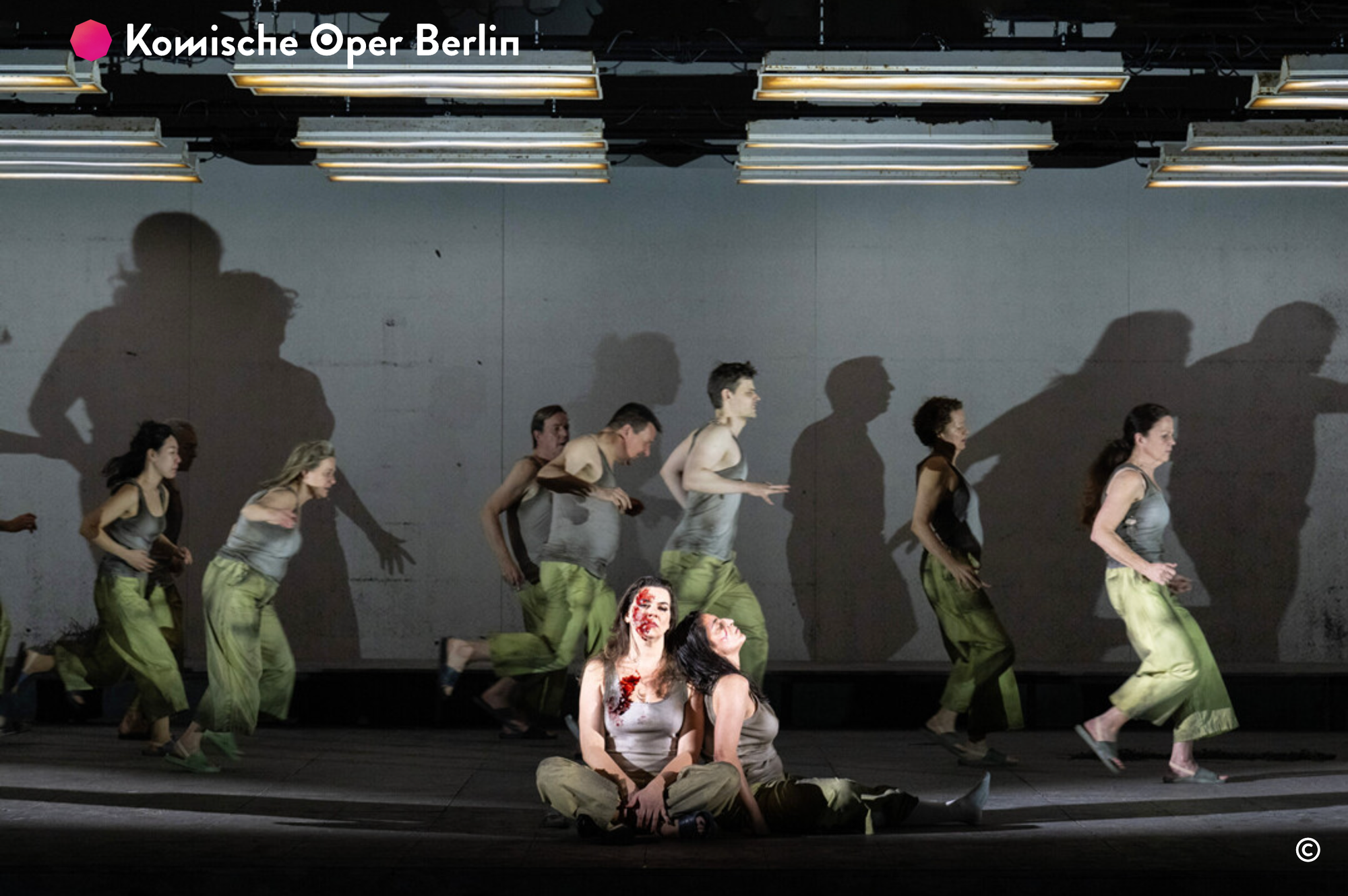
What Remains
I left thinking about the ways the piece operates simultaneously as several different things: a portrait of a specific woman in a specific environment; a sociological study of how constraint produces violence; a political act against a state that was, at the time of its composition, already beginning to require cultural conformity; and - perhaps most uncomfortably - a comedy. Not a comedy that undercuts the tragedy but one that runs alongside it, the kind of satirical grotesque that exaggerates until the thing you are looking at becomes visible in a new way: The drunk priest; the pissing snitch; the police enraged about a party invitation while a body rots in a cellar. Shostakovich understood that horror and absurdity can occupy the same space.
The concrete hellscape is anywhere because the argument is universal: environments that cannot contain you will eventually be destroyed by you, or destroy you first. I managed to escape my village in time; Katerina wasn't so lucky. Shostakovich understood this, and so does Kosky's production, which gives us no one to root for and no clean exit - only the wheel of suffering, turning.
 Komische Oper Berlin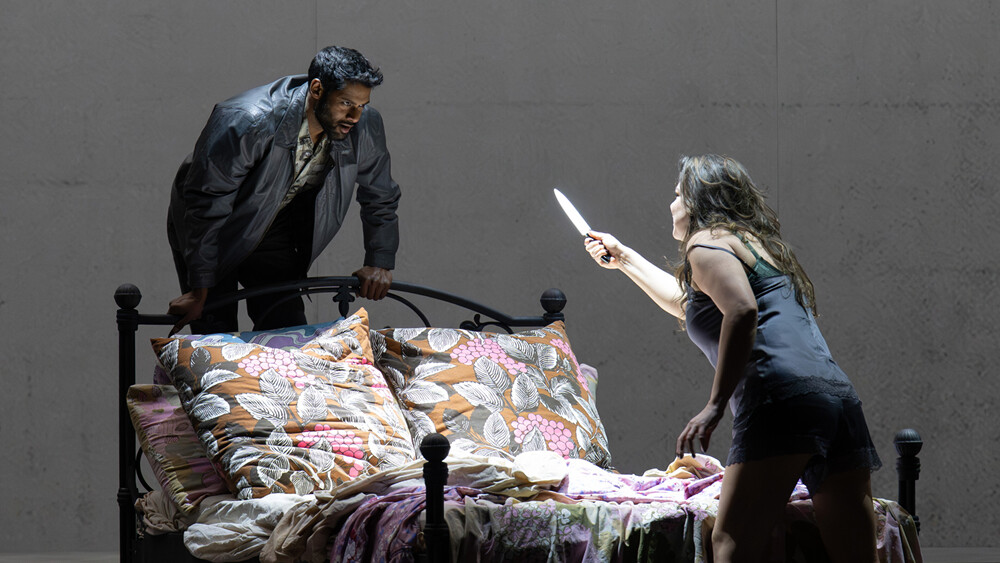
Cast - 14.03.2026
Musikalische Leitung James Gaffigan
Inszenierung Barrie Kosky
Bühnenbild Rufus Didwiszus
Kostüme Victoria Behr
Dramaturgie Daniel Andrés Eberhard
Chöre David Cavelius
Licht Olaf Freese
Boris Timofejewitsch Ismailow / Geist des Boris Dmitry Ulyanov
Sinowi Borissowitsch Ismailow Elmar Gilbertsson
Katerina Lwowna Ismailowa Ambur Braid
Sergej Sean Panikkar
Aksinja Mirka Wagner
Der Schäbige Caspar Krieger
Pope Dimitry Ivashchenko
Polizeichef Marcell Bakonyi
Sonjetka Susan Zarrabi
Alter Zwangsarbeiter Stephen Bronk
Hausknecht Junoh Lee
Zwangsarbeiterin Elisa Maayeshi
Lehrer Thoma Jaron-Wutz
1. Vorabeiter / Kutscher Volker Herden/Yauci Yanes Ortega
2. Vorarbeiter Matthias Spenke/Taiki Miyashita
3. Vorarbeiter Philipp Schreyer/Carsten Lau
Verwalter / Wächter Ezra Jung/Simon Wallfisch
Polizist Philipp Schreyer/Carsten Lau
Bote Philipp Schreyer/Simon Wallfisch
Chor Chorsolisten der Komischen Oper Berlin
Orchester Orchester der Komischen Oper Berlin
Komparserie