Wunderkammer by Staatsballett Berlin and Marcos Morau
A hypnotic descent into Berlin’s queer club culture—where wonder carries the weight of otherness, and belonging is never guaranteed.
🎭 Wunderkammer
🩰 Staatsballett Berlin
🕺 Marcos Morau, 2024
🎶 Clara Aguilar, Ben Meerwein
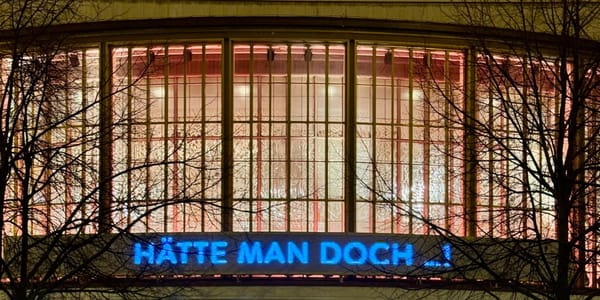
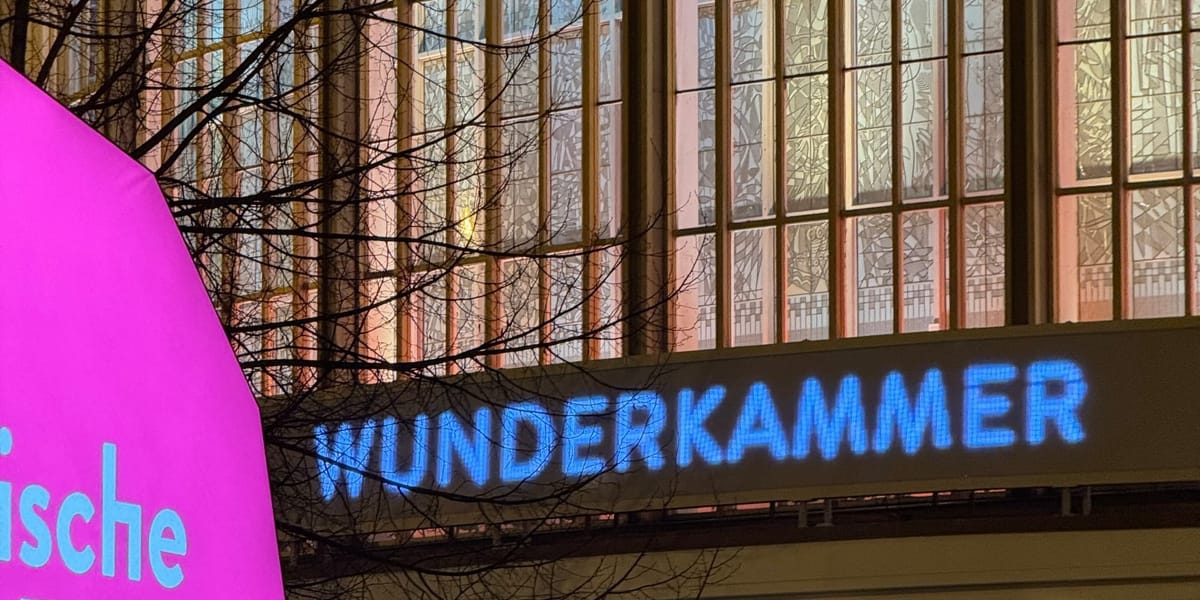
🏛️ Komische Oper Berlin im Schillertheater
🗓️ 14.11.2025
“OH DARKNESS, YOU EMBRACE US TO ERASE US.”
There’s a particular quality to Berlin nights—a sense that the city operates on its own frequency, where pleasure and danger, liberation and loss, exist in perpetual conversation. Marcos Morau’s Wunderkammer doesn’t just reference this legacy; it stages a séance with it. Over seventy minutes, the Spanish choreographer crafts a chamber of wonders that feels less like a celebration and more like an excavation—unearthing the layers of Berlin’s club culture, its queer epicenter, its cycles of flourishing and erasure.
The title itself is telling. A Wunderkammer, or cabinet of curiosities, traditionally housed objects deemed strange, rare, exotic—things that provoked wonder precisely because they defied categorization. But as Morau suggests throughout this piece, wonder isn’t always benign. It can mean spectacle. It can mean otherness. It can mean: you don’t belong here, but we’ll stare anyway.
A Smoke-Filled Time Machine
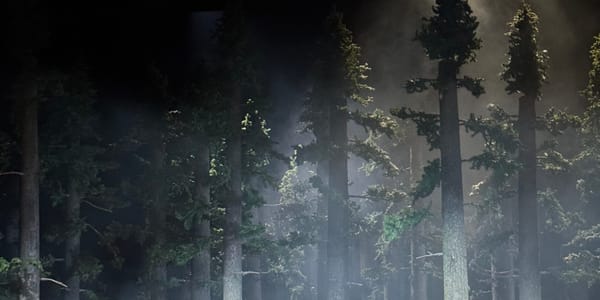
The production announces its visual language immediately: darkness, smoke, shadow. We open in something resembling a post-apocalyptic landscape, though it quickly becomes clear we’re not watching the future—we’re watching memory. Berlin’s club culture, from the jazz-soaked cabarets of the 1920s to the pulsing techno temples of today, becomes the production’s conceptual spine. The music, composed specifically for this work, mirrors that chronology: jazz melts into ragtime, ragtime gives way to techno. The progression isn’t linear so much as cyclical, a reminder that Berlin has always been this—a crucible of hedonism and resistance, repeatedly destroyed and rebuilt.
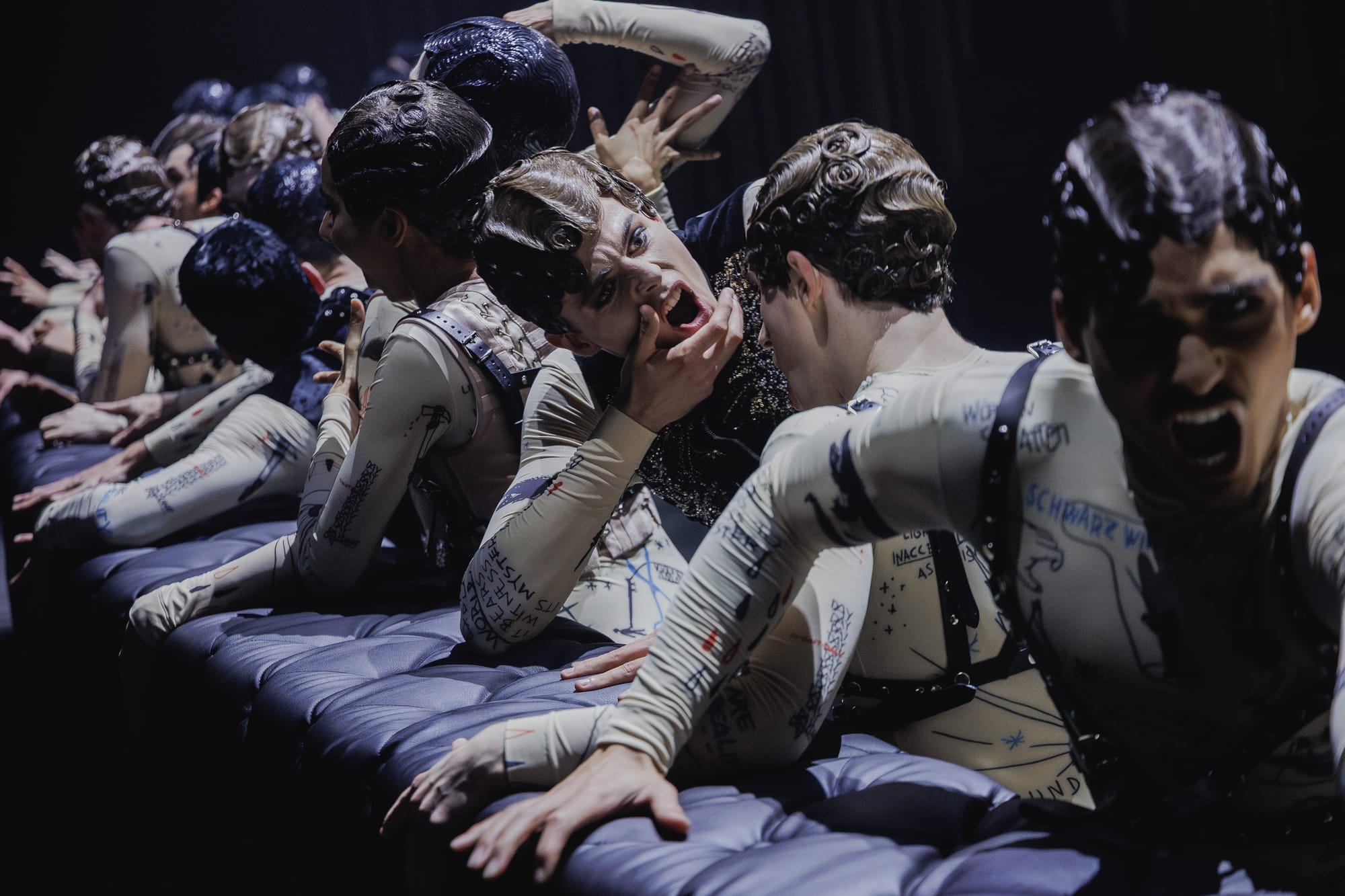
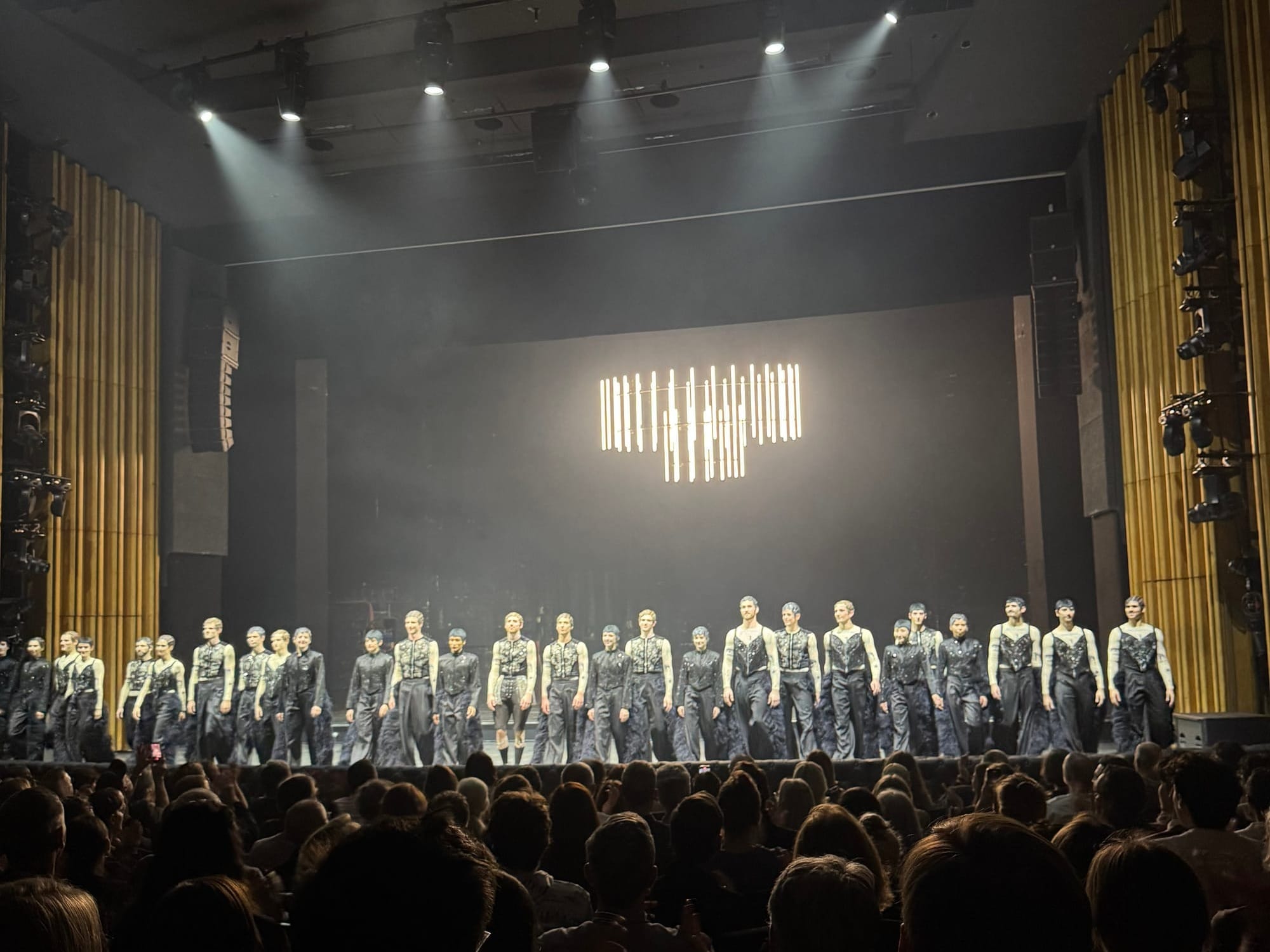
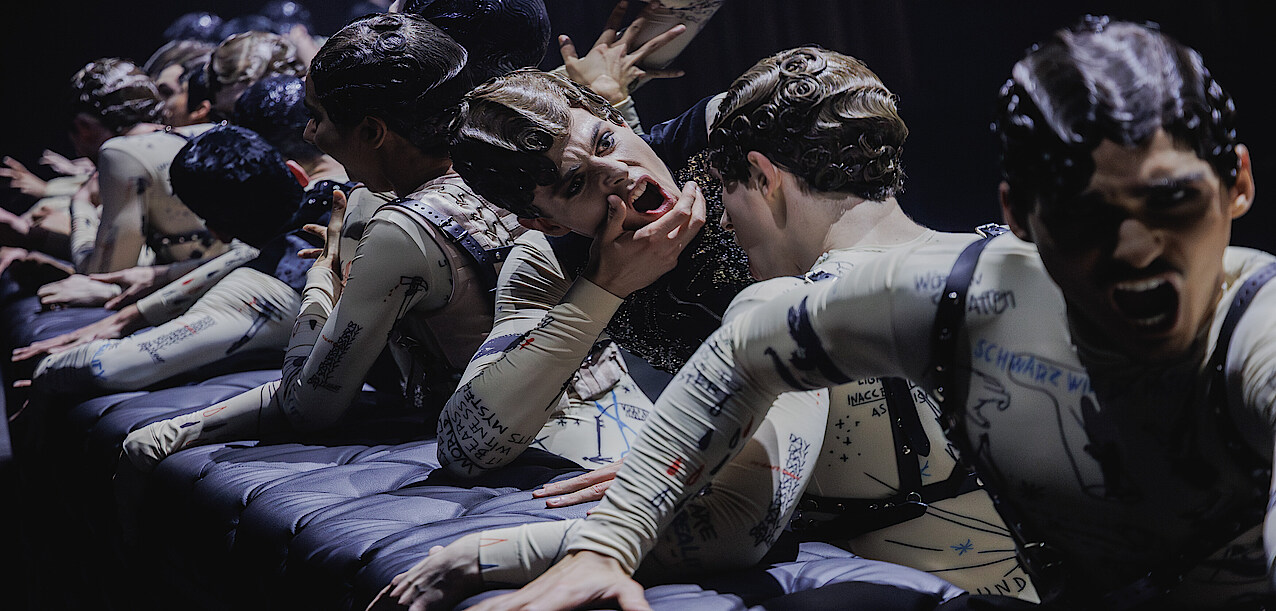
Aesthetically, Wunderkammer is rooted in Weimar-era queer Berlin: slicked hair, expressive faces, the glossy theatricality of bodies that know they’re being watched. But Morau refuses nostalgia; instead, he leans into estrangement. The dancers move with unsettling precision, their bodies contorted in ways that feel just shy of human. They walk on the insides of their feet, creating a gait that’s viscerally wrong, like watching marionettes cut loose from their strings. It’s uncanny in the truest sense—familiar enough to recognize, alien enough to unsettle.
The Accordion as Oracle
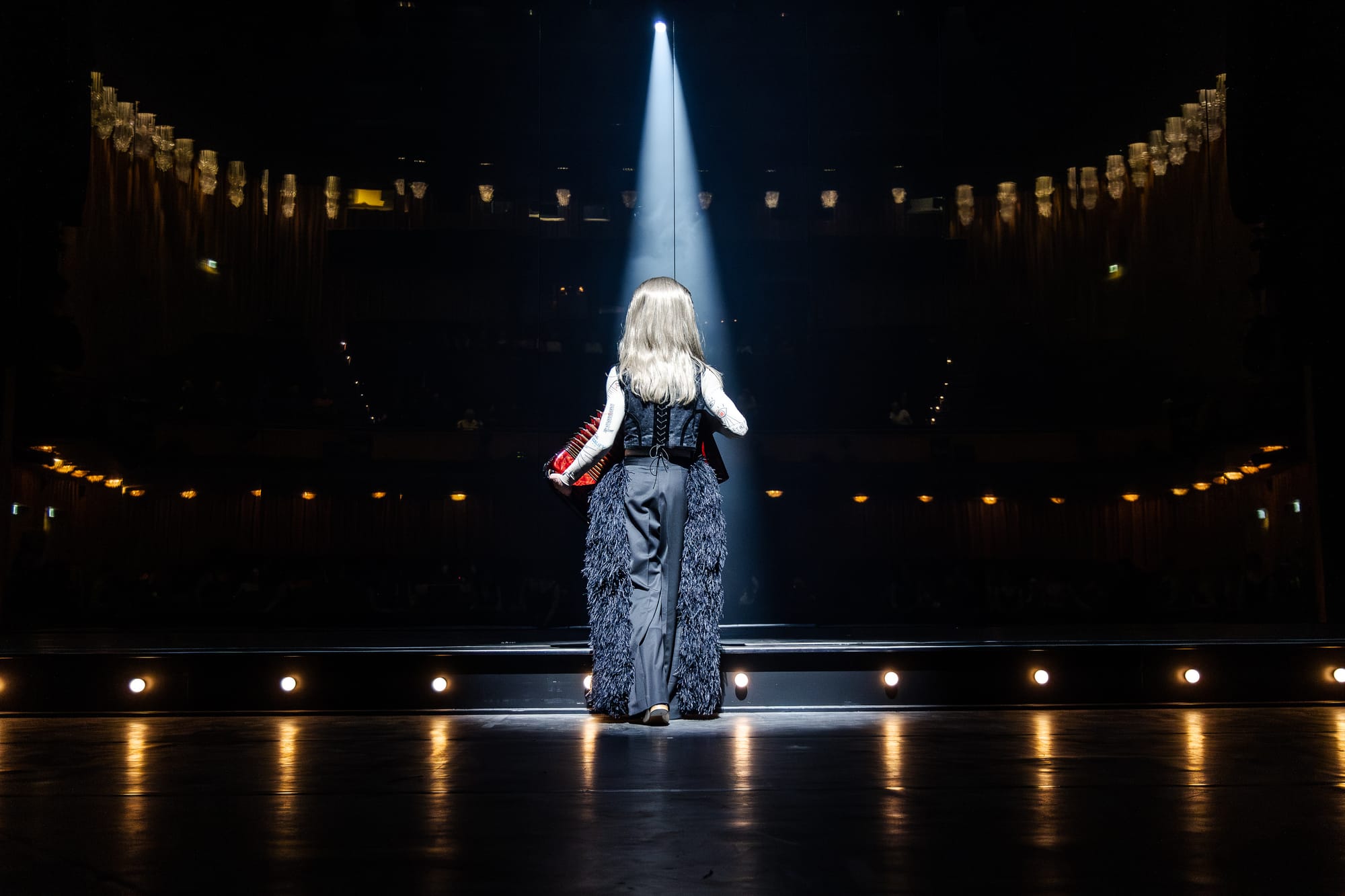
Threading through the entire piece is a figure with an accordion—a lone instrumentalist who seems both shepherd and outsider. At first, he appears to herd the dancers, moving them with his music like a conductor with invisible strings. But the dynamic shifts. Is he controlling them, or are they trapped by his presence? Music here isn’t just accompaniment; it’s coercion. The dancers don’t perform to it—they’re governed by it.
This figure becomes increasingly uncertain as the piece progresses. By the end, he’s not leading but fleeing, pursued by the very group he once seemed to guide. The ambiguity is deliberate: is this about artistic control? Social conformity? The mob mentality that can turn on anyone deemed too different? Morau never resolves it, and that refusal feels like the point.
Light, Shadow, and the Physics of Belonging
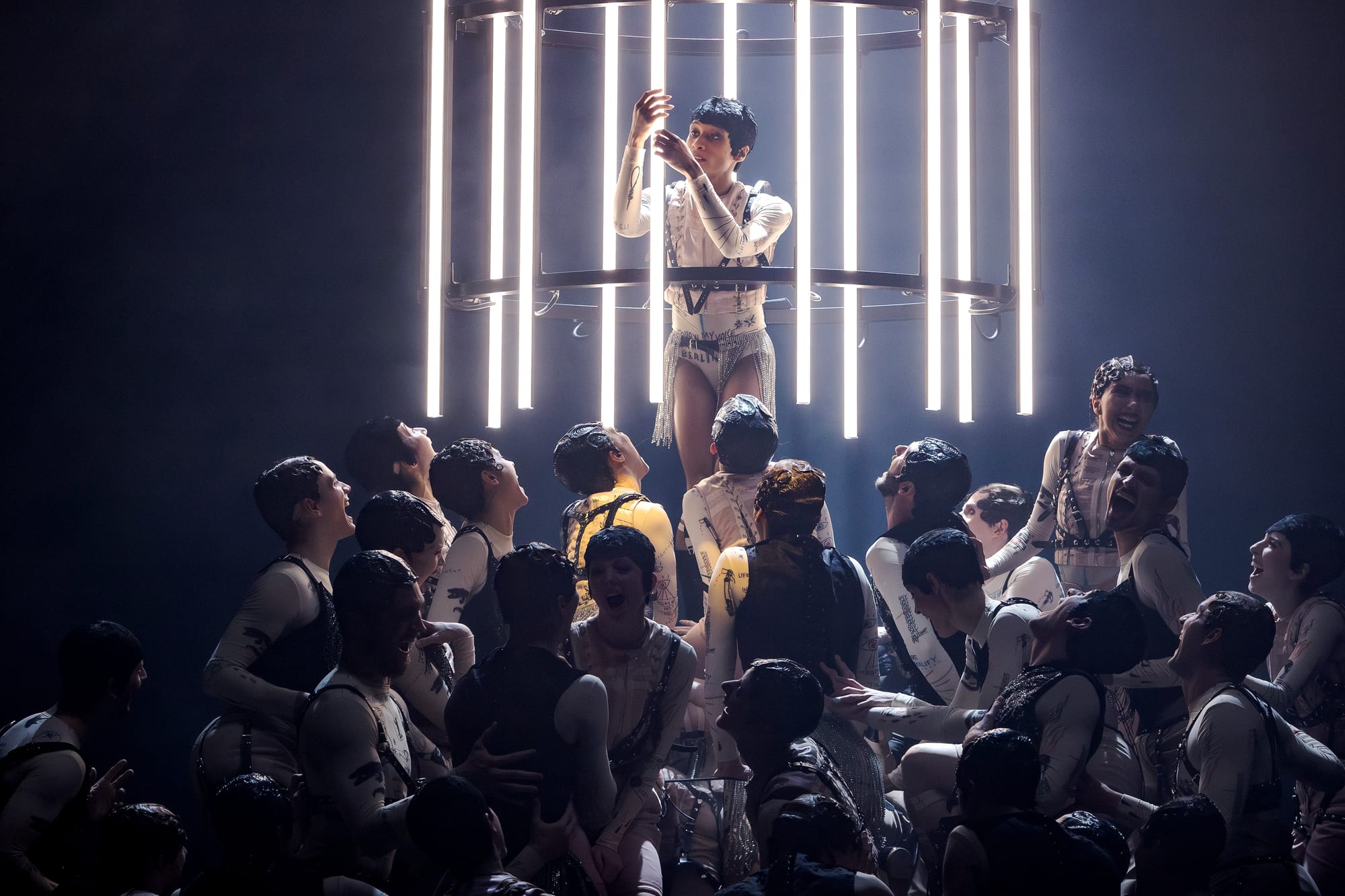
If the accordion represents control, light represents exposure. Wunderkammer is obsessed with visibility—who gets seen, who gets to hide, and what it costs to exist in the glare of public scrutiny. An array of lamps dominates the stage, pulsing and shifting like a living organism. At times, the lights are warm, almost nurturing. At others, they’re blinding, aggressive, interrogative. The dancers seem drawn to them like moths, flocking and flinching in equal measure.
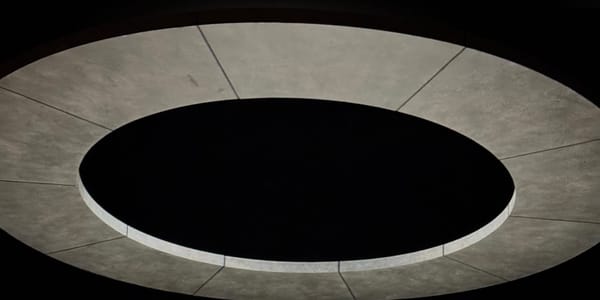
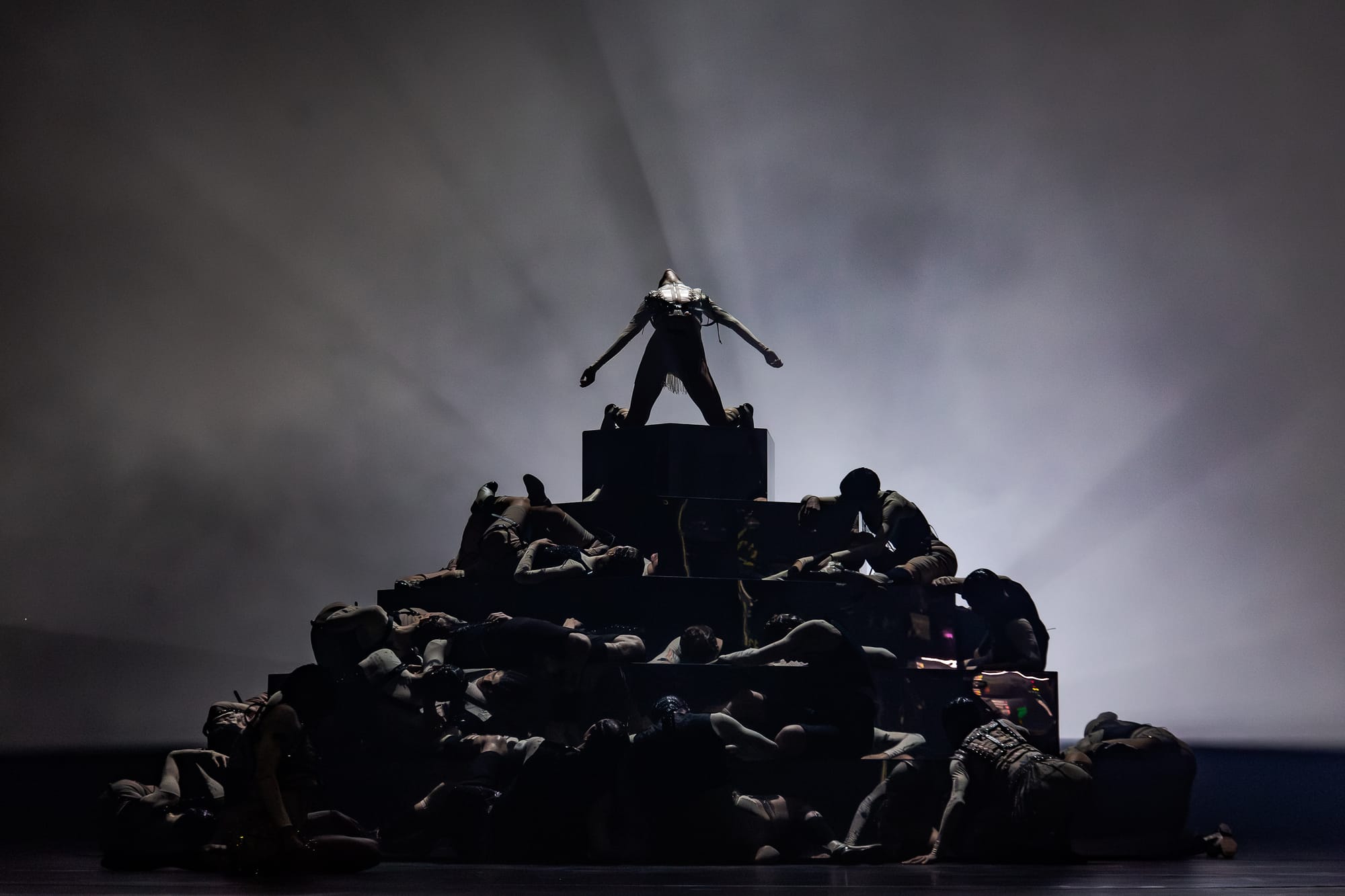
Lighting cages trap individual dancers. Smoke pours from accordions. Chandeliers descend and ascend like breathing architecture. In one moment, dancers stand on rotating mirrored blocks while a massive light source behind them creates silhouettes in the fog—an image lifted straight from Interstellar’s tesseract scene, where time and space become tangible, something you can reach out and touch. The dancers strum the light as if playing it, their movements transforming illumination into sound, presence into absence.
The Weight of Wonder
Morau casts a wide inspirational net for the vocabulary of Wunderkammer. There are flamenco stomps, haka chants, techno sequences where the auditorium literally vibrates. Dancers sing as a choir, scream into the void, whisper secrets we can’t quite hear. The piece borrows from silent film and from glossy cabaret spectacle. At one point, a dancer circles the stage on a golf cart, a surreal interruption that feels both absurd and oddly grounding. You’re reminded: this is theater; this is artifice. And yet, the hypnotic pull never breaks.
By the final moments, Wunderkammer has become something closer to ritual than narrative. Twin figures—spooky, uncanny, eerie—move across the stage like specters. We’ve fallen through the rabbit hole, Alice-style, into a world that operates by different rules. The title’s promise of “wonder” reveals itself not as delight but as disquiet. These are wonders in the old sense: things that provoke awe and fear in equal measure, that demand to be witnessed even as they resist comprehension.
And then, the blunt ending: a massive mirror slides down, reflecting the entire audience. The dancers walk into the rows, singing a cappella, then disappear back onto the stage. We’re left staring at ourselves—confronted, exposed, implicated. The metaphor is almost too obvious: after seventy minutes exploring identity, otherness, and belonging, Morau asks us to look inward. Who are we in this story? Observers? Participants? Complicit? It’s a question the production never answers.
What Lingers
Wunderkammer is not an easy watch. Some sequences stretch longer than they might need to, testing patience even as they hypnotize. Seventy minutes could have been sixty. But that minor criticism feels almost beside the point. What Morau has created is a visceral, unrelenting meditation on what it means to be seen—and what it costs to be different in a world that demands conformity.
Berlin’s history as a queer sanctuary, as a center for radical self-expression, is inseparable from its history of violence and erasure. The production holds both truths at once. The clubs, the cabarets, the techno temples—they’re spaces of liberation, yes, but also spaces of survival. And Wunderkammer refuses to romanticize that duality. Instead, it stages it, complete with all its beauty and terror, its light and shadow, its wonder and its weight.
By the time the lights go out and the final image—our own faces, reflected and distorted—fades into darkness, the feeling isn’t catharsis. It’s recognition. And maybe that’s the most powerful thing art can offer: not answers, but acknowledgment. Not comfort, but witness.

Cast
Choreography and Staging Marcos Morau
Assistant to the Choreographer Shay Partush
Music Clara Aguilar / Ben Meerwein
Lyrics Katja Wiegand / Ben Meerwein / Marcos Morau
Set Design Max Glaenzel
Costumes Silvia Delagneau
Lighting Design cube.bz
Dramaturgy Katja Wiegand