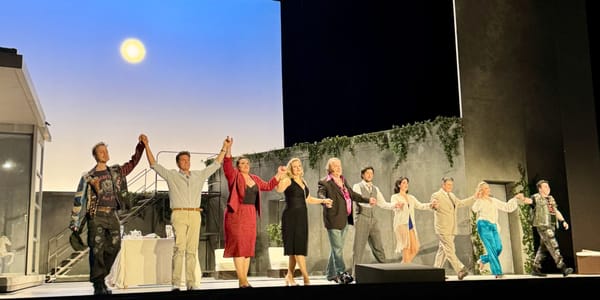
Selemo at Neuköllner Oper
Two traditions, one stage, and the quiet insistence that spring, contradiction, and simultaneity don't need your permission.
🎭 SELEMO. Eine Frühlingsoper
🎶 S’busiso Shozi / Nhlanhla Mahlangu, 2026
💭 Nhlanhla Mahlangu, 2026
🏛️ Neuköllner Oper
🗓️ 26.02.2026
"A CALLING THAT CANNOT BE POSTPONED; A BEGINNING THAT WE ARE NOT READY FOR"
There is a moment early in Selemo when you realize the show has already begun—not metaphorically, but literally, and you missed the starting gun. The lights haven't fully dimmed. People are still talking. But something is moving on stage. Voices are beginning to form. And the question of whether the performance has started, or whether you are simply watching preparations for a performance that hasn't started yet, turns out to be entirely irrelevant—because that ambiguity is precisely the point.
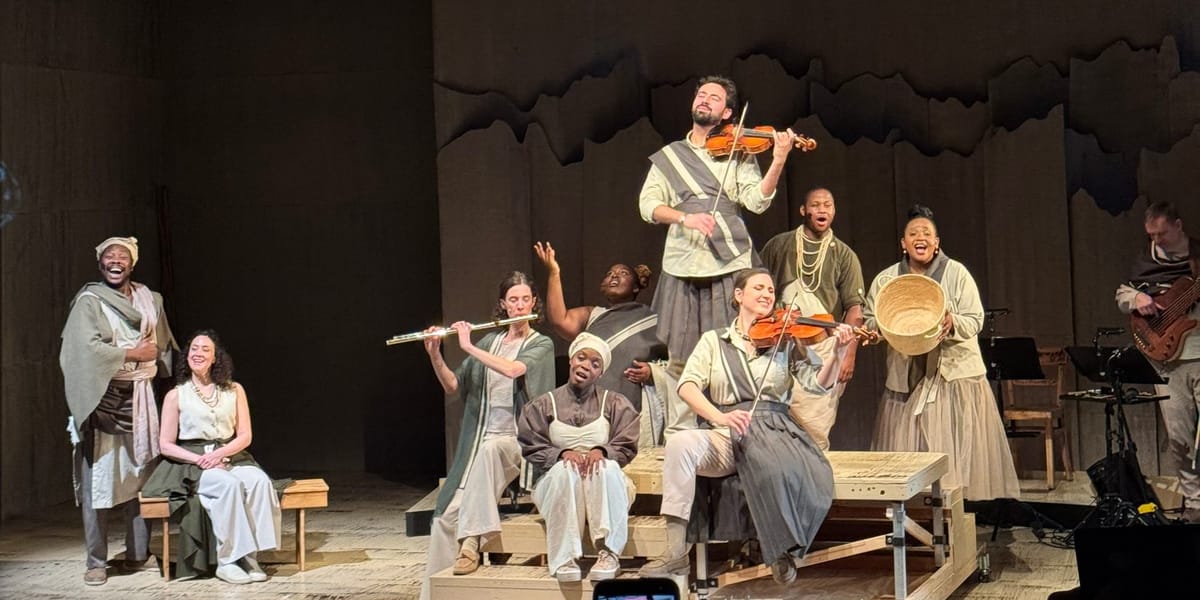
This coproduction between the Neuköllner Oper, the Komische Oper Berlin, and Johannesburg's Center for the Less Good Idea takes Vivaldi's La Primavera as its skeletal frame and then refuses, cheerfully and at every turn, to let it stand alone. The premise is formally elegant: what happens when you place the rigidity of Baroque convention—its hierarchical certainties, its very European sense of when things begin and end—into dialogue with a more fluid, folkloric musical tradition? What falls away? What survives the contact? The answer, as Selemo proposes it, is that the categories themselves were always more fragile than we assumed.
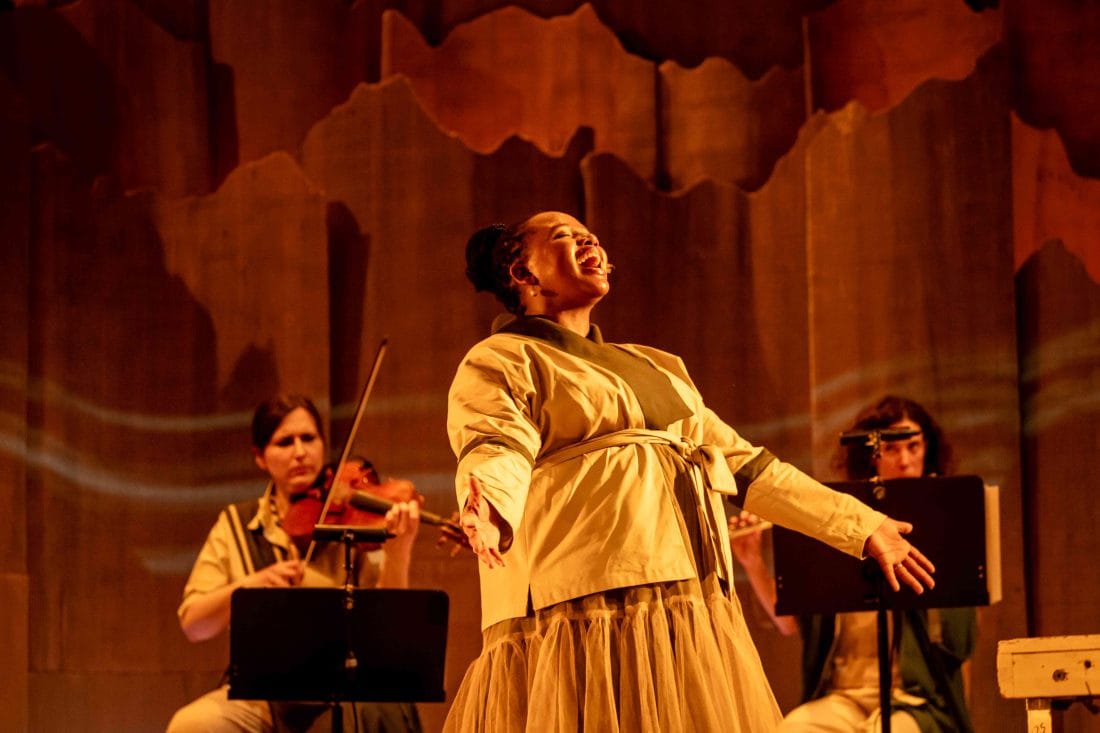
The piece moves between Zulu, German, French, and English with no particular urgency to flag the transitions. Vivaldi surfaces and recedes—less a foundation than a punctuation mark, arriving to interrupt, to assert, and then to be subsumed again into something less formal and more alive. The effect is not fusion, exactly. The styles don't dissolve into one another so much as they coexist, overlap, and occasionally clash, which is truer to the experience of living in between cultural inheritances than any clean synthesis would be.
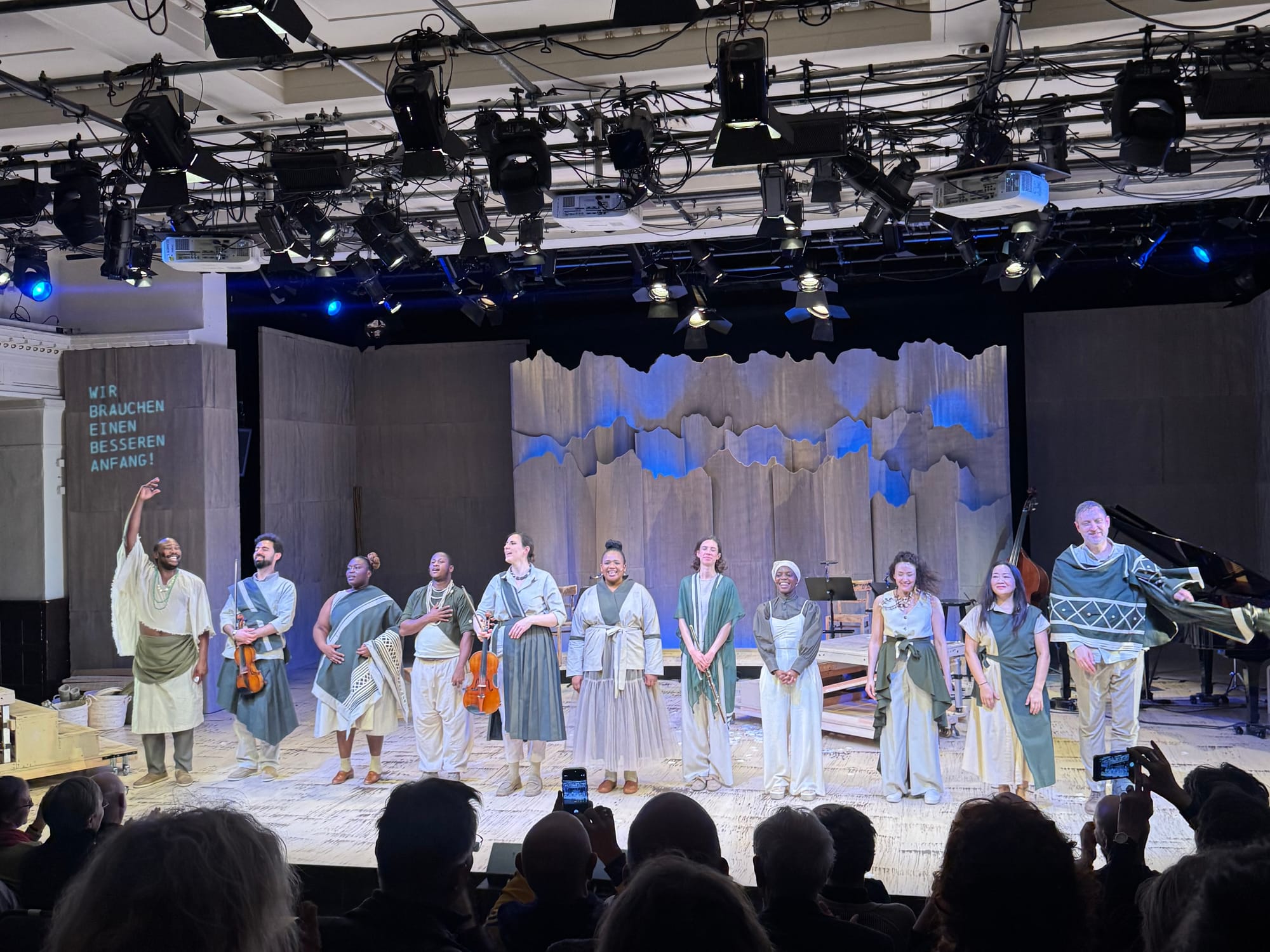
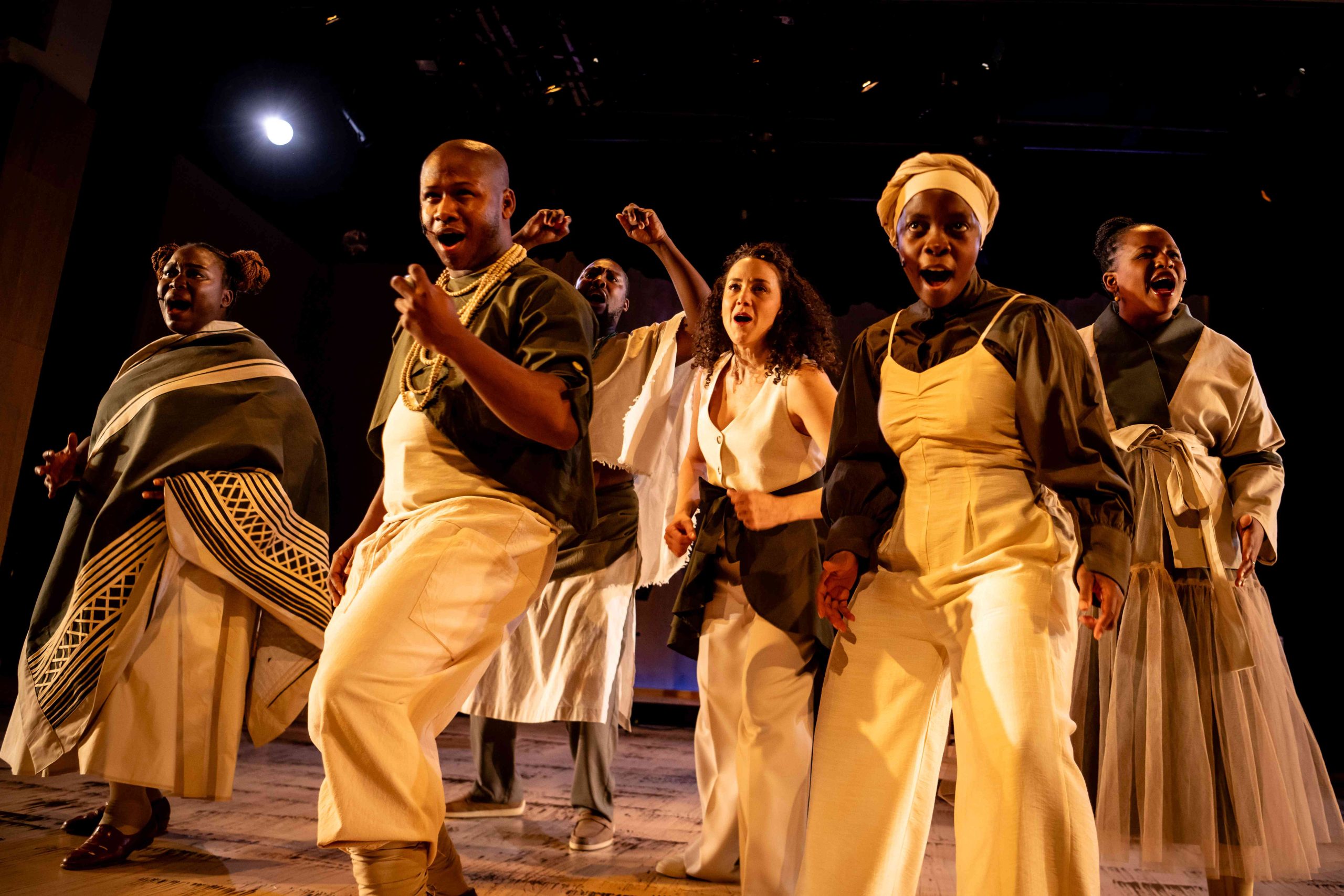
What Selemo understands—and what makes it so genuinely interesting—is that simultaneity is not the same as contradiction. The show stages this premise again and again, finding different registers for the same argument. A church hymn plays underneath something explicitly sexual; the sacred and the profane occupy the same beat without either cancelling the other. Performers climb and descend stairs in repeated, almost ritualistic patterns, the movement cycling and cycling until someone stops the room: we need a better start. We need a new spring. We will not wait for the calendar. The binary dissolves not by choosing a side but by insisting on the spectrum between them.
Text projections flanking the stage play with the language of spring—spring clean, spring forward—unpacking a single word into the plurality of things it contains. This is the show's structural logic in miniature: any given concept, examined with enough care, turns out to be several concepts cohabiting uncomfortably. Beginnings contain endings. A calling that cannot be postponed and a beginning we are not ready for are, the show suggests, often the same event. Life is too complex and too simultaneous for our binary framing to keep up.
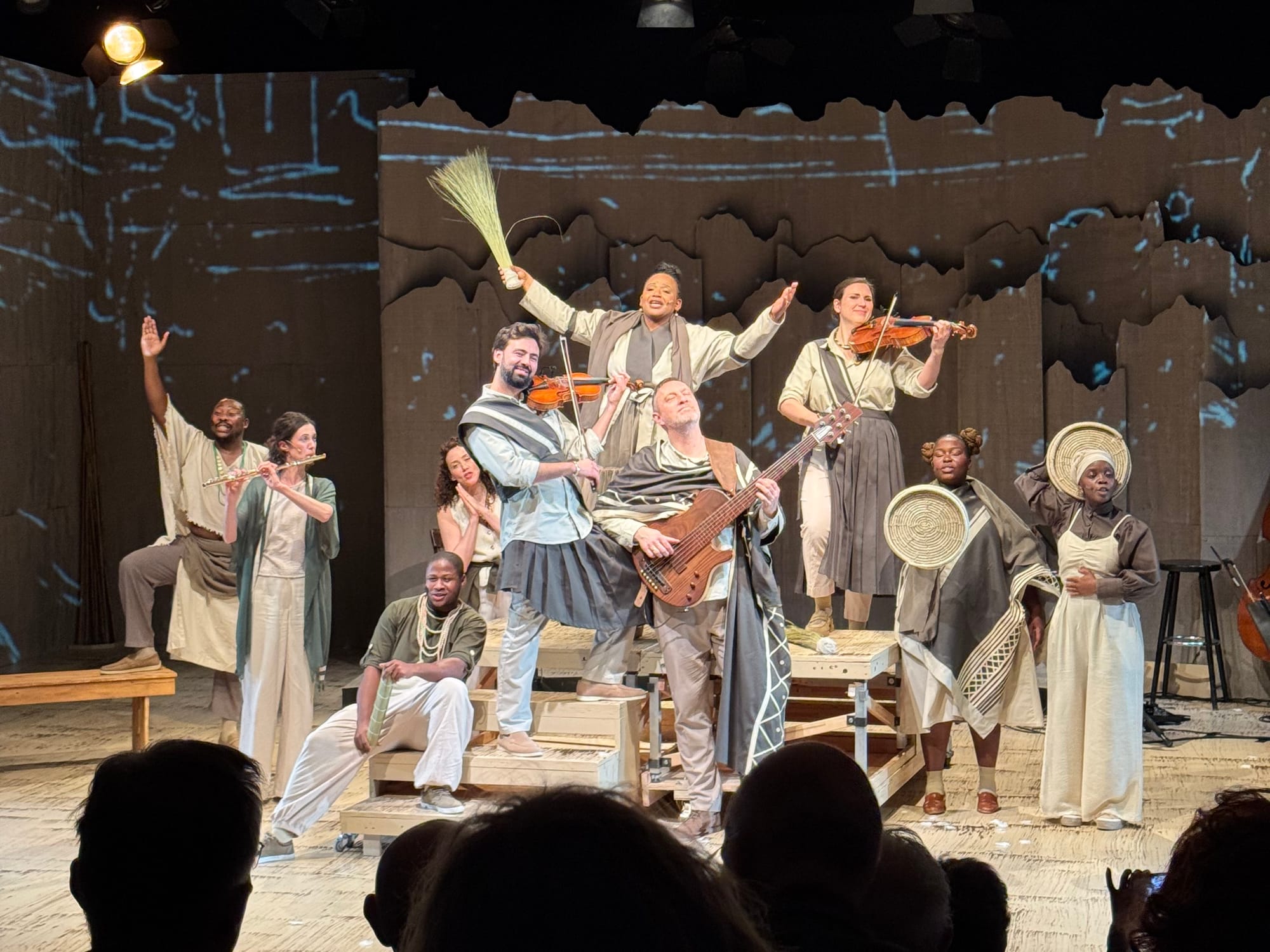
There are moments where this expands into something more serious—a postcolonial reckoning with loss of land, language, lineage, identity, archive. Die Vorfahren sprechen von dem, was weggenommen wurde. The grief is structural, not incidental, and it sits without resolution inside everything else the piece is doing. I glanced around the audience: predominately white, as opera audiences in Berlin so reliably are—a city with real demographic diversity that somehow doesn't make it through the doors of its opera houses, even when the work onstage is explicitly about dispossession and cultural erasure. The irony doesn't announce itself; it just sits there. (Though maybe this is precisely a piece for a white audience—again, two things can be true at once.)
Fittingly, the piece closes where it opened: we need a better start. Not a resolution but a return, a spring that comes around again, which is both a comfort and an indictment. The cyclical structure earns its ending in a way that a linear narrative couldn't—because the purpose was never arrival, but recurrence, and the recognition that recurrence is not failure. The wheel turns. The season comes. Sometimes you must, as the performers remind us at some point during the evening, sing spring into existence.
Selemo was performed on the first warm day of the Berlin spring: the first double-digit temperatures, the kind of day where you notice the evening light has changed. A good beginning.

Cast
Co-composer, Musical Director: S’busiso Shozi
Co-composer, Stage Director: Nhlanhla Mahlangu
Musical Mentor: Neo Muyanga
Producer: Bronwyn Lace
Associate Producer: Dimakatso Motholo
Costumes / Stage Design: Nthabiseng Malaka
Stage Design Assistent: Elena Gorlatova
Light Design: Michael Inglis
Visual Artist: Marcus Neustetter
Script Writer: Stacey Hardy
Dramaturgy: Sophie Jira/Dennis Depta
Assistant Director / Stage Manager: Sandra M. Heinzelmann
Production Manager: Lucia Leyser
Performers: Hlengiwe Lushaba Madlala, Tshegofatso Khunwane, Gregory “Kekelingo” Mabusela, Vhahangwele Moopo, Pertunia Msani, Alma Sadé / Polly Ott and the musicians Deniz Tahberer, Julia Lindner de Azevedo Conte, Magdalena Bogner, Arnulf Ballhorn and Tuyêt Pham