Jewgeni Onegin at Komische Oper Berlin
An opera about not getting over a crush—and a production so gorgeous it makes 150-year-old heartbreak feel like yesterday.

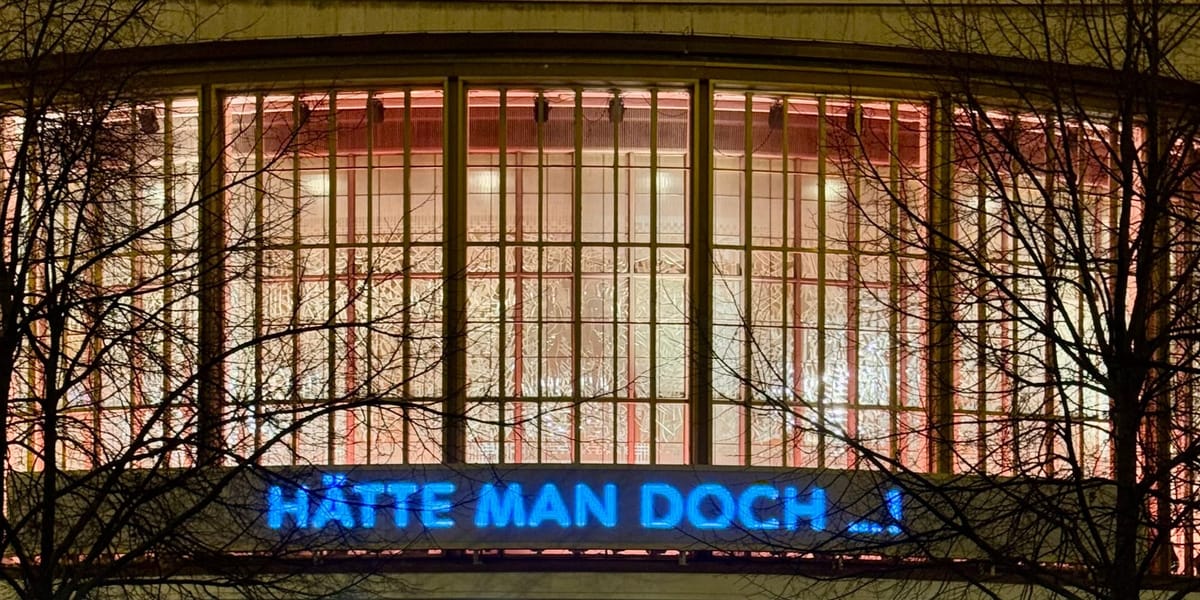
🎭 Jewgeni Onegin
🎶 P. I. Tchaikovsky, 1879
💭 Barrie Kosky, 2016
🏛️ Komische Oper Berlin
🗓️ 25.01.2026
"HABIT IS HEAVEN-SENT, A SUBSTITUTE FOR HAPPINESS"
There are operas you admire, and there are operas that get under your skin. Evgeny Onegin is unambiguously the latter, and this production at Komische Oper Berlin understands exactly why. It is an opera about not getting over a crush; about the particular cruelty of a feeling that doesn't care whether you've moved on, built a life, married well, grown up. It arrives when it wants. "My fiery heart aches from suffering." Same, Tatiana, same.
They're Just Kids!
It's worth saying early: everyone in this opera is very young. Tatiana has grown up in rural Russia, surrounded by forest and social convention and not much else. Her entire experience of the world, of desire, of what love might look like—it's all theoretical until Evgeny shows up. So of course she writes the letter, and of course he doesn't know what to do with it. Of course Lensky challenges his best friend to a duel over a provocation that, from any reasonable distance, is obviously meaningless. These are people who haven't yet accumulated enough life to act proportionately—and the opera never lets you forget that. Any irrationality we might perceive from a modern lens isn't a flaw in the writing. It's the whole point.
This production holds that youth very close, and it makes the second half—in which these same people have aged, built lives, learned to manage themselves—land with much more weight.
Love in Past Tense
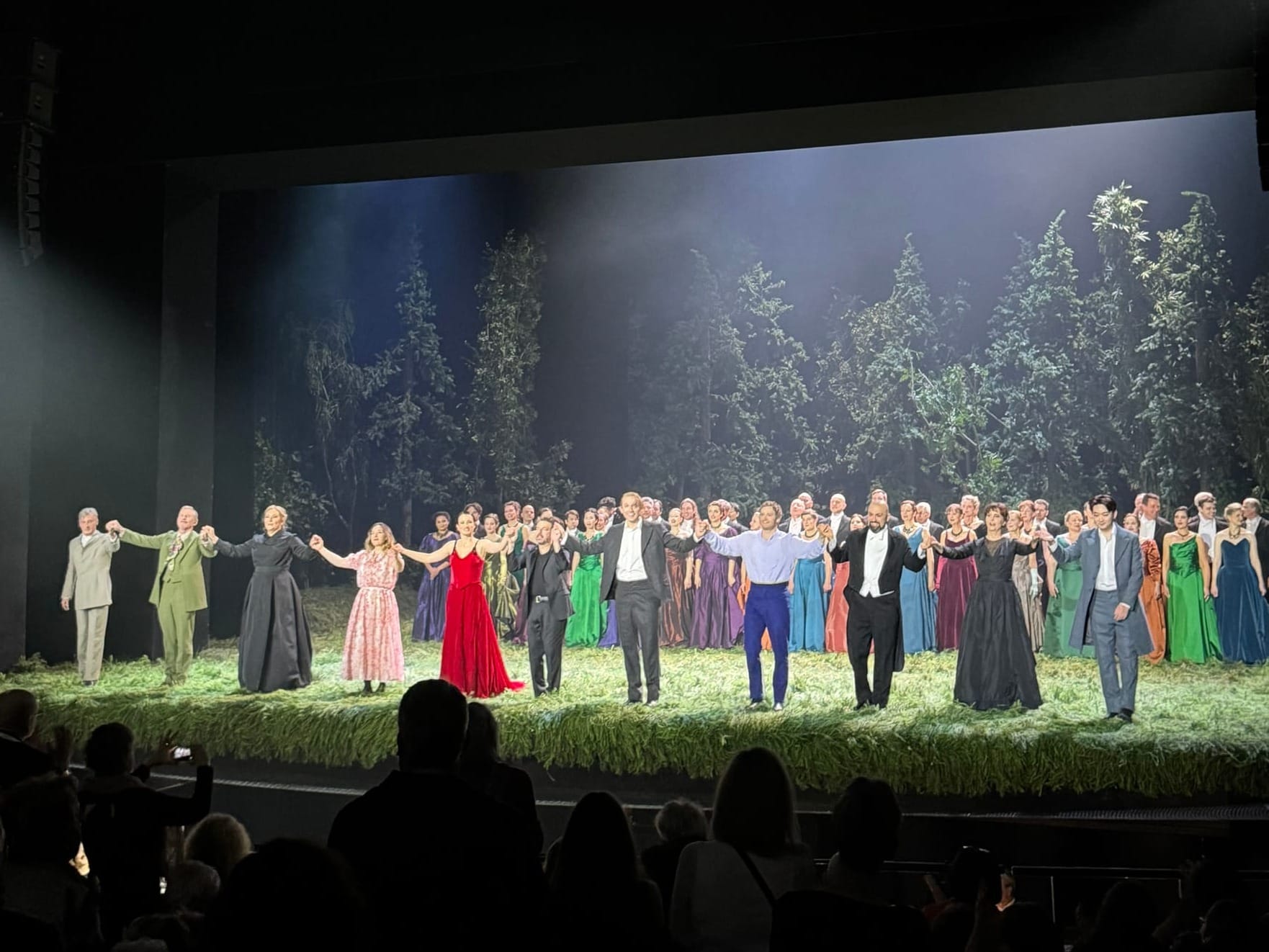
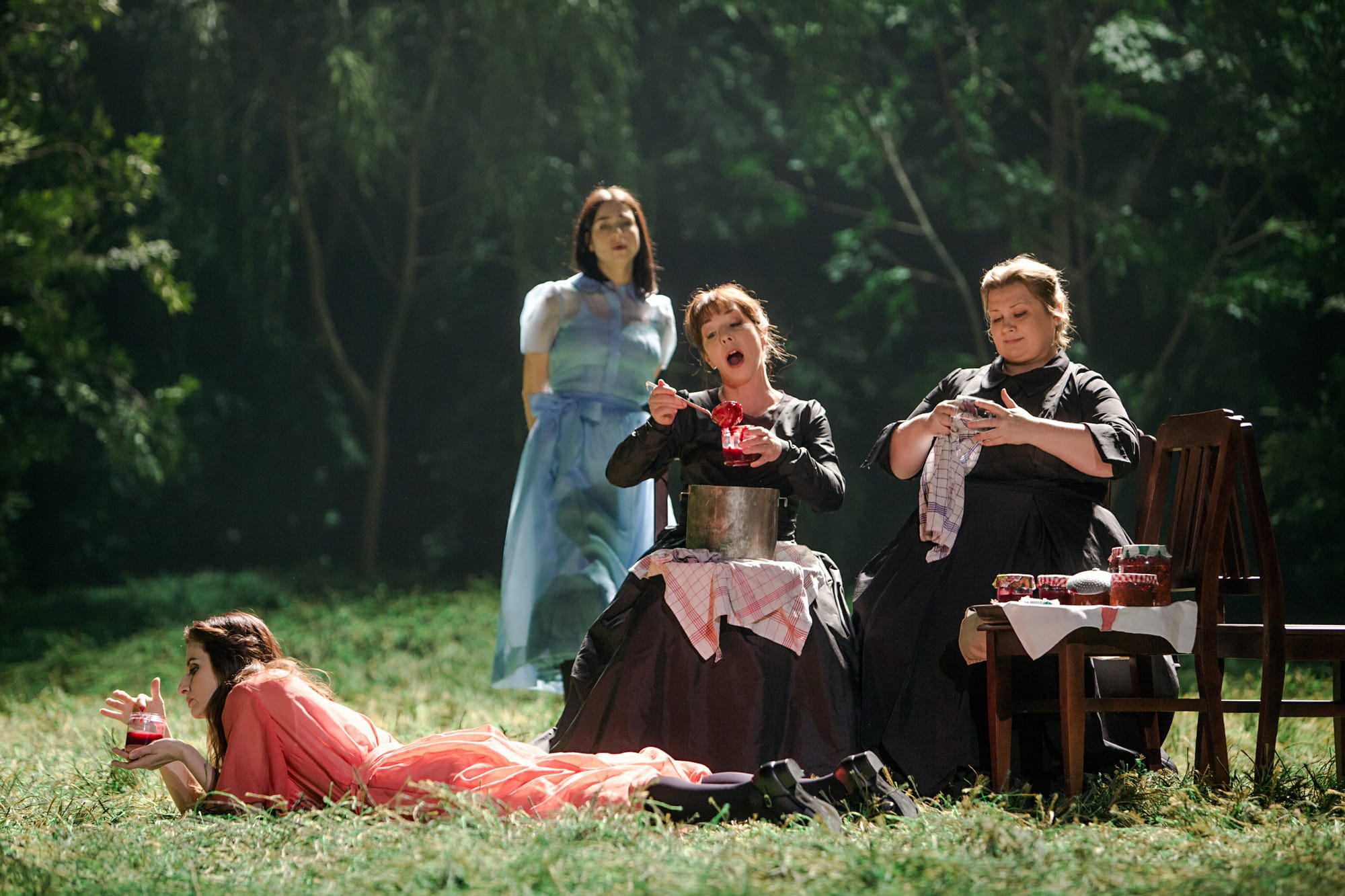
The lights come up on two middle-aged women sitting in a forest clearing. They speak about love lost, love half-remembered; one of them sings about habit being heaven-sent, a substitute for happiness. Before a single plot point has been established, the emotional logic of the entire opera is already in place. We know how this ends: not in catastrophe, but in accommodation; in learning to want less.
What unfolds from there is one of the most luscious stagings I've encountered. The clearing is not backdrop; it breathes! Villagers emerge from the back, stepping out of the tree line as if from somewhere else entirely. The Act I picnic—food, badminton, a rotating stage, a cheerful folk song, the whole nine yards—is the kind of scene that reminds you what opera can do when it commits to filling a stage with actual life.
We Live And We Yearn
Tchaikovsky wrote Onegin from the inside, and it shows. The intimacy is structural: Tatiana's letter scene is one of the great confessions in the repertoire, raw, exposed, almost uncomfortable in how directly it lands. Onegin's rejection isn't cruel so much as oblivious, which turns out to be worse. He simply cannot see her yet. Years later, he will see nothing else.
The production holds all of this very close. The yearning scenes feel private in a way that makes you slightly self-conscious for watching. And when the opera shifts into the world Tatiana has built for herself—the ball, the chandeliers, the hard-won life in the city—it doesn't play the contrast ironically. She has built something real for herself, with the limited agency granted to her by the society of her time. And then Evgeny walks in.
An Immediate Throwback
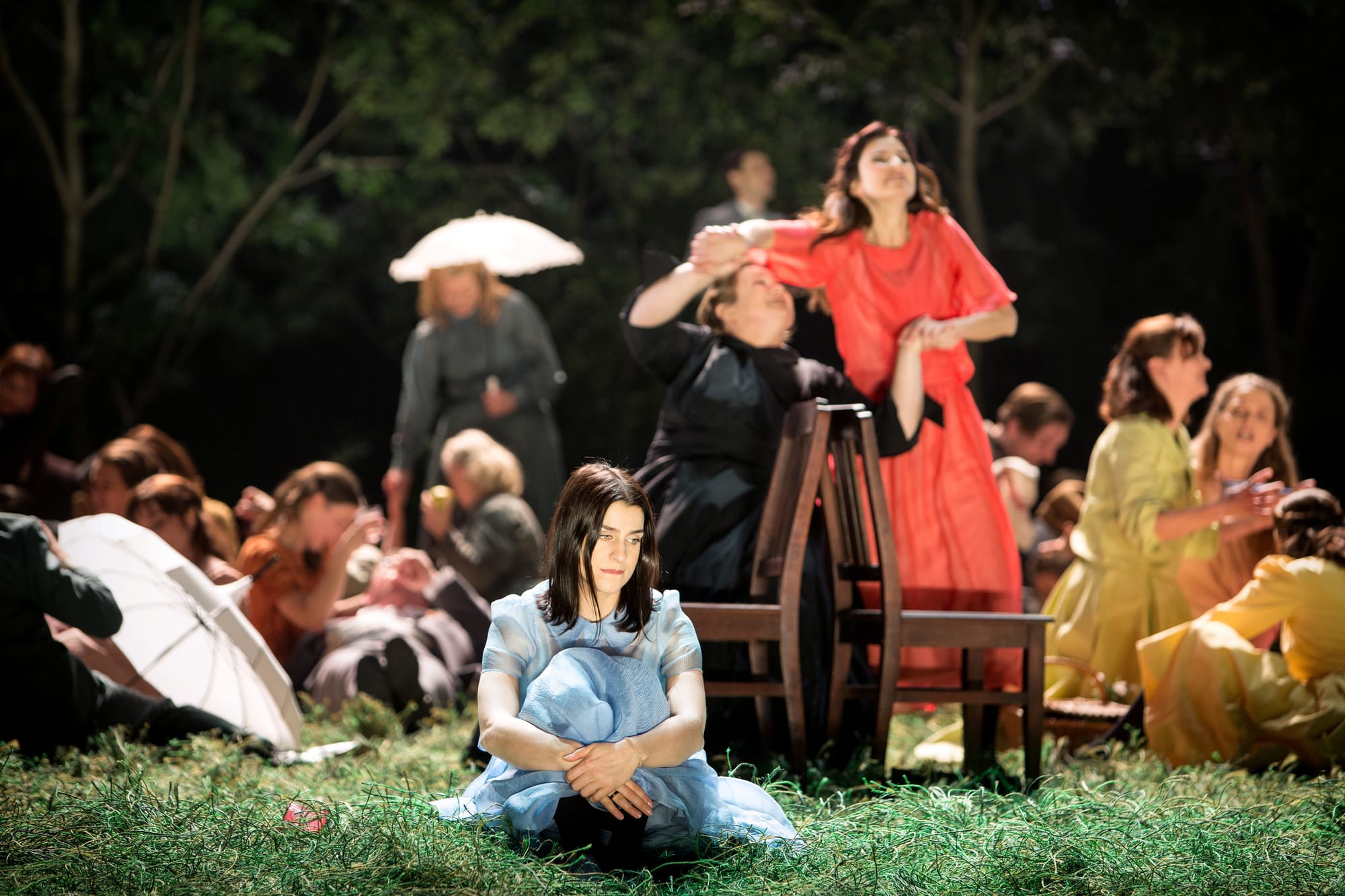
What follows is one of the production's masterstrokes. During the interlude, stagehands begin quietly dismantling the set—piece by piece, while the music continues—and the mansion is carried into the wings. By the time the scene resumes, the clearing is back. Same trees, same path, same green.
It is a simple image and it is devastating. Because this is exactly what memory does; what a single encounter can do: collapse years of hard work in an instant, pull you back to the person you were before you knew how to protect yourself. I'm twenty without aim, plagued by idleness. Of course she was. The production doesn't romanticize any of that. It just shows it.
Returning to the Forest
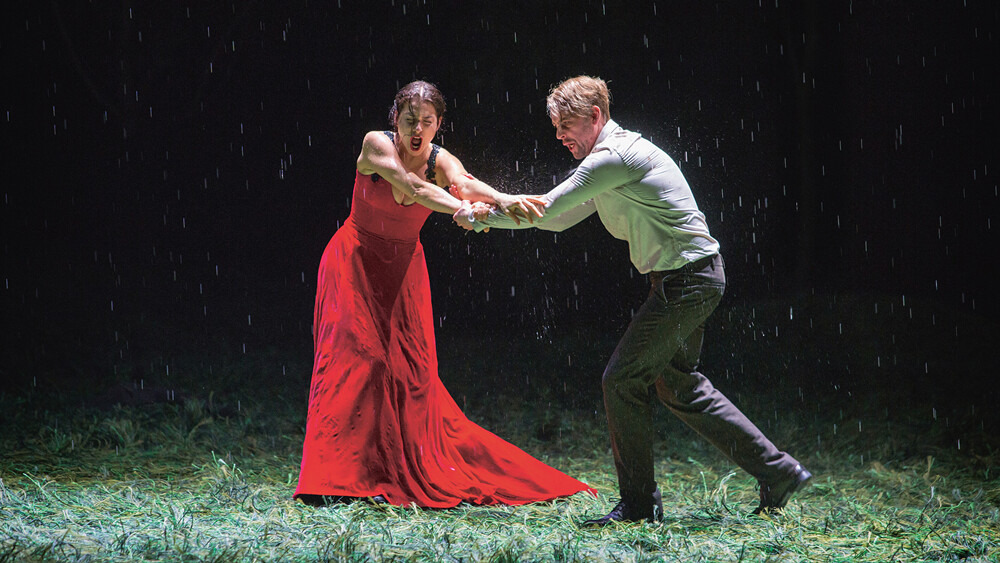
In Pushkin’s original version, Tatiana ultimately rejects Onegin despite admitting that she still loves him. This production adds one crucial twist: they kiss. For a moment, the temptation becomes real. The rain begins to fall as they stand once again in the forest clearing—the emotional birthplace of their story. Then Tatiana breaks away and runs into the woods, leaving Onegin alone to confront the wreckage of his own choices.
It’s a small change, but a significant one. The kiss acknowledges the truth that feelings rarely disappear simply because life has moved forward. Desire and duty exist side by side, pulling in opposite directions. In the end, Tatiana chooses the life she has built.
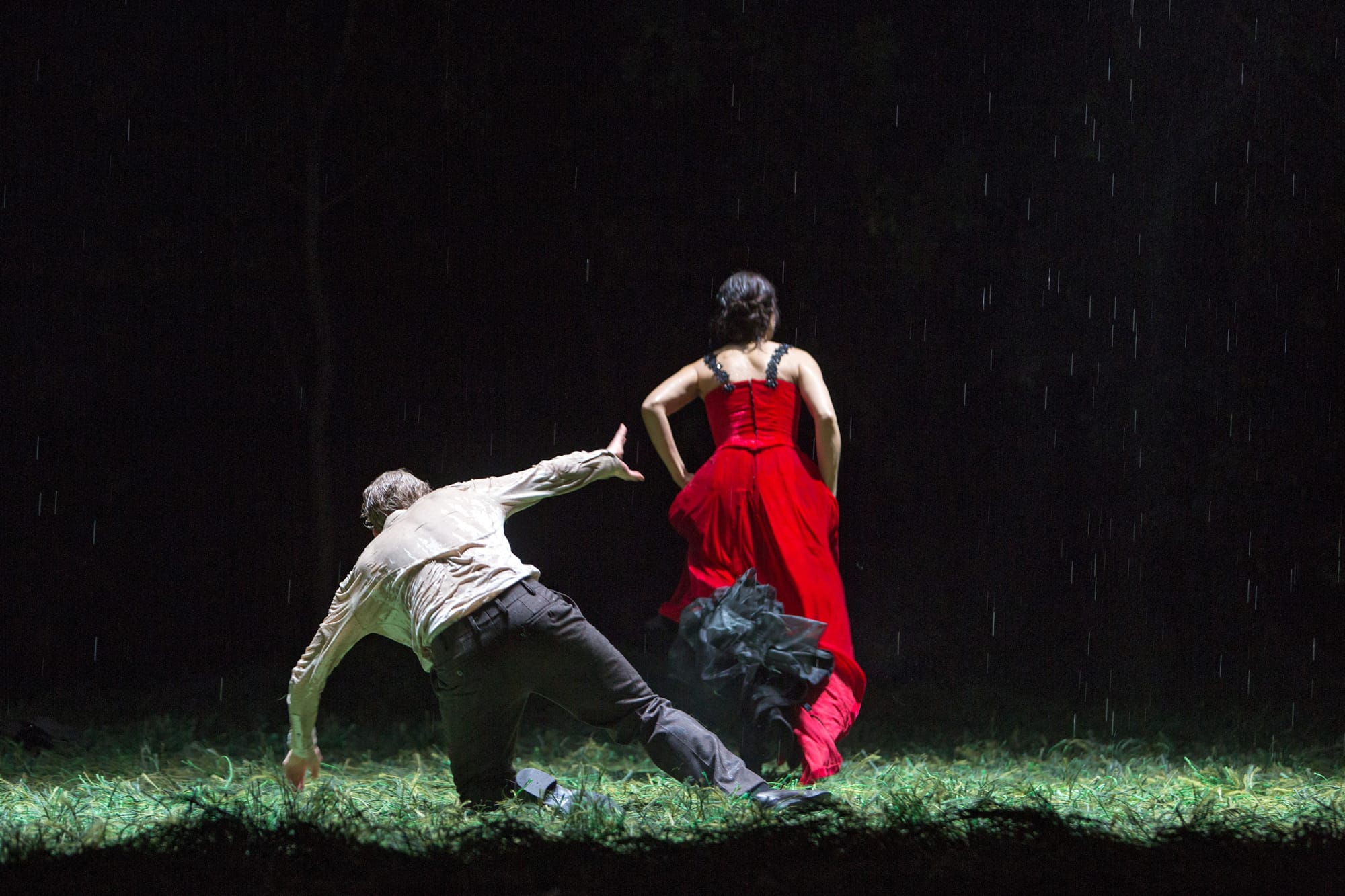
And so the lights go down on something that feels less like a 19th-century opera ending than like a scene from your own life: a moment you gave in to something you knew you shouldn't but did it anyway, and in doing so understood something true about yourself that you'd rather not have known.
Which is to say: social convention has changed in the last 150 years, as have the possibilities of self-expression. What hasn't changed is the feeling of wanting something you can't have, or having it briefly and then losing it, or building a whole careful life and watching it tremble the moment the wrong (or right?) person walks into the room. Humans have always been humans! And there is something cathartic about sitting in a darkened theater and watching characters from another century act out feelings you recognized immediately—and understanding that you were never as original in your suffering as you thought. Tchaikovsky knew that; this production knows it too.
 Komische Oper Berlin