Don Giovanni at Staatsoper Berlin
A rotating enchanted forest, a Giovanni who bleeds through the whole opera, and the production that knocked the wind back into my opera-tired lungs.

🎭 Don Giovanni
🎶 Wolfgang Amadeus Mozart, 1789
💭 Claus Guth, 2008
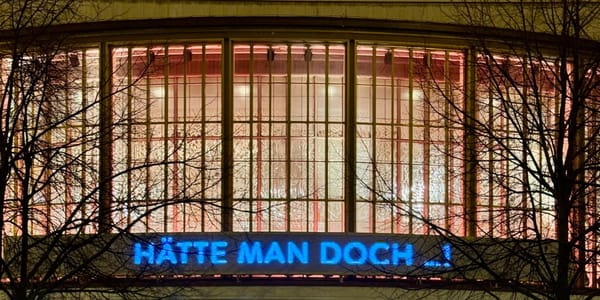
🏛️ Staatsoper Berlin
🗓️ 17.02.2026
"DER WÜSTLING IST MEIN UNGLÜCK"
There are productions that entertain, and there are productions that remind you why you fell in love with opera in the first place. This Don Giovanni at Staatsoper Berlin did the latter. After weeks—if not months—of creative fatigue, of sitting in darkened theaters and struggling to connect, something in this production cracked me open again. It is, without question, one of the finest stagings I have seen at this house: intricate, fully enveloping, alive with detail and genuine joy, and full of moments that made the audience gasp and grin in equal measure.
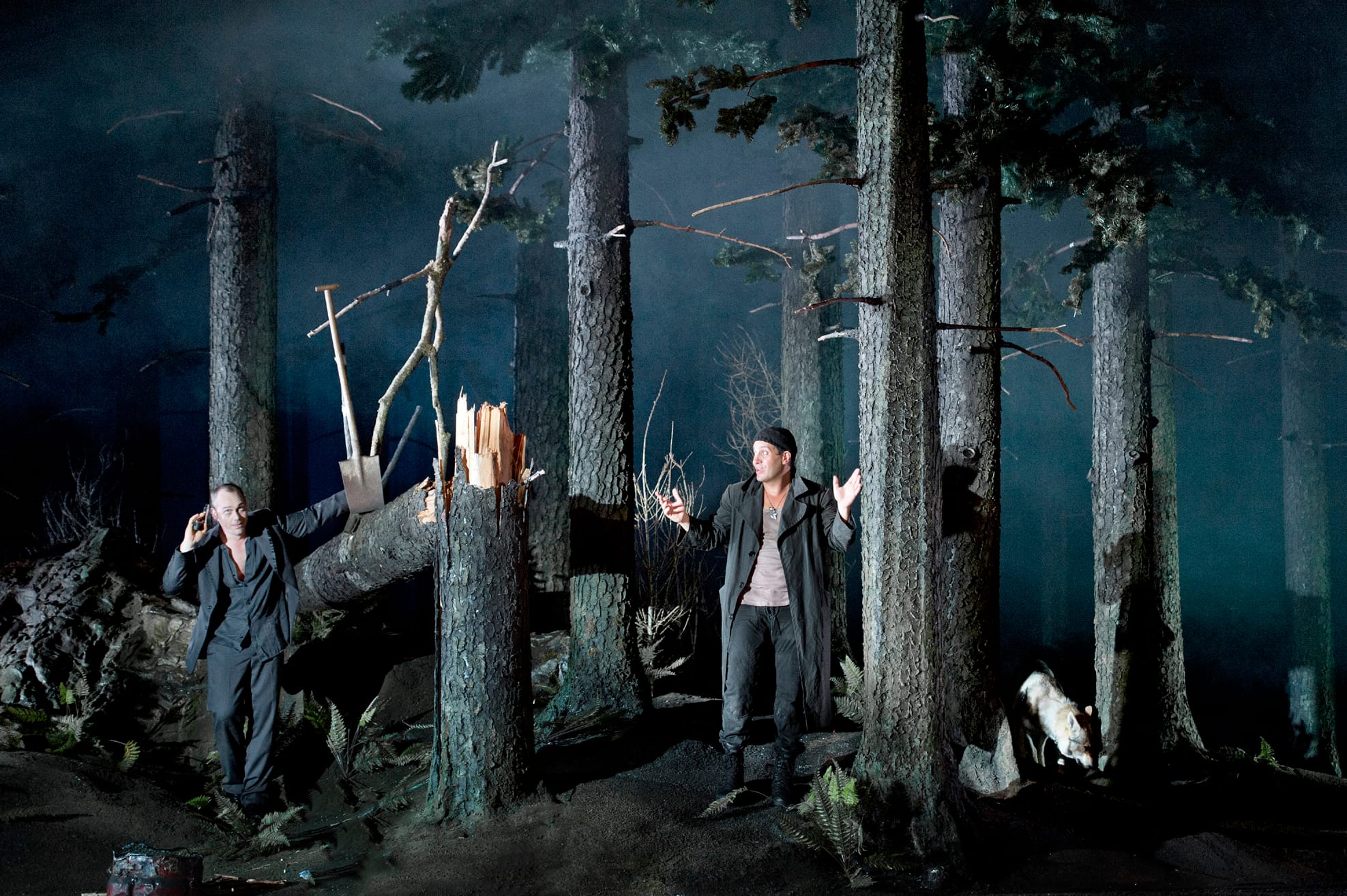
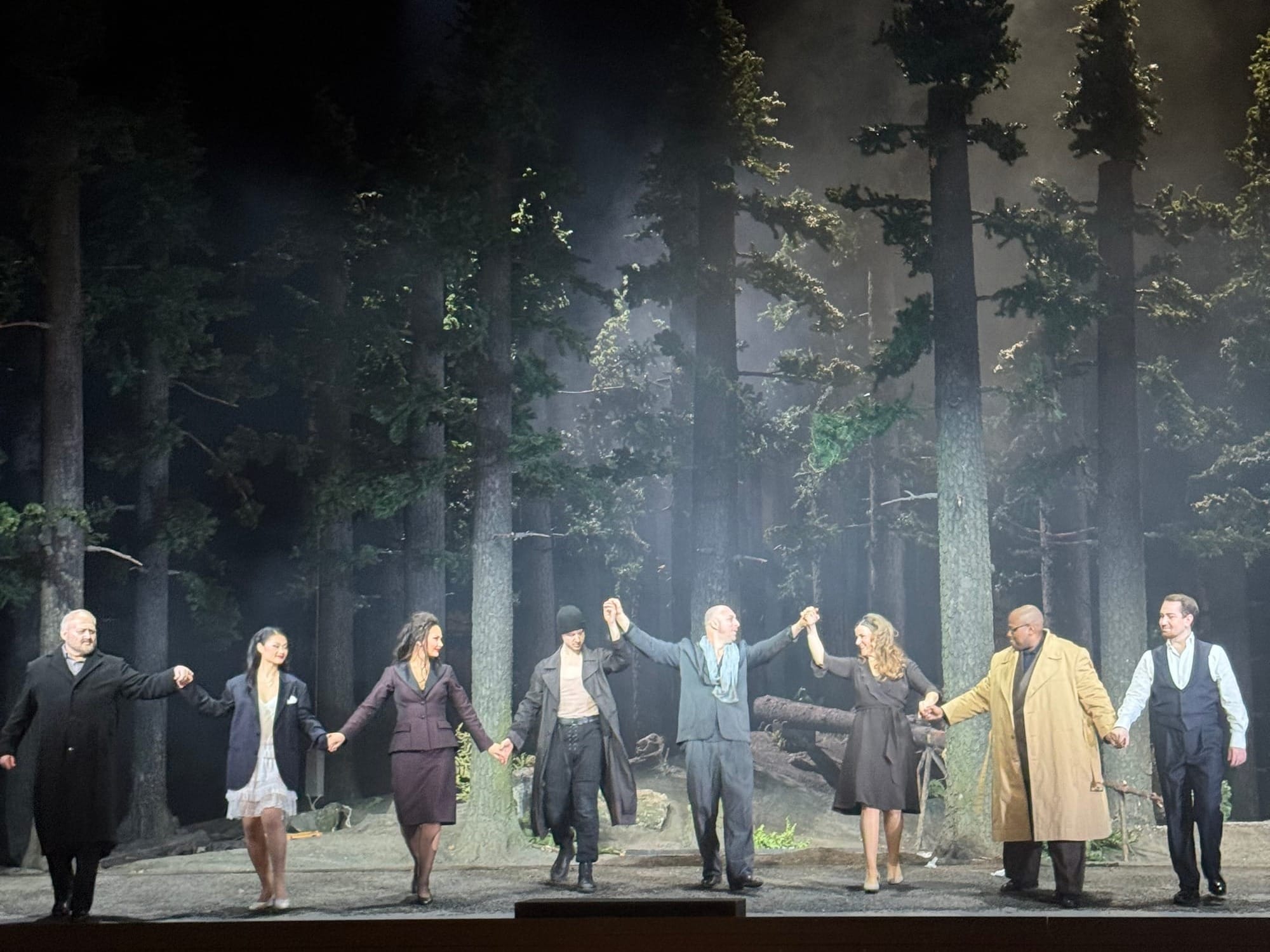
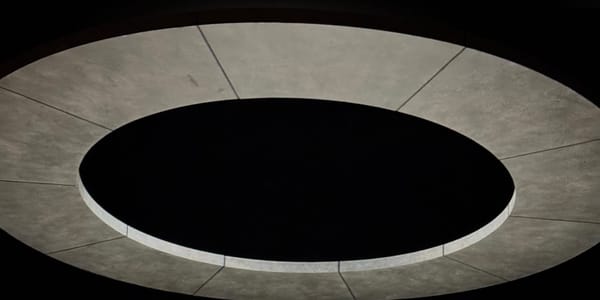
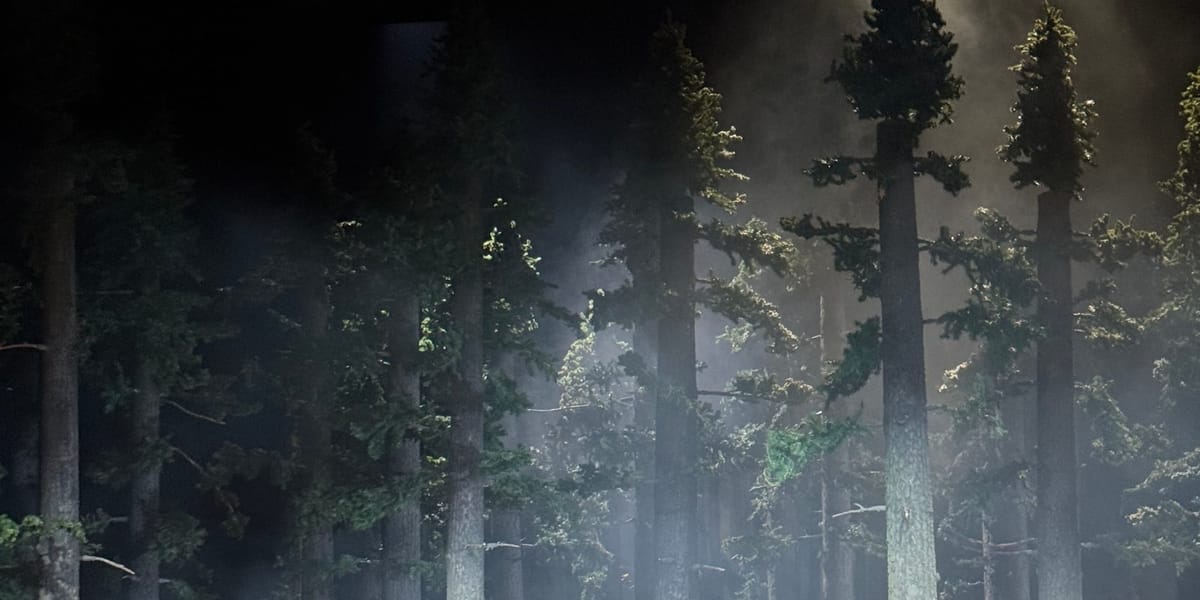
The conceit is a forest—enchanted and cursed in equal parts—rendered on a rotating stage that is one of the evening's great technical pleasures. As the forest turns, we peer through the foliage at different angles, different depths, different characters caught in different configurations of desire and shame and denial. It functions as both magnifying glass and kaleidoscope. The forest doesn't merely contain the drama; it metabolizes it, drawing out the contradictions and ambivalences that make these characters so difficult and so recognizable.
And contradiction is really what this production is about. One of the persistent challenges of staging Don Giovanni for a contemporary audience is the motivational gap: why do these people do what they do? Why does Donna Anna still grieve a man she should revile? Why does Zerlina waver? Why does Donna Elvira keep returning? This production answers not with psychological explanation but with emotional truth. It reminds us that knowing someone is bad for you and still wanting them is not an 18th-century phenomenon; that love-bombing and ghosting leave real damage; that desire and duty can coexist in a person without either canceling the other out. Suddenly, the opera feels less like a historical document and more like something we've all felt ourselves.
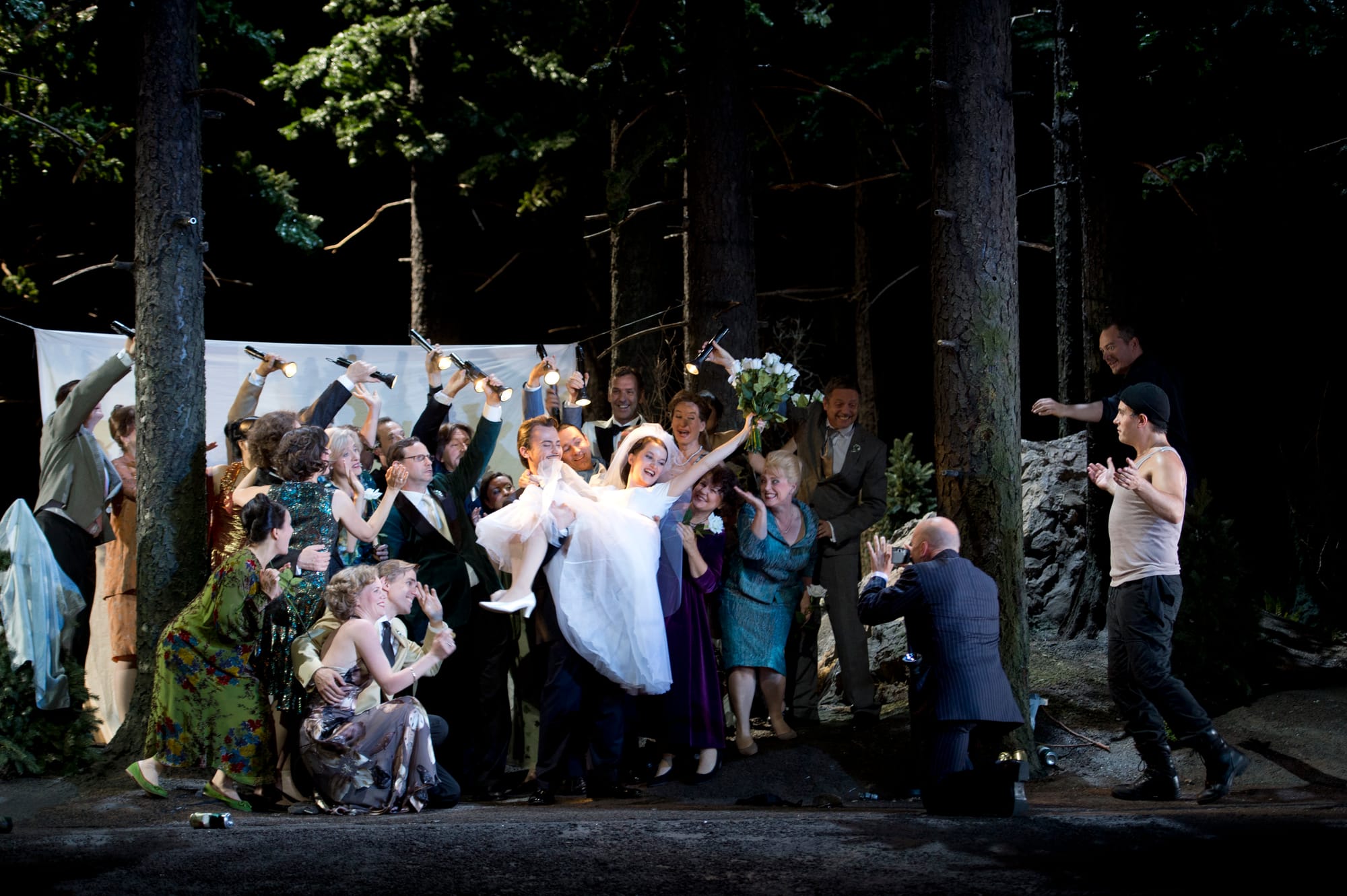
The character interpretations have been meaningfully adjusted to serve this reading. Donna Anna is openly repulsed by Don Ottavio, treating him with a coldness that reads as cruelty but feels honest—her real pull is clearly toward Don Giovanni, which reframes her grief and her rage entirely. Zerlina, too, is genuinely obsessed with him, and this makes her ambivalence about Masetto something more textured than comic relief. These are people caught between what they feel and what they're supposed to feel, and the production refuses to resolve that tension neatly.
Don Giovanni himself has been radically reimagined. Gone is the polished, aristocratic seducer. In his place: a wounded, bleeding figure who shoots heroin with Leporello in the underbrush. He has been shot at the opera's opening—during his killing of the Commendatore—and spends the rest of the evening slowly dying, his clothes perpetually bloodstained, his embrace leaving marks on whoever gets close to him. It's a striking image, both literally and metaphorically. Whether what follows is reality, fever dream, or a dying man's final hallucination is left productively open.
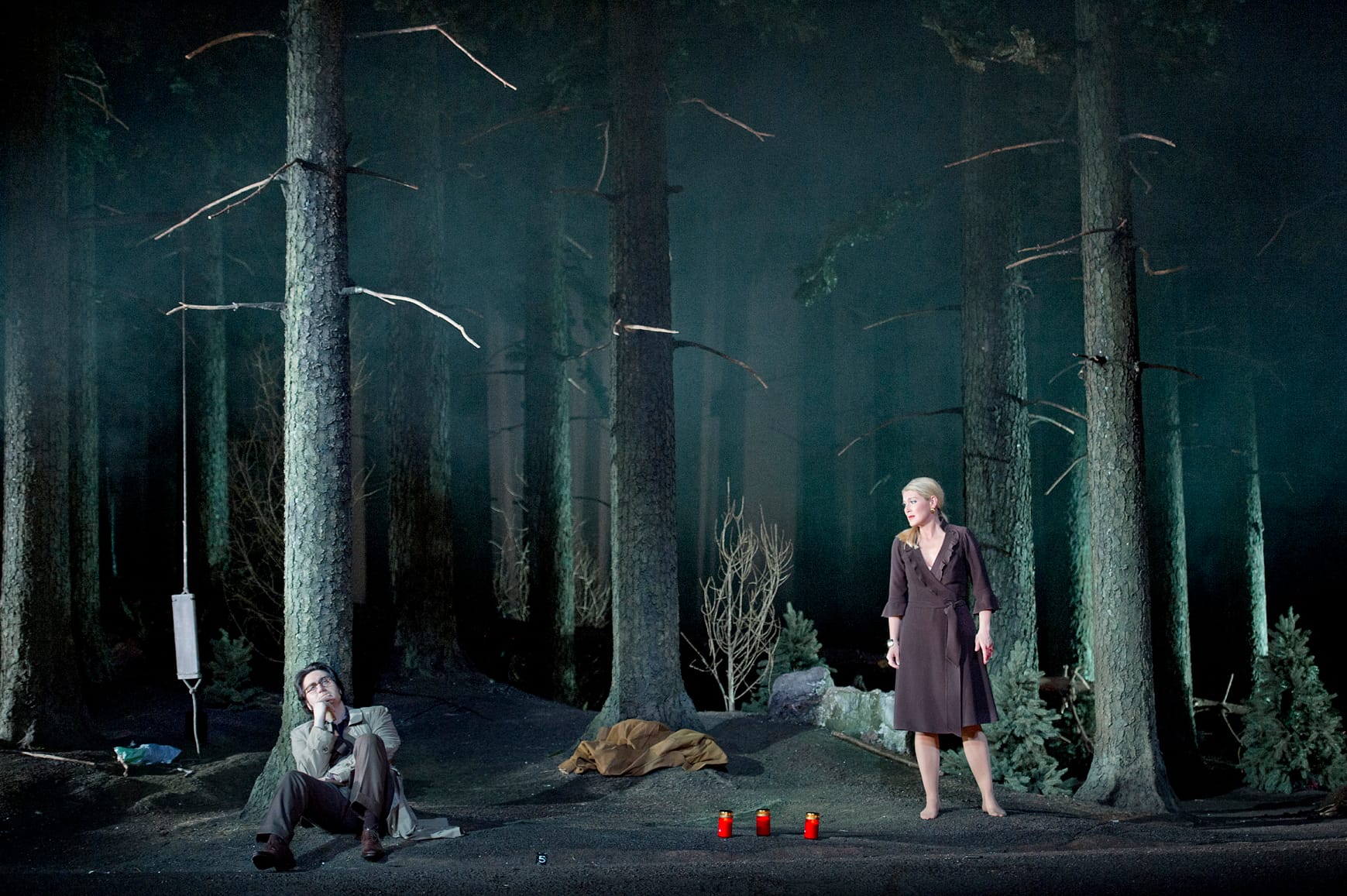
The production's aesthetic hovers somewhere around the 1990s without fully committing to a decade, which suits the dreamlike register: poofy hairstyles, knee-length dresses, old station wagons. It feels suspended in time, which is exactly right for a story that is essentially timeless in its cruelties and its longing.
And within this suspended time, it's never quite clear what's real and what isn't. Donna Elvira wanders the forest with a suitcase, stranded at a bus stop in the middle of the night. Don Ottavio and Donna Anna arrive in an old car that promptly breaks down. A rave pulses somewhere in the trees. A wolf-like dog passes through, unhurried. There is a small swing. The forest has no cell reception—a joke that landed with particular force for the German audience, intimately familiar with the particular helplessness of a phone showing zero bars.
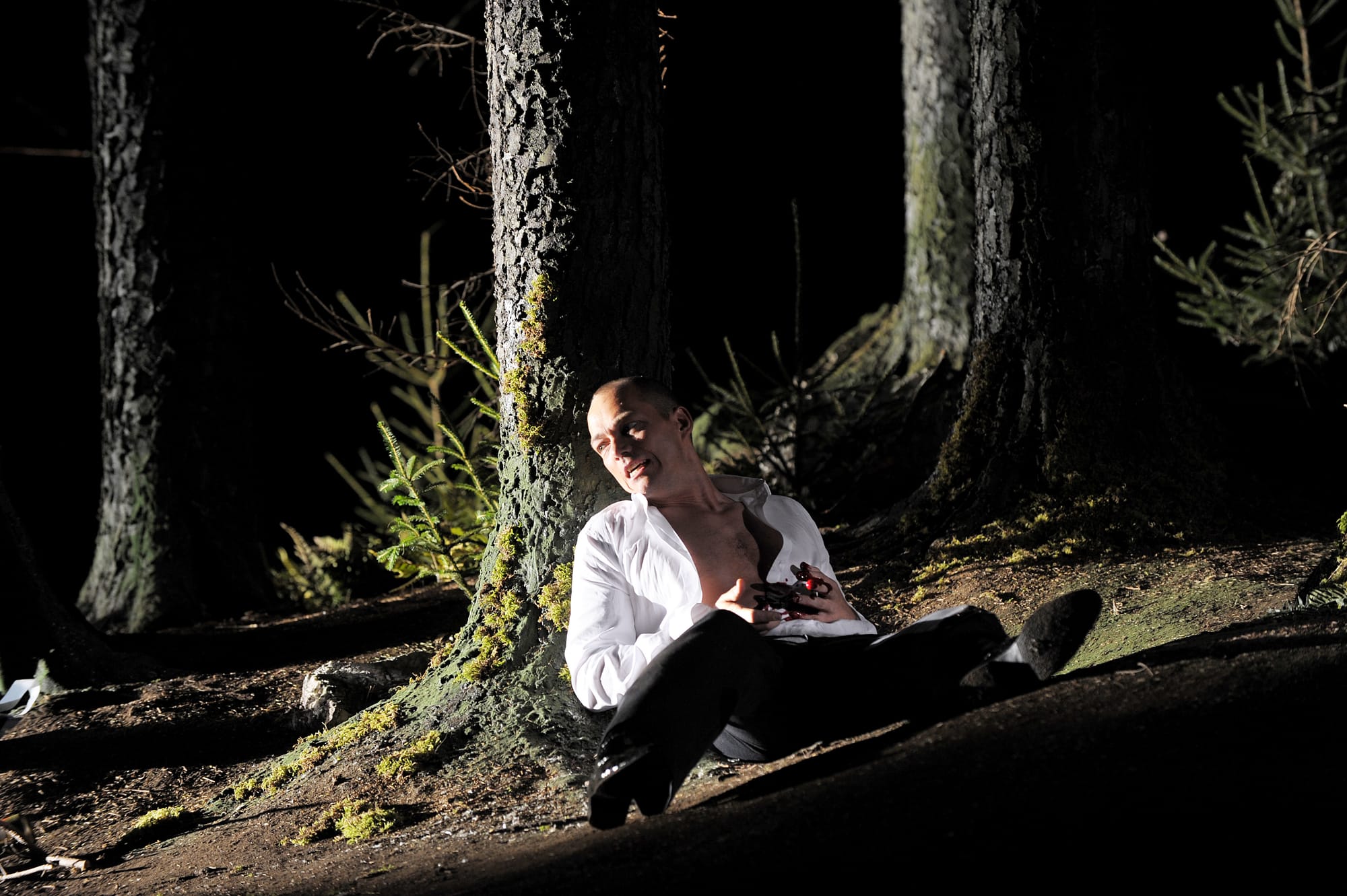
When the Commendatore finally arrives to claim Don Giovanni, there is no supernatural thunderclap, no descent into literal hellfire. He simply falls into a grave that has been quietly waiting for him. The wound, the forest, the fever—it all closes around him. It's an ending that is both inevitable and strangely peaceful, which is perhaps the production's most daring choice: to make us feel something close to tenderness for a man who deserved none of it.
The audience was with this production from the first scene to the last: laughing when it was funny, hushed when it needed to be, openly delighted by the dog. That kind of collective attentiveness is rare. It suggests that the singers were, too: you don't walk a rotating forest terrain at night, bloodstained and hallucinating, without committing entirely. They committed.
This is the kind of Don Giovanni that justifies the opera's survival across three centuries—and proves, contra current discourse around Chalamet Gate, that audiences still do care. They just need to be given something worth caring about.